
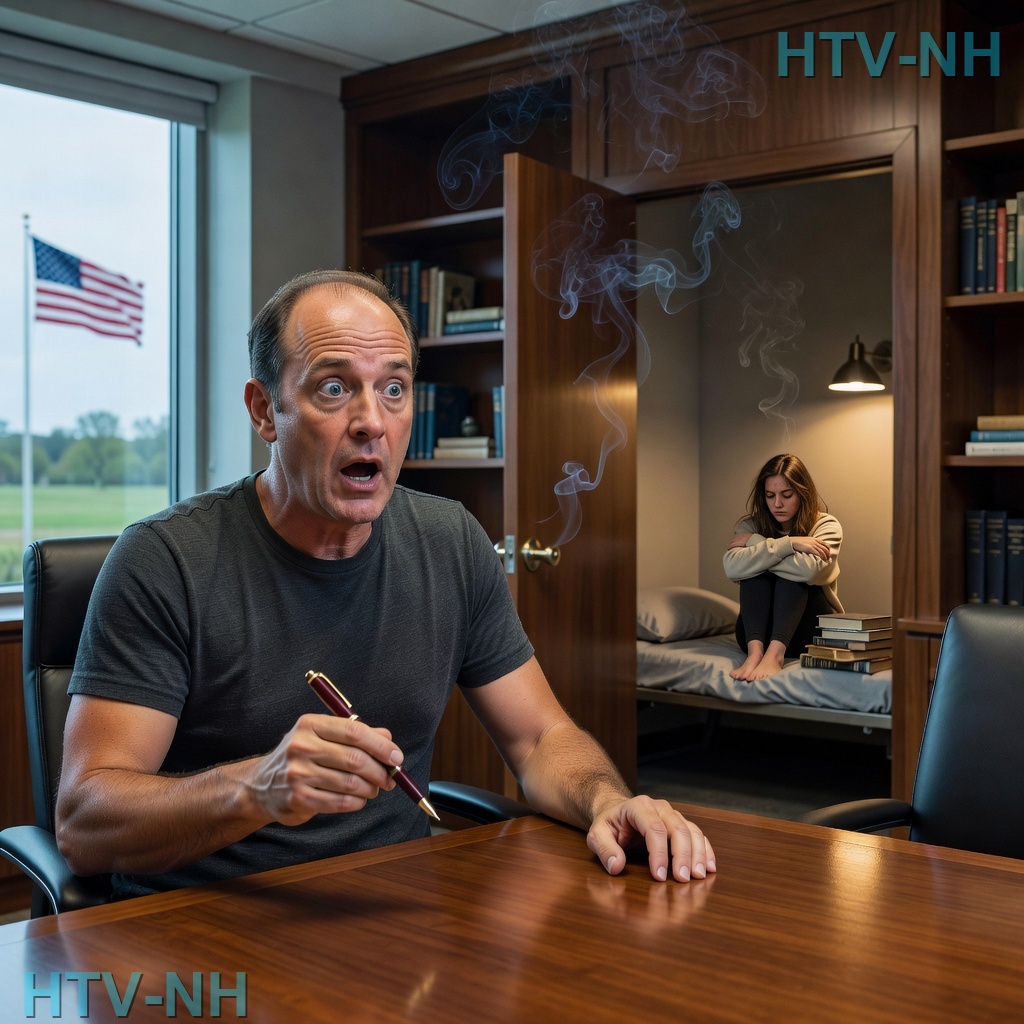
I only stopped by my wife’s medical clinic at the Houston Medical Center to confirm our anniversary dinner plans. It was supposed to be a surprise, a small celebration of survival after the worst tragedy a parent could face. But the moment I walked into her office, she didn’t look happy to see me. She brushed me off, buried her eyes in her paperwork, and coldly told me she was far too busy to talk.
I swallowed the sting of her rejection and sat down at her desk to wait, trying to give her space. That was when my eyes locked onto something that made my heart stop.
Resting in her pen organizer was a vintage fountain pen. It wasn’t just any pen. Engraved into the dark lacquer was a name that haunted my every waking hour—the name of our young daughter, who had gone missing three years ago and was presumed dead.
My hands began to shake. I picked it up on pure survival instinct. As I examined it, my thumb brushed against a microscopic, hidden seam near the cap—a physical detail that made absolutely no sense. I pressed it.
Click.
A soft, mechanical sound echoed through the sterile office. I looked up, and my blood ran cold as a section of the heavy oak bookshelf slowly began to swing inward, revealing a pitch-black, hidden room right behind her wall.
The Secret Behind the Wall
I didn’t call out her name. I didn’t reach for my phone to dial 911. The sheer weight of the betrayal anchored me to the floor. Through the narrow gap of the opening door, a faint light flickered from inside the secret chamber, casting a shadow that looked terrifyingly familiar.
For three agonizing years, I had wept on our daughter’s empty bed. I had spent every dime of our savings on private investigators, while my wife calmly comforted me, telling me to “let go” and accept that our little girl was gone forever. She played the part of the grieving, broken mother perfectly to the world.
But as I stepped closer to that clicking bookshelf and peered into the hidden room, the sickening reality of my marriage finally unraveled. Some relationships don’t just end in divorce; they collapse into a criminal nightmare before you even have the chance to realize who you’ve been sleeping next to.
She wasn’t mourning our missing daughter. She was hiding her.
————————————————————————————————————————
I was already holding my breath when the wall moved.
The bookshelf didn’t swing wide like something out of a movie. It shifted in silence, six feet of walnut shelving gliding sideways on a track so smooth it might have been part of the architecture from the beginning. Cool air spilled out of the dark gap behind it. The smell that came with it wasn’t mold or concrete or anything dramatic. It was lavender detergent, stale recirculated air, and the thin metallic chill of a place with no windows.
For half a second, my brain refused to translate what my eyes were seeing.
A small room. White walls. A narrow bed pushed against the far side. A desk lamp on low. A stack of middle-school workbooks. And on the bed, tucked back against the wall with her knees pulled up, sat my daughter.
Belle.
Eight months missing, and there she was less than ten feet from the mahogany desk where my wife met clients, signed book deals, smiled for headshots, and accepted awards for helping children.
My hand tightened around the burgundy fountain pen engraved with my daughter’s name.
“Belle?” I heard myself say.
She looked up too quickly, as if she’d expected someone else. Her face had thinned in a way no twelve-year-old’s face should ever thin. Her hair, normally wild no matter how much money Mariah spent on products, hung flat around her cheeks. Her eyes were too big. Too careful. Too old.
“Dad?”
That one word tore something open in me so hard I nearly dropped the pen.
I crossed the room before the shelf finished settling. I don’t remember whether I spoke first or reached first. I only remember the feel of her shoulders under my hands, the frightening lightness of her when I pulled her up off that bed, and the way she went rigid for one startled beat before she folded against me and started shaking.
“I’ve got you,” I said into her hair. “Baby, I’ve got you.”
Her voice came out muffled against my shirt. “She said you knew.”
I closed my eyes.
Outside, somewhere beyond the glass walls of the Texas Medical Center, a siren rose and faded toward Fannin. Life went on. Cars moved. Coffee got poured. Appointments started on time. The city kept breathing.
My wife had hidden our daughter in a room behind a bookshelf and gone on with her day.
That was the moment my marriage ended. Not later, when the handcuffs clicked. Not in court. Not when the sentence came down. Right there, with a pen in my hand and my child in my arms and eleven years of my life splitting cleanly down the middle.
Everything after that was just accounting.
Marriage teaches you how to normalize silence.
You tell yourself a quiet spouse is a mature spouse. You tell yourself distance means stability, that two adults with careers and calendars and a mortgage in River Oaks do not need the kind of constant reassurance younger couples demand. You tell yourself love can look like efficient logistics, shared passwords, anniversary dinners booked three weeks ahead, and a woman kissing your cheek while scanning her email over your shoulder.
For eleven years, I told myself all of that about Mariah.
She was brilliant in ways that made other people feel lucky to orbit her. Dr. Mariah Grant. Founder of Renewed Mind Wellness Group in the Medical Center. Behavioral therapist. Conference keynote speaker. Board member. Donor favorite. The kind of woman who could sit on a gala panel at Hotel ZaZa and speak for twelve minutes about childhood trauma, and by the end of it, a ballroom full of wealthy Houstonians would look at her like she’d personally invented mercy.
I used to be proud of that.
I worked in commercial real estate downtown, which sounds more glamorous than it feels. Most of the job was lease language, site visits, landlord ego, and calls that started with square footage and ended with somebody threatening to walk. I knew steel, financing, easements, and exactly how much fake greenery it took to make a lobby feel expensive. Mariah knew people. Not socially. Structurally. She knew where their weak places were, the private ache underneath whatever public self they were selling. When she was loving, it felt like being understood by someone with better tools than you had.
When she was finished with you, apparently, it looked like a hidden room.
That Tuesday had started like every other Tuesday. Coffee at home. Traffic dragging along Westheimer. A tenant threatening to renegotiate build-out terms. By ten-thirty I’d handled two client calls, signed off on a retail package in the Heights, and remembered that our anniversary was coming up that Saturday. I’d made us a reservation at Caracol on Post Oak because Mariah liked the octopus there and because in our marriage I had become the kind of husband who solved emotional problems by booking the right table.
She had texted me the week before about picking up a dress she’d ordered for a fundraiser. Thursday worked for me. I figured I’d swing by her office, kiss her, confirm the timing, maybe make her laugh for thirty seconds before she floated back into the life she’d built.
That was the entire plan.
The receptionist looked wrong the second I walked in.
Not guilty. Not openly. Just… strained. Like a person trying to keep a glass balanced on a tray while pretending her hand wasn’t shaking. Her name was Bailey, twenty-something, polished, always in neutrals that matched the office walls. I’d seen her enough times to know her smile. That day it came out a fraction late.
“Mr. Grant,” she said. “Dr. Grant isn’t expecting you.”
“That’s why it’s a surprise.”
Her fingers stilled on the keyboard. “She’s in session.”
“I can wait.”
“It may be a while.”
I smiled because I had no reason not to. “Then I’ll wait longer.”
Her eyes flicked past me, down the hall toward Mariah’s office, then back. “I can text her and let her know you’re here.”
“No need.” I lifted the garment bag draped over my forearm, joking. “I’m just here to be useful for once.”
She didn’t laugh.
That should have landed somewhere in me. So should the way she half-rose from her chair when I started down the hall, as if she might physically stop me and had decided at the last second she liked her paycheck more than she liked a confrontation with the boss’s husband. But suspicion is easy in hindsight. At the time, I just thought she was protective of boundaries the way assistants in expensive offices often are.
Mariah’s office sat at the end of the corridor behind frosted glass. I knew that room as well as I knew our kitchen. I’d waited in it through late dinners, donor calls, one migraine, and two separate pipe leaks in our townhouse when she refused to come home until she’d finished reviewing somebody’s treatment plan. There were framed degrees on the wall, a Persian rug she claimed grounded nervous clients, shelves lined with books arranged by color rather than subject because Mariah believed aesthetics lowered defenses. Her desk sat centered in the room like an altar.
I sat in the leather chair across from it and checked my phone.
Then I saw the pen.
Burgundy lacquer. Gold trim. Heavy. Elegant. Out of place only because I knew it too well.
When Belle turned ten, she had gone through a brief phase of wanting “grown-up” things. Not toys. Not glitter. She wanted what she called serious objects. A real watch. A notebook with thick paper. A fountain pen because she’d seen one in a bookstore display and decided people who wrote important things used pens with weight. I bought her one that Christmas—too expensive for a child, Mariah said, smiling as if she were amused by how sentimental I was. I had Belle’s name engraved on the barrel because children lose things and fathers like to believe engraving can hold onto what time won’t.
Eight months earlier, Belle disappeared on a Thursday afternoon.
We told police she’d last been seen leaving after-school robotics club. Surveillance footage showed her walking out of St. Agnes Middle School with a backpack and a ponytail, sunlight on the side of her face, then turning past the line of parent pickups toward the side street where students sometimes got rides from friends. After that, nothing clean. A partial camera angle. An old woman who remembered a dark SUV but not a plate. A boy who thought he heard Belle arguing with someone. No body. No ransom demand. No confirmed digital trace after 4:12 p.m.
There is a point in missing-child cases where sympathy curdles into distance.
The first two weeks, everybody shows up. By week five, casseroles stop. By month three, the community is still kind but tired. By month eight, people look at you in the grocery store with a grief they hope you won’t make them carry. Your friends lower their voices. The police stop using the word when and start using if. You become a family that exists as a cautionary tale in other people’s kitchens.
Mariah handled that season with astonishing grace.
She spoke at vigils. She sat beside me in interviews, tissue folded in her hand, voice raw at exactly the right moments. She started a private support circle for parents of missing children. She told me not to blame myself when I woke up at three in the morning certain I had failed as a father in some ancient, unrecoverable way. She whispered that we would find Belle because mothers knew these things. I believed her because belief was the last currency I had left.
Then I saw our missing daughter’s pen on my wife’s desk.
I picked it up because I could not not pick it up.
The engraving—BELLE GRANT—caught the light. My thumb brushed the seam near the clip. A small mechanical give answered back.
A click.
And the wall opened.
I stayed in that hidden room with Belle for less than four minutes.
It felt both instantaneous and lifelong.
“Can you walk?” I asked.
She nodded.
“Is anyone else here who knows you’re in this room?”
Her eyes flicked once toward the office wall, toward the world beyond it. “Mom. Uncle Preston. Sometimes Bailey.”
The receptionist.
The fact of that settled into me without surprise. In shock, the body gets efficient. Details arrive. They take their seats. You promise yourself you’ll come back for them later.
“Has anyone hurt you?” I asked.
She hesitated the way children do when they’re calculating what counts.
“Not like that,” she said softly. “She just—” Her shoulders pulled in. “She says things until I start thinking maybe they’re true.”
A hot, clean rage moved through me. No fireworks. No yelling. Just a precision so sharp it was almost calm.
“When did she bring you here?”
“September.”
It was May.
“At first she let me come out at night,” Belle said. “Only when the office was empty. Then she stopped because she said I wasn’t adjusting right.”
Adjusting. As if she were a lamp moved from room to room.
I took her face in both hands and made her look at me. “Listen very carefully. None of this is because of you. I never agreed to any of it. I have been looking for you every single day.”
Tears jumped into her eyes so fast they frightened me. “I know,” she whispered. “I think I knew. But she kept saying you were relieved. That you wanted quiet. That you said I made everything harder.”
If I live to be ninety, I will still hear that sentence exactly the way I heard it then.
I got her out the same way I had come in—through the office, past the desk, into the hall.
Bailey stood when she saw us.
There are moments when language is unnecessary. She saw Belle. I saw her see Belle. Something folded in her face—not surprise, not remorse, exactly. Recognition. Exposure. The knowledge that whatever arrangement had existed between her fear and her paycheck had just been blown apart.
“Have a good afternoon,” I said to her.
My voice sounded pleasant. It wasn’t.
I kept one hand on Belle’s shoulder all the way through the lobby, through the front doors, through the warm Houston noon waiting outside. Bertner Avenue was bright and ordinary. A med student in scrubs crossed against the light holding an iced coffee. An ambulance idled half a block down. Somewhere, construction hammered on steel.
At 12:19 p.m., I buckled my daughter into the passenger seat of my Tahoe and closed the door with more care than I’d used on anything in months.
I did not call 911.
People love to imagine there is one correct reaction to catastrophe. There isn’t. There is only the reaction your nervous system can live with.
If I had called the police from that curb, maybe things still would have ended the same way. Maybe they would have swept in, taken statements, sealed the office, arrested Mariah by evening. Maybe every child would still have been found. Maybe Preston would still have gone down. But maybe not. Maybe the wrong detective would have leaked the wrong detail to the wrong person. Maybe Preston would have vanished. Maybe files would have been wiped, donors alerted, lawyers deployed. Maybe my daughter—thin, frightened, barely reattached to reality—would have been marched straight from a hidden room into flashing cameras and official questions and the kind of public handling that leaves bruises no one can photograph.
I wanted the truth. But before that, I wanted control.
So I drove.
North on Main, then west, then into River Oaks where the trees were too old and the houses too clean and the whole neighborhood carried itself with the casual confidence of inherited money. Our townhouse sat in a gated cluster off a quiet street lined with magnolias and SUVs. The fountain out front trickled exactly as it had the morning Belle disappeared. That nearly undid me.
Inside, Belle stood in the foyer as if she were unsure the house would recognize her.
Everything was where it had always been. The console table. The framed family photo from Port Aransas. Her sneakers by the mudroom shelf, smaller than I remembered. For months I had kept her room untouched because that is what grieving parents do when they need to preserve hope without admitting that’s what they’re doing. Now hope had walked in on her own feet and didn’t know where to stand.
“Do you want a shower?” I asked.
She nodded.
“Clean clothes?”
Another nod.
“Food?”
That one came with the smallest lift of one shoulder, which in Belle language meant yes but don’t make a fuss about it.
“Okay.” I kept my own voice level. “You shower. I’ll find clothes and make something. Then we talk only if you want to.”
She looked at me for a long second, maybe testing whether this version of me was real. Then she climbed the stairs without a word.
I made scrambled eggs because they were fast and because feeding your child is the oldest repair a parent knows how to attempt.
While the pan heated, I stood at the kitchen island and wrote Mariah’s name on a yellow legal pad.
Just that. M-A-R-I-A-H. A line underneath it. Then columns.
What I knew. What I thought I knew.
What I could prove.
The first column embarrassed me.
She drank coffee black. She hated televisions in restaurants. She sorted groceries by category before putting them away. She had founded Brighter Futures Foundation three years into our marriage. She could cry on cue—no, I corrected that, maybe not on cue. On access. She could find tears as easily as some people find car keys.
She kept my missing daughter in a room behind a bookshelf.
I added Preston Adair beneath her name. Younger brother. Smiles too quickly. Always needed money but never enough to look desperate. Had hugged me at Thanksgiving with a hand on the back of my neck and said, “We’re gonna get her back, brother.”
I wrote Bailey last. Receptionist. Knew enough to stall me.
Upstairs, the shower ran. I had never been more grateful for a household noise in my life.
Belle ate at the island in one of my old University of Houston sweatshirts, hair damp, eyes on her plate. She moved carefully, not timidly, which would have been easier to interpret. Caution has its own intelligence. She took small bites. Drank water as if she had once been told to ration it and her body hadn’t received the update that those rules were gone.
When she finished the eggs, she asked, “Can I sleep in my room?”
That question hurt more than anything she’d said so far.
“It’s your room.”
She looked away. “I know. I just didn’t know if it still was.”
I swallowed. “It still is. It always was.”
She nodded once and went upstairs.
I washed the plate because doing nothing felt impossible. Then I carried Mariah’s laptop—found on the little desk in the hidden room—to the island and sat down.
Some marriages are built on trust. Ours, it turned out, had also been built on predictable password habits.
By two-fifteen I was inside.
The folder that changed everything was named Futures.
It should have felt melodramatic. Instead it felt clinical. That was Mariah’s genius. She made cruelty sound administrative. Inside were eight child profiles arranged by year. Names. Ages. Intake photographs. Country of origin. Psychological evaluations written in her precise, elegant language. Notes on attachment instability, identity malleability, resocialization receptivity. One column labeled integration timeline.
The children were from the Philippines, Guatemala, and Ukraine. Some of the paperwork looked legitimate on its face—visa documents, sponsorship forms, host family agreements routed through Brighter Futures and something called Pathways International, a program I had vaguely heard Mariah mention over cocktails without ever thinking to ask follow-up questions.
I had financed the first fifty thousand dollars of that foundation.
I remembered writing the check in our dining room, proud of her. Proud of us. She kissed me after I signed it and said, “You always believe in my big ideas first.”
Now I sat there staring at spreadsheets that mapped human beings like inventory.
The newest file was the one that took the air out of the room.
Lena Reyes. Twelve. Manila. Intake photo taken against a cinder-block wall painted pale blue. Same bone structure as Belle. Same warm skin tone. Same dark hair. Not identical. She didn’t need to be. Children change. Grief blurs edges. Communities remember the story they’re told far more faithfully than they remember a face.
Under Lena’s image, in a notation Mariah had typed and then highlighted for herself, were the words candidate for primary placement.
Primary placement.
My wife had hidden our daughter and begun sourcing a replacement.
I sat back, then forward, then stood so fast the stool barked against the hardwood. I crossed to the sink, turned the water on full cold, and braced both hands under it until the shock in my chest stopped trying to become panic.
Eight files.
Eight children.
Eight months my daughter had been missing.
Somewhere in that number was a pattern I had failed to see because I had been too busy grieving the child in front of me to notice the ones being moved around her.
That was the first time I understood this wasn’t an affair-scale betrayal, or even a family one. It was a structure. A business. Maybe a fetish for control dressed up as philanthropy. Whatever it was, it extended far beyond the hidden room.
I went back to the laptop and kept digging.
Brighter Futures had taken in a little over $2.3 million in the last four years. Clean website. Donor testimonials. An annual gala. Corporate sponsors. The board consisted of Mariah, Preston, and an attorney named Elaine Pruitt whose firm handled nonprofit compliance for half the city’s respectable frauds. Pathways International had bank wires routed through a consulting company Preston had registered in Delaware. Shell address at a UPS store outside Wilmington. Every cliché men like me assume only dumber criminals bother with.
I downloaded everything.
Bank statements. Scanned intake forms. Email chains. Travel confirmations. A calendar entry from six days earlier showing IAH arrival for L. Reyes. A PDF brochure for host families that made the program sound like a compassionate cultural exchange with therapeutic support. An expense sheet for special preparation suite that included air filtration maintenance, soundproofing, and custom shelving.
The hidden room had been budgeted.
There’s a kind of fury that screams. Mine narrowed.
At four-thirty I heard Belle come halfway down the stairs and stop. When I looked up, she was standing in the archway between kitchen and living room, one hand on the banister, watching me the way people watch live power lines.
“You found it,” she said.
I closed the laptop. “Some of it.”
Her gaze moved to the legal pad, to the pile of printed pages already growing beside my elbow. “You’re making your quiet face.”
“What quiet face?”
“The one you make before you tell someone no and they don’t realize how bad an idea it is to keep pushing.”
In any other hour I might have laughed. Instead I pulled the stool beside me out with my foot. “Come here.”
She climbed up and tucked one leg under herself. Her wrists were thinner than they should have been. I kept noticing details like that and hated myself each time as if hatred were a useful fuel.
“How much do you know?” I asked.
She thought about it honestly. “Not everything. But more than she thought.”
“Tell me.”
Belle stared at the closed laptop instead of my face. “At first she said I was helping with an experiment.”
My hands curled on the counter.
“She said I had big feelings and the world was noisy for me and she wanted to see what happened if I had less input. Then when people started looking for me, she said it had gone too far to stop because if she brought me back, you’d think she was crazy.”
“And Preston?”
“He brought food. He changed the filters. He complained a lot.” A pause. “He never looked at me very long.”
Of all the details in the world, that one chilled me most. Not because it was dramatic. Because it sounded normal. Ordinary predatory men are rarely theatrical.
“Did she ever take you anywhere else?”
“No. Just sometimes into her office late. If I had to stretch or shower. She kept saying it was temporary.” Belle rubbed at the sleeve of the sweatshirt. “Then after Christmas, I heard her talking about another girl.”
Lena.
“She said she needed it done before the fall gala,” Belle said quietly. “She said the transition had to be clean.”
The word transition sat between us like something toxic.
“She used my name?” I asked.
Belle nodded. “And then she said former.”
For a moment I couldn’t hear anything except the hum of our refrigerator.
Former.
I looked at my daughter and saw that she was looking back not for comfort exactly, but for confirmation that the world had not fully lost its mind. Children can survive astonishing things if one adult stands in front of them and says, without blinking, I see what happened and it was real.
“She will never get to use that word about you again,” I said.
Belle studied me. “You’re not going to just call the police.”
“No.”
“Good.”
That surprised me enough that I actually showed it.
She reached over and tapped once on the closed laptop. “If you do it wrong, she’ll talk her way out halfway. She talks like that and people start fixing things for her.”
I thought of donor luncheons. Board dinners. Television interviews. Cops asking gentle questions of a respected therapist in a navy sheath dress.
“You think so too,” Belle said.
“Yes.”
She picked at a loose thread on the cuff. “Then don’t make it small.”
That was the first real glimpse I had of what eight months had done to her. Not just the fear. The compression. Childhood stripped down to judgment and endurance. No parent wants to admire that in their child. I did anyway.
“I won’t,” I said.
And that was the promise everything else had to serve.
Mariah texted at 5:07.
Running behind. Last appointment turned into a crisis. Don’t wait for dinner. Love you.
I stared at the screen until the words blurred, then typed back, No problem. Grab something out. Love you too.
I did not enjoy sending that. But there are moments in war when lying is just a form of seatbelt.
Before Mariah got home, I made three decisions.
The first was that Belle could not stay under our roof once Mariah realized the office room was empty. Our townhouse had too many cameras Mariah controlled and too many routines she could weaponize. My sister Dana lived in Katy with her husband Rob and twin boys who worshiped Belle the way younger cousins often do. Dana never liked Mariah. I used to think it was petty jealousy. Turned out my sister’s intuition had simply been sober where mine was drunk.
The second was that I needed a federal friend before I needed a local one.
Grant Holloway and I had met freshman year at U of H, two scholarship kids pretending not to be intimidated by richer men with cleaner shoes. He’d been in the FBI’s Houston field office for years now, mostly financial crimes and public corruption, which meant he knew how monsters often dressed: expensive, patient, and publicly committed to something civic.
The third was that I would not confront Mariah until I could ruin every version of the story she might tell.
At 6:58 p.m., I was on the couch with ESPN on mute and a glass of water in my hand when the front door opened.
“Hey,” she called.
There was nothing wrong with her voice. That was the part I remember most. It wasn’t tense or rushed or guilty. She sounded like a tired woman coming home from a long day of helping people.
“In here,” I said.
She stepped into the living room shedding her blazer, hair still neat, lipstick faded just enough to imply hard work rather than guilt.
“Long day?” I asked.
“The usual.” She set her bag on the entry table, slipped out of her heels, and crossed into the kitchen. “One teen crisis, one couple pretending not to be on the edge of divorce, one donor call that should’ve been an email.”
She smiled at her own joke. I watched her pull a Topo Chico from the fridge and twist off the cap with the easy confidence of a woman who believed every room she entered belonged to her.
Then she looked at me more closely.
“You okay?” she asked. “You look a little off.”
“Tired.”
“Bad day?”
“Long one.”
She nodded like that explained everything, which in our marriage it usually did. Mariah had always been happy to accept partial answers from other people as long as she controlled the full ones herself.
She leaned against the counter, took a sip, and let her gaze move around the room. Not searching. Not exactly. But there was a brief pause when she looked toward the stairs, the kind you’d miss if you weren’t already counting every blink.
I kept my voice flat. “How was the last session?”
“Exhausting.” She let out a breath. “You know when someone says they want change but what they really want is to be admired for describing their pain well?”
“You just described half of Houston.”
That got a soft laugh. Real, too. Or good enough to pass for it.
Have you ever sat across from someone you loved and wondered whether every comforting thing they had ever said was rehearsal?
Because that was the first night I truly did.
She came around the island and kissed the top of my head. The gesture was so familiar my body nearly answered it on autopilot. “I’m going to change,” she said. “Did you eat?”
“Grabbed something earlier.”
“Good.”
Then she added, “Bailey said a man came in asking for me near lunch. She assumed it was a new patient’s husband. Was that you?”
My pulse did not spike. That would have been useful. Instead it went strangely slow, as if my body understood there was no room for wasted motion now.
“Yeah,” I said. “I was in the area.”
She looked back over her shoulder. “Why didn’t you text me?”
“I didn’t want to interrupt a session.”
A beat.
Then she smiled. “That’s unusually considerate of you.”
There are moments when a marriage dies in public and moments when it dies privately. This one was private. Quiet. Two people in a kitchen designed by a woman who had once chosen the backsplash tile while standing against my chest, asking whether I liked the brushed brass fixtures better than the matte black. One of us was a criminal. The other had just become a witness.
She went upstairs.
I stayed on the couch counting the seconds between footsteps overhead, telling myself not to move too soon.
The one advantage grief had given me was that Belle’s room had become holy ground in our house. I had gone in. I sat there often. Mariah almost never did. In the first month after Belle vanished, she had cried once in the doorway and told me she couldn’t bear the smell of the room still being the same. Back then I thought that meant the pain was too sharp. By May I understood it differently. The room had not been a shrine for her. It had been an inconvenience.
At 8:21, Mariah came back downstairs in leggings and one of my old Rice T-shirt she liked to sleep in. She microwaved leftover sea bass, asked whether I’d paid the HOA invoice, and spent eleven minutes telling me about a speech she might be giving at a donor breakfast near The Post Oak Hotel in the fall. Not a twitch. Not a sign. The same woman who had looked into television cameras and said our daughter’s name with tears in her voice was now standing three feet from me deciding whether she had time to squeeze in a blowout before Saturday.
Which betrayal is worse—the crime itself, or the terrifying ease with which the criminal keeps discussing ordinary things?
At 10:47, she fell asleep beside me.
At 12:18, I got out of bed.
I stood there in the dark for one long second, looking at the shape of my wife under the sheet, listening to the central air hum through the townhouse we had bought together. Then I picked up my phone, my keys, and the duffel I’d packed after dinner.
Belle was awake when I opened her door.
Maybe she hadn’t slept at all. Maybe children who spend eight months listening for locks never really do.
“Time?” she whispered.
“Time.”
She was dressed, shoes on, hair braided back. I don’t know why that nearly broke me, but it did. Twelve-year-olds should not know how to leave a house in silence.
We moved through the hallway with the careful rhythm of people who have already had one life stolen and don’t intend to lose another. Downstairs. Across tile and wood. Out the garage door, which I opened by hand rather than using the wall switch because even that small sound felt too loud.
Houston at twelve-thirty in the morning is a different city than Houston at noon. The freeways still move, but they move like men with their ties loosened. The lights on 610 feel farther apart. River Oaks looks less like wealth and more like stage design.
I drove west, then north, then out toward Katy where my sister Dana lived with her husband Rob in a two-story brick house on a cul-de-sac full of bikes, basketball hoops, and dogs that barked at delivery vans like it was public service.
Dana opened the door in pajama pants and a college sweatshirt, hair pulled into the kind of lopsided bun only sisters and exhausted women can wear without apology.
She saw me first.
Then she saw Belle.
The mug in her hand slipped and hit the entry tile hard enough to crack the handle.
For one second no one moved.
Then Dana made a sound I had never heard from her in all our lives and dropped to her knees in the doorway.
“Baby,” she said, already crying. “Oh my God. Oh my God.”
Belle stood still until Dana held both arms out, slow, giving her the choice. Then Belle stepped forward, and my sister wrapped herself around my daughter so carefully it looked like she was trying to keep the whole world from touching her.
Rob came down the hall half awake, took one look at the three of us, and went fully still.
“Tell me what you need,” he said.
That was why I came there. Rob never led with outrage. He led with usefulness.
“I need invisibility,” I said. “I need no social media, no calls to anybody, no school emails, no church ladies, no one. I need her here and quiet until I tell you otherwise.”
Rob looked at Dana once. Dana stood, wiped her face with the heel of her hand, and nodded before he even asked.
“She stays,” Dana said.
“She stays,” Rob repeated.
I told them enough to make the danger real and not one detail more. Mariah. The office. The hidden room. Preston. Files. Dana went pale and then furious in that order. Rob listened without interrupting, jaw working once near the end like he was biting through something hard.
When I finished, Dana said, “I always knew something about her was wrong.”
Normally, that would have irritated me. In a family crisis, somebody always wants retroactive credit for intuition. That night it didn’t matter. What mattered was the guest room upstairs, the blackout curtains, the fact that Mariah never came out this far unless absolutely forced, and that in her mental map of my family, Dana and Rob barely existed beyond birthdays and Christmas cards.
To Mariah, my brother-in-law’s house in Katy was a place beneath notice.
Which made it perfect.
I stayed until almost two-thirty while Dana made tea nobody drank and Belle sat on the sofa with a blanket around her shoulders, too exhausted to pretend she wasn’t exhausted anymore. At one point Rob said quietly, “Does she need a doctor?”
Belle answered before I could.
“Not a doctor like Mom.”
Silence landed.
Rob nodded. “Okay.”
I crouched in front of Belle. “I’m going back because if I don’t, she’ll know something’s wrong.”
She studied me with those too-old eyes. “You’re coming back tomorrow?”
“I’m coming back every day.”
“Promise?”
“On everything I’ve got.”
That satisfied her enough to blink once and lean back into the couch.
Dana walked me to the garage.
“Wes,” she said in a whisper that shook. “Are you calling the police?”
“Not yet.”
“Why?”
Because I knew Mariah’s face in public. Because I had watched judges and board members and donors soften under it. Because a man who has spent his career negotiating land knows the first rule of leverage: do not show your hand before the foundations are mapped.
I said only, “Because if I do it too early, I lose children I haven’t even found yet.”
Dana’s expression changed then. Not calmer. Just more precise.
“How many?”
“I don’t know.”
That was the worst answer in the world.
I got back into bed at 3:18 a.m.
Mariah rolled toward me in her sleep and put one hand against my ribs, warm and trusting as if trust were still the language between us. I lay there staring into the dark until dawn.
That was the first full day I understood I would have to act married while planning her demolition.
—
The next morning I kissed my wife goodbye in our driveway.
There is no trophy for that kind of performance. No medal. No clean word. Only necessity.
She got into her Mercedes, sunglasses on, coffee in the cupholder, and smiled at me through the open window. “Don’t forget we have dinner with the Kellers on Friday.”
“I won’t.”
“Love you.”
I looked at her face—the one from our wedding pictures, our Christmas cards, our tenth-anniversary trip to Napa—and said, “You too.”
Then I waited until she turned left at the gate before I got in my Tahoe and headed west again.
Belle was sitting at Dana’s kitchen table in one of my old sweatshirts, eating dry Cheerios from a coffee mug.
Dana had put fresh flowers in the room where she slept. That was such a Dana thing to do it almost made me smile.
“How’d you sleep?” I asked.
“Mostly.”
That was as much as I got.
Rob had already left for a jobsite in Cypress. Dana pulled me into the laundry room while Belle stared out the back window at the little fenced yard where her cousins kicked soccer balls after school.
“She woke up twice,” Dana said quietly. “Both times she was listening, not crying. Like she was checking whether doors were locked.”
I nodded.
“She asked if the air vents here always sound like that.”
I closed my eyes for one second. “Okay.”
Dana touched my arm. “Wes.”
“I know.”
“No, I mean really know. You don’t have to be made of cinder block just because she is.”
I almost laughed. Instead I leaned against the dryer and rubbed a hand over my face.
“I found more files,” I said.
Dana stilled. “What kind of files?”
“The kind that make this bigger than Belle.”
She didn’t ask for details with Belle in the next room. My sister may have strong opinions, but she also knows when information has teeth.
I spent that morning doing what I should have done years earlier: looking at Mariah’s world the way I would have looked at a hostile acquisition target.
People think commercial real estate is about buildings. It isn’t. It’s about paperwork disguised as space. Floor plans. Amendments. Change orders. Tenant improvement allowances. Hidden costs tucked inside polite emails. If you know how to read a build-out, you know what someone paid to change and what they hoped no one would notice.
Mariah’s office lease had been negotiated two years earlier. I hadn’t handled it myself—conflict of interest, optics, the usual. But I knew the landlord’s management company and I knew which maintenance coordinators talked too freely after lunch.
By noon I had the original space plan in my inbox.
There was no hidden room on it.
The office had been delivered with one storage alcove behind the back wall of Mariah’s suite. Standard. Dead space. Useful for boxes, printer paper, maybe archived files. But in a later facilities note, buried in a chain about HVAC access and custom millwork, I found a reference to a special therapeutic quiet room added after occupancy. The work had been approved as an internal modification and paid through a donor-funded capital line under Brighter Futures, not the practice itself.
The line item for the custom shelving company was familiar.
I called a friend named Neal who had been selling cabinetry and office millwork in Houston since before either of us had gray at the temples.
“Neal, you ever sub out for a shop called Bayline Interiors?”
“Sometimes. Why?”
“You know who they use for concealed track shelving?”
He let out a low whistle. “That’s a niche question.”
“Humor me.”
Twenty minutes later, I was in a truck stop parking lot off 59 meeting a cabinet installer named Miguel Serna who smelled like sawdust, gas-station coffee, and a life too busy for niceties.
He looked at the printout I set on his dashboard and said, “Yeah, I did the moving wall on this one.”
The sky over Sugar Land was pale and hot. Eighteen-wheelers hissed past. Somewhere a diesel engine idled hard enough to make the truck tremble under us.
“What were you told it was for?” I asked.
Miguel shrugged. “Sensory space. High-end practice. Rich people pay for all kinds of custom nonsense.”
“Who hired you?”
“Not the lady doctor. Her brother, I think.” He squinted. “Tall guy. Too much cologne. Paid half through the company, half in cash because he kept changing the locking mechanism.”
My voice stayed even. “What locking mechanism?”
Miguel gave me the look tradesmen reserve for clients who suddenly realize they should have asked better questions earlier.
“There was a magnet release tied to the pen click, and a secondary dead latch inside the shelf housing. He wanted it quiet. Didn’t want a standard keypad on the visible wall.”
I thought of Belle sitting behind that shelf waiting for the sound of the right click.
Miguel reached into the glove box and handed me a wrinkled carbon invoice copy. Bayline Interiors. Labor and materials. Silent glide track. Reinforced bookcase frame. Supplemental air circulation. Acoustic insulation panels.
Total: $18,640.
A number becomes a different kind of weapon when you know what was purchased with it.
Eight months missing. Eighteen thousand six hundred and forty dollars to help keep her that way.
“Why keep a copy?” I asked.
He snorted. “Because a man who pays in cash and changes specs three times is a man who’ll later pretend he never met you.”
He took my business card, promised to answer questions if federal agents called, and drove off before I could ask whether he had ever wondered why a therapist needed a hidden room behind a shelf.
Maybe he had. Maybe he had bills. Maybe those are the same answer.
That was evidence you could hold.
—
Bailey was harder.
Cowards usually are.
I waited for her in the medical center parking garage two days later, leaning against the concrete pillar beside her car like a man who had not slept enough and no longer cared how that looked.
She nearly dropped her tote bag when she saw me.
“Mr. Grant.”
“Get in the car.”
She froze.
“Not yours,” I said. “Mine.”
“What? No.”
“Then we can do this standing in a parking garage where a camera catches your face when I say the words hidden room and child.”
She went white.
Ten minutes later we were parked in the shade near Hermann Park, both windows cracked, the A/C low, her hands twisted so hard in her lap it looked painful.
“I want to hear the lie she told you,” I said.
Bailey stared at the windshield. “I didn’t know everything.”
“I didn’t ask what you knew. I asked what she told you.”
That made her flinch.
“She said Belle was unstable,” Bailey whispered. “She said there had been an episode at home. That there were legal issues and safety issues and that until a family transition plan was in place, Dr. Grant was handling it privately with a specialist. She said you weren’t being informed because you were too emotionally reactive.”
I almost smiled at that. Too emotionally reactive. The woman who had hidden my daughter had explained me away with clinical language to the receptionist, and it had worked.
“Did you ever see Belle?”
“A couple times. Not really. Not like that.”
“Try again.”
Bailey started crying, angry tears, embarrassed tears. “I brought food once. She took it through the doorway. I heard her crying one night when I stayed late. Dr. Grant said it was detox from media and stimulation, that some kids have attachment distortions and need intensive environmental control—”
“She told you a child crying in a locked room was treatment?”
Bailey covered her mouth.
The part of me that wanted to destroy her was real. So was the part that knew frightened subordinates often become the difference between suspicion and proof.
“Listen carefully,” I said. “You helped hide my daughter. Whether you meant to or not, that is true. The only reason you are not already talking to police is that I need everything she has on paper before she knows the paper matters.”
Bailey lowered her hands. “What do you want?”
“Everything you can get me without tripping alarm bells. Badge logs. Calendar exports. After-hours visitor entries. Any donor meetings tied to Brighter Futures. Anything Preston dropped off. And if she has you mail or print something connected to Pathways International, you scan it for me first.”
She stared. “That’s illegal.”
I leaned back in the seat and looked at her for a long moment.
“So was the room.”
That ended the argument.
Three hours later, an encrypted folder hit a throwaway email address I had set up from a laptop at Dana’s kitchen table.
Badge logs. Building entry times. Two separate after-hours visits from Preston every week since September. Delivery receipts. A scanned internal calendar note titled L.R. transition preliminary. A donor breakfast deck in which Mariah floated a new signature family reintegration success story for the foundation’s fall gala.
Not a child.
A success story.
People like Mariah don’t just commit crimes. They narrate them.
—
The hardest part of the next three weeks was not the evidence.
It was breakfast.
Breakfast with my wife while knowing where my daughter was sleeping.
Breakfast while Mariah reminded me to call the landscaper or asked whether we should skip the Kellers’ barbecue because the heat index would be awful. Breakfast while she scrolled headlines about a school board dispute and smiled faintly at some text from Preston, never knowing I was memorizing the exact cadence of her face when she thought she was safe.
Some men, when betrayal arrives, need distance from it. I needed proximity. I needed to learn how she moved when unafraid.
There was a donor lunch at the Houstonian in week two. Mariah asked me to come because “people always give more when you look stable and married.” That line would have sounded like a joke to anyone else. To me it sounded like unguarded truth.
I wore the navy suit she liked, drove us there, and sat through ninety minutes of salmon, white wine, and soft conversations about youth development while my wife explained Brighter Futures’ next phase.
She stood at the front of a private room with a clicker in her hand and a screen behind her showing tasteful slides of smiling children, donor logos, and phrases like continuity, identity preservation, and long-term integration outcomes.
Then she said, “This fall, we’re hoping to introduce a very personal case study—one of the most meaningful family restoration journeys I’ve ever been privileged to guide.”
Applause. Interested smiles. A woman in diamonds pressed her hand to her chest.
I sat there with my water glass halfway to my mouth and understood exactly what the file on Lena had meant.
The replacement was not theoretical. It had a rollout date.
What would you do if the whole city trusted the person who had broken your child?
Because that was the question I took home from that lunch. Not whether Mariah deserved to fall. She did. Not whether I could prove enough. I was getting there. The question was scale. How public. How complete. How irreversible.
That afternoon I drove straight to Katy.
Belle was in the backyard with Dana’s twins, barefoot in the grass, watching them argue over a soccer ball. She wasn’t playing. She was just standing there under the Texas sun, arms folded, expression guarded. But she was outside. The sight of that almost dropped me to my knees.
When she saw me, she came over fast and lowered her voice before we even reached the patio.
“You found more.”
She had become terrifyingly good at reading my face.
“I found enough to know you weren’t the only child involved.”
Her eyes didn’t widen. They tightened.
“How many?”
“At least eight.”
She looked away toward the fence. The boys were yelling about handballs. A sprinkler clicked somewhere two houses over. Normal suburban noise. The kind of soundtrack that should have belonged to her all year.
“Was I the first?” she asked.
“I don’t know.”
“Was I the one she practiced on?”
That question stayed in the air between us like something poisonous.
“I don’t know,” I said again, because lying to children who have been psychologically caged is a special kind of cruelty and I was done participating in it.
She swallowed hard. “There was another name I heard a few times. Lena.”
I nodded slowly.
Belle stared at me. “That was the girl, right?”
“Yes.”
“Was she supposed to be me?”
There are truths you can phrase and truths you can only stand beside. I chose the second kind.
“Not if I had anything to say about it.”
Her mouth trembled once, then flattened. “Don’t let them make this small, Dad.”
“I won’t.”
“No, I mean it.” She looked straight at me now, voice low and steady. “If you just make it about me, people will feel bad for a week and then say Mom was sick and move on. She did this like it was a plan. Uncle Preston helped. Other people signed things. Don’t let them say it was one bad decision.”
That was the moment I stopped thinking of my daughter only as someone I needed to protect and started recognizing the person she had become while surviving me.
“I won’t make it small,” I said.
And then, because twelve-year-olds are still twelve-year-olds no matter what evil has been done around them, she asked, “Can I have Whataburger?”
I laughed for the first time in weeks.
We got burgers that night and ate them at Dana’s table while the twins argued over dipping sauces and Dana pretended not to be listening too closely whenever Belle spoke. It was the first meal I saw my daughter finish without hesitation.
Sometimes survival looks heroic.
Sometimes it looks like ketchup on a paper tray.
What the story of those twenty-nine days usually misses is how much of it looked like nothing.
Nothing, if you were standing outside it.
A Friday dinner in Tanglewood with the Kellers, where Mariah wore a pale blue dress and laughed at all the right places while Cary Keller opened another bottle of Napa cabernet and his wife touched my wrist and said, “I still think of Belle every single day.”
Nothing, if you were the valet at their house watching us arrive as the kind of polished couple people assume has weathered hardship with grace.
Nothing, if you were sitting three seats down while Mariah described the parents’ grief circle she had started and someone at the table actually said, “This city is lucky to have you.”
I smiled through that dinner so hard my molars hurt.
At one point Cary asked whether the police had any new leads, and Mariah lowered her eyes with such measured sorrow I nearly dropped my fork.
“Nothing concrete,” she said softly. “We’ve had to learn how to live in uncertainty.”
We.
The pronoun made me feel physically cold.
Across the table, she rested her hand on mine like a wife holding steady beside her husband in public grief. I let her. What else was I going to do? Rip my hand away and light the room on fire before I knew where Lena was sleeping? Before the warrants? Before the paper trail was airtight?
So I let her hold my hand while she lied to our friends in a dining room that smelled like expensive roast chicken and candle wax.
That was week one.
Week two, Preston came by the house on a Sunday afternoon carrying bourbon and a grin.
I opened the door and saw, with absolute clarity, the same man Belle had described changing air filters in the wall that held her.
“Brother,” he said, pulling me into a hug before I could decide whether to step back. “You look rough.”
“So do you.”
He laughed, not hearing the truth in it.
Mariah had invited him for burgers. She said he’d been “so worried lately” and thought family time might be good for all of us. Good for all of us. I stood at my own grill in the courtyard flipping patties while Preston talked about a boat he wanted to buy and a fantasy football punishment from the year before. He had the easy superficial confidence of a man who had spent his life mistaking other people’s patience for approval.
When Mariah went inside to grab cheese slices, Preston leaned against the counter and said quietly, “You holding up?”
I looked at him.
Really looked.
“You?” I said.
His smile paused just a fraction too long. “As well as any of us, I guess.”
There it was. Not panic. Not guilt. Just the small arrogance of people who believe a shared lie becomes safer with repetition.
I served him lunch on a white plate from our wedding registry and listened while he said Belle’s name twice without a tremor in his voice.
That was week two.
Week three was the one that taught me the difference between action and progress.
Every day I collected something. A badge log. A donor deck. A contractor note. A calendar discrepancy. An old foundation expense report. A duplicate invoice. A forwarded email Bailey should never have been dumb enough to keep. My printer at Dana’s house ran so often Rob finally brought home extra toner from a jobsite supplier and set it beside the desk without comment.
At night, I drove back to River Oaks and became a husband again.
I asked about Mariah’s day. I answered questions about mine. I attended one neighborhood fundraiser and two donor calls.
I slept beside the woman who had hidden our daughter and woke before her so I could practice my face in the bathroom mirror.
By then I understood something ugly about survival: sometimes the most moral thing you can do in the middle of a crisis looks a lot like deceit from the outside.
What would you have called me in those weeks if you had only seen the surface?
Loyal? Cold?
Complicit?
The truth sat nowhere that neat.
The hardest nights were the ones in Katy.
Dana’s guest room was safe. It was not yet home. Safe and home are cousins, not twins.
The first time I found Belle crouched on the floor in the closet, she wasn’t hiding exactly. She was listening.
“For what?” I asked, kneeling down.
She looked embarrassed at being seen there. “Nothing.”
I waited.
Finally she said, “At the office I could hear when the outer door opened because of the echo in the hall. Here I can’t hear the front door from the room.”
That answer rearranged me.
I sat down on the carpet beside her and we stayed there shoulder to shoulder in the dim light filtering through the slats until her breathing slowed.
Later, Dana told me Belle had started leaving a pencil lined up exactly parallel to the guest-room door every night before bed.
“Why?” Dana whispered.
“Maybe so she can tell if someone opened it while she was asleep.”
Dana covered her mouth with both hands and turned away.
The next day Rob changed the hinges on that door because the old ones squeaked. He never mentioned why.
Another night, around two in the morning, Belle came into the kitchen where I was making copies of foundation records and asked, “Does she know I’m gone yet?”
I looked up from the scanner light moving under the lid.
“Not for sure,” I said.
“She always knew schedules.” Belle wrapped both arms around herself. “Even when I couldn’t see a clock, she’d know if I’d fallen asleep too early or stayed up too late. She’d say, ‘You don’t disappear from me just because I’m not looking at you.’”
I pushed the papers aside. “You disappeared from her the minute she forgot you were a person.”
Belle absorbed that without blinking.
Then she asked, “Do you ever miss her and hate her at the same time?”
That may have been the most honest question anyone asked me in the whole year that followed.
“Yes,” I said.
She nodded once as if that solved nothing but made the room truer.
There was another version of this story where I called Grant the same day I found her and let the government take over. There was another version where I confronted Mariah in the kitchen and let fury make my choices. There was another version where Preston sensed something, ran, and left the rest of us stitching together shadows.
I lived the one where patience felt like poison but worked anyway.
And then, on the twenty-ninth day, I finally called Grant Holloway.
Not because I didn’t trust him.
Because I did.
Trust means understanding what another person’s job will force them to do, even if they love you. Grant, once told the truth, would have to put the machine in motion. And once the machine moved, I would lose control over pace, sequence, and leak points. I needed every copy made first. Every file mirrored. Every receipt photographed. Every email forwarded. Every quiet conversation with Bailey captured in notes stored three different places.
By the time I reached out, I had the following laid out in a banker’s box in Dana’s spare room: copies of the Futures folder, path-of-funds notes on Brighter Futures and Pathways International, contractor invoices for the hidden room, building access logs, flight confirmations tied to Lena Reyes, internal deck materials for the fall gala rollout, and a list of donors whose names would matter once the story broke.
Grant chose Common Bond on Westheimer because he always chose places where a hundred kinds of people could exist without being remembered.
He walked in at 7:03 a.m. in a blue button-down and the face of a man who expected routine unpleasantness, not catastrophe. Broad shoulders. Hair going gray at the temples. Wedding ring worn dull from use.
He slid into the booth, looked at me once, and said, “You look like hell.”
“Good morning to you too.”
“Why does your message sound like a subpoena?”
I took the flash drive out of my jacket pocket and set it between the sugar caddy and the salt shaker.
“Before you say anything,” I said, “plug this in.”
He didn’t touch it.
“Wesley.”
“Plug it in.”
Something in my face must have convinced him I was already beyond persuasion. He pulled out his laptop, turned slightly away from the room, and opened the drive.
I watched the moment his eyes hit the first child file.
Grant had spent years in federal law enforcement. He was not a man who reacted easily. But somewhere around the fifth document—the pen mechanism clip, the shelving invoice, and the Lena Reyes arrival confirmation stacked in sequence—his mouth hardened.
He scrolled farther. Read donor transfers. Read Preston’s shell company wiring. Read Mariah’s words: candidate for primary placement.
Then he closed the laptop very carefully.
“How long?” he asked.
“Twenty-nine days.”
He looked like he wanted to say something impolite and was editing himself for location. “You found your daughter and waited twenty-nine days to call me?”
“I found my daughter and spent twenty-nine days making sure your first move wouldn’t be my wife’s warning shot.”
“That is not your call.”
“It was until I handed you the drive.”
Grant sat back, jaw tight, and rubbed a hand over it. “Is Belle safe?”
“Yes.”
“Where?”
“With family Mariah doesn’t track.”
He let that stand. “How many kids?”
“At least eight in the files.”
“At least?”
“There may be more. Eight documented.”
Grant opened the laptop again and clicked into a folder I’d labeled PRIORITY. He spent a silent minute inside it, then another. When he looked up, he had gone fully federal.
“This isn’t just kidnapping, Wes. This is conspiracy, wire fraud, false sponsorship, unlawful confinement, and whatever the child-crimes unit wants to add once they see the room and the evaluations.”
“I know.”
“No, you know pieces. I’m telling you the scope.” He tapped the screen. “And the girl from Manila? Lena Reyes? She landed at Bush six days ago. If your documents are current, she is already with a host family.”
I kept my voice neutral by force. “Where?”
“Sugar Land, most likely. I’ll verify.”
A waitress came by to refill coffee. Neither of us noticed until she was gone.
Grant shut the laptop again. “You should have called me the same hour you found Belle.”
“If I had, Preston would’ve smelled it. Mariah would’ve hired a defense team before you even had your first warrant drafted. The foundation would’ve cried administrative misunderstanding. Donors would’ve circled. Files would’ve been wiped. And every child in these documents would be harder to find.”
He stared at me for a long second.
Then, reluctantly, “You may not be wrong.”
That was as close to praise as I was getting.
“I need two things,” I said.
His eyes narrowed. “You are in no position to negotiate.”
“I need two things anyway.”
Grant said nothing.
“One, no one talks to Mariah without enough paper to keep her from talking circles around them. Two, the press needs questions in the air before she sees a badge. Not my daughter’s identity. Not details. Just enough public scrutiny that this doesn’t get quietly managed through reputational fog.”
“That’s not standard.”
“Nothing about this is.”
He leaned back and looked out the window toward the parking lot. “I can’t promise timing on media.”
“I’m not asking you to leak sealed evidence. I’m asking you not to object if reporters happen to start asking the right questions at sunrise.”
His head turned back slowly. “What exactly have you already done?”
I held his gaze. “I asked a few people what they’d do if they were curious about Brighter Futures’ books.”
Grant exhaled through his nose.
“You are a problem.”
“I’m a father.”
He pocketed the drive. “Forty-eight hours. Do not confront her. Do not move money. Do not warn anybody. And if you’ve contacted any reporter with more than public-record questions, pray I never find out the details.”
“Forty-eight?”
“That’s me moving like my hair is on fire.”
He stood, dropped cash on the table, and added, “And Wesley?”
“Yeah?”
“If Belle asks whether you came to me, tell her yes. Kids who’ve had control taken need the truth faster than adults do.”
Then he walked out into the Houston morning.
Forty-eight hours can hold an entire life.
—
I spent those forty-eight hours finishing what I had started.
The Houston Chronicle had an investigative reporter named Nora Mendel who built stories the way careful people build fires—small at first, then suddenly impossible to ignore. I never told her my name. I used a voice app, asked whether Brighter Futures’ donor filings matched its immigration sponsorship activity, and suggested she compare board compensation disclosures to Pathways International vendor transfers.
KHOU had a producer who loved nonprofit accountability pieces. I asked her whether any foundation describing family reintegration outcomes should maybe also have to explain why a Delaware consulting shell with no staff kept appearing near its wires.
A watchdog blogger with forty thousand aggressive local followers got a tip to request the foundation’s public program descriptions against state charitable registration language.
I never told anyone about Belle.
That was hers to tell or not tell. The story was bigger than her, but her privacy was not mine to spend.
On the second evening, Mariah noticed the tolls.
Not metaphorically. Literally. My EZ Tag account had auto-posted a Grand Parkway run and she happened to be standing beside me in the kitchen when the email preview flashed across my phone.
“Katy?” she said lightly. “What were you doing out there?”
I kept slicing limes for the sparkling water I’d told her I wanted. “Retail pad in Cinco Ranch. Client wanted eyes on traffic flow.”
“I thought you said that deal was dead.”
“Resuscitated.”
She smiled faintly. “I’m impressed you still remember how to hustle.”
I looked up then, partly because the line irritated me and partly because I wanted to see whether she understood how close she was standing to fire.
But if she noticed anything, she gave nothing back.
That night I drove to Dana’s and found Belle awake in the guest room, lamp on low, a workbook open in front of her. She wasn’t doing math. She was drawing floor plans.
Rectangles. Doors. Vents. The shelf.
She put the pencil down when she saw me looking.
“I’m trying to remember where everything was,” she said.
“You don’t have to.”
“I know.”
She looked down at the page. “I want to.”
There are children who talk around trauma and children who try to master it by measuring it. Belle, apparently, was the second kind.
I sat on the edge of the bed. “Grant has the files.”
She went still. “The FBI one?”
“Yeah.”
“Does that mean it’s real now?”
“It means it’s moving.”
She picked at the pencil eraser with her thumbnail. “Are they going to ask me questions?”
“Yes. But not tonight, and not without someone whose job is to protect you first.”
“Not Mom’s kind of protect?”
“No,” I said. “The real kind.”
That almost made her smile.
Then she asked, very quietly, “When they take her, are you going to watch?”
I thought about the answer. That mattered.
“No,” I said finally. “I don’t think so.”
“Why not?”
“Because I don’t need to see handcuffs to know she lost.”
Belle absorbed that for a moment, then nodded like she was filing it somewhere.
“Okay,” she said. “I wouldn’t want to either.”
That was the dark hour, though I didn’t know it then. Not the investigation. Not the lies. Sitting on the edge of a guest bed while my daughter calmly discussed her mother’s arrest like weather.
That was when I came closest to breaking.
—
The story broke at 5:47 a.m. on a Thursday.
I know the exact time because I was awake before the headline posted, standing in the kitchen making Mariah coffee, listening to the drip machine finish while the sky outside turned that thin gray color Houston gets just before sunrise.
My phone buzzed twice on the counter.
Grant.
Moving now. Keep routine. Do not say Belle’s location on any line.
Thirty seconds later, another buzz.
Nora Mendel’s article was live.
Questions Surround River Oaks Therapist’s Nonprofit Children Program and Financial Transfers.
The headline was careful, lawyered, not nearly as dramatic as the truth. It didn’t need to be. Under it sat words like unexplained vendor ties, international placement irregularities, and private therapeutic transition cases. Enough to set the city talking. Enough to make silence impossible.
Mariah came downstairs in a cream blouse and navy slacks, already reaching for her phone before she reached for the mug I handed her.
“Thanks,” she murmured, eyes on the screen.
Then her face changed.
Not collapsed. Mariah didn’t collapse. But something inside it pulled tight.
“What is this?” she said.
I buttered toast. “What’s what?”
She was scrolling fast now, then tapping, then opening another message. Her phone buzzed again. And again. A donor. Preston. Someone from the board. Maybe Bailey. Maybe the attorney. The machine she had spent years building had finally found friction.
“Wesley.” Her voice sharpened. “There’s an article about the foundation. There are reporters asking about Pathways. About immigration placements.”
I set down the knife.
“Preston was arrested four minutes ago,” I said quietly. “Grant Holloway sends his regards.”
Her coffee cup slipped in her hand.
She caught it before it hit the floor, but not before a dark splash ran over her knuckles.
For the first time in eleven years, I watched my wife truly fail to hide her face.
It wasn’t guilt. It wasn’t fear, exactly. It was calculation crashing into surprise.
“How much do you know?” she asked.
“All of it.”
The lie would have been kinder. I didn’t owe her kind.
She stared at me. “Where is Belle?”
“Safe.”
That one word hit her harder than accusation would have.
The doorbell rang.
No novelist could have arranged the timing better, which is why life rarely gives it to you. But sometimes it does. Three federal agents. Two Houston PD officers. One warrant packet. I had unlocked the front door two minutes earlier because petty mercies no longer interested me.
Mariah looked at the foyer, then back at me. In some marriages there is a last appeal, one final private look that says tell me I’ve misunderstood the edge of this. She gave me no such look. Maybe because she knew exactly what edge she had built. Maybe because people like her do not plead until they have exhausted control.
“Wesley,” she said, lower now. “You don’t understand what you’re doing.”
“No,” I said. “I understand exactly what you did.”
An agent stepped forward. “Dr. Mariah Grant?”
I walked to the back porch before the cuffs clicked.
I stood there in the wet heat of early morning, listening to the muffled rhythm of professional voices carrying through the house. Radio chatter. A drawer opening somewhere upstairs. Footsteps crossing the tile. The specific silence of a woman smart enough not to speak without counsel.
The fountain in the courtyard kept running.
Birds still landed on the fence.
Houston traffic had already started building somewhere beyond the gate.
There is no soundtrack when your life burns down. Only the continued insult of normal noise.
Grant called twelve minutes later.
“Preston’s in custody,” he said. “Search teams are moving on the office, the foundation records, and two host locations.”
“And Lena?”
A pause. “Still verifying.”
“Grant.”
“We’ll get her.”
That was all he gave me.
I drove to Katy before the news helicopters even had the neighborhood shot framed correctly.
Dana met me at the door holding her phone out like it might bite. Local anchors were standing outside a blurred aerial of our townhouse. The crawl at the bottom mentioned federal investigation, children’s nonprofit, prominent therapist.
Belle was on the sofa, knees tucked up, watching the muted television as if she were trying to recognize her own life from a great distance.
“It’s happening,” she said when she saw me.
“It’s happening.”
She searched my face. “Did you watch?”
“No.”
“Good.”
Then she stood up, crossed the room, and hugged me so hard I felt how much of the last eight months she had carried in her bones.
Some endings don’t look like triumph.
Sometimes they look like your child finally letting her full weight rest against you.
—
They found all eight children within seventy-two hours.
The first interview Belle did with a child advocate happened in a low brick office building near downtown that had tried very hard to look nothing like government. There were soft chairs, a rug with bright shapes on it, a bowl of individually wrapped mints at the front desk, and a woman named Camille whose entire professional gift seemed to be speaking to children without talking down to them.
Belle met her, listened for thirty seconds, and then asked, “Are you going to say you understand when you don’t?”
Camille smiled faintly. “No. I’m going to say I’ll tell you when I don’t and ask again.”
Belle looked at me, then at Dana, then back at Camille.
“Okay,” she said.
That was the closest thing to trust any of us got that week.
I waited outside during most of the interview because that was what Camille recommended. “Children tell the truth differently when they don’t have to manage a parent’s face,” she said, and I hated how right she was.
So I sat in a hallway with bad art and a vending machine full of snacks no one wanted, holding a paper cup of coffee I never drank. Through the closed door I couldn’t hear words, only the rise and fall of voices. Once, unexpectedly, I heard Belle laugh.
It lasted maybe a second.
It undid me more thoroughly than any of the crying had.
When she came out, she looked smaller and steadier at the same time.
“How was she?” I asked as we walked toward the elevator.
Belle shrugged. “Better than Mom.”
“That bar is in hell.”
That got the ghost of a smile.
Then, on the drive back to Katy, she stared out the window at the traffic on I-10 and said, “She didn’t sound like she already knew what answer she wanted from me.”
That was Belle’s definition of safety now.
Not warmth. Not kindness. Not even comfort.
An adult who asked without preloading the truth.
I wrote that down that night so I would never forget it.
The other children’s recoveries came in fragments through Grant and later through filings. One boy in Pearland had been told he was being prepared for a permanent American family and had already stopped using his own last name when agents arrived. A girl outside The Woodlands had a suitcase packed under her bed because she said adults kept moving her whenever she got attached to a room. Another child in Fort Bend County thought the host-family arrangement was normal until investigators asked why her mail was being routed through a foundation office instead of the house where she slept.
Damage doesn’t duplicate neatly. It customizes itself to every nervous system it touches.
That sentence sounds cleaner than the reality felt.
The reality was phone calls and waiting and redacted updates and learning how many forms of adulthood exist solely to process damage after the fact. Child advocates. Emergency placement specialists. Federal interview rooms designed to look less frightening than they are. Translators. Medical evaluations. Quiet paperwork. Loud headlines.
Lena Reyes was recovered from a host family in Sugar Land that had genuinely believed they were participating in a therapeutic exchange program. That turned out to be true of several of the households. Not innocent, exactly. But manipulated. Given paperwork, clinical framing, and the moral vanity of believing they were helping vulnerable children adjust. A few had noticed odd things and swallowed those doubts because a respected professional had named the doubt for them before it grew teeth.
That was Mariah’s real expertise. Not people. Permission.
She made other adults feel authorized to ignore what should have stopped them cold.
Bailey, to her credit or disgrace or both, turned over everything once agents sat her down. Badge logs. Printed decks. Office messages. A folder of deleted scans she hadn’t quite known how to erase. She lost her job, her license track, and most of her illusions in one week. I was not sorry.
Elaine Pruitt, the nonprofit attorney, took exactly six days to start cooperating. I’d always suspected she billed by the hour and by the ounce of conscience. Faced with the prospect of being named, she found religion in documentation and handed over enough internal correspondence to help prosecutors show the board knew Pathways International was a shell meant to keep oversight fuzzy.
Preston talked less. Men like Preston always think charm will come back if they wait long enough. It didn’t.
The story left Houston by Monday.
Texas Monthly resurrected Mariah’s old profile photo for a digital update about the investigation. National outlets picked up the nonprofit angle. Cable panels spent forty-eight hours misusing words like monster, mastermind, broken system, and unthinkable. Donors issued statements. The hospital board removed her name from everything it could remove her name from before lunch. The Brighter Futures website went dark, then stayed dark, then was replaced by a federal seizure notice.
At one point someone from the Chronicle called me a hero.
I hung up.
Heroes are people who arrive before the damage. I arrived with a pen.
—
The visit to the Harris County Detention Center happened three weeks after the arrest.
I went because Mariah requested it through her attorney, and because I believed one thing by then that I had not believed at the beginning: closure is overrated, but sometimes precision matters.
The detention center on Baker Street has a way of stripping everyone down to the same fluorescent truth. No polished wood. No donor walls. No bergamot perfume. No strategic lighting. Just plastic seating, gray floors, and the low bureaucratic hum of a place built to contain people no one wants to humanize for too long.
Mariah was already thinner when she sat down across the glass.
Not ruined. Not humbled. Just diminished in the way highly constructed people become smaller when the scaffolding is removed.
She picked up the phone first.
I picked mine up a second later.
For a moment we only looked at each other.
Then she said, “You planned all of it.”
Not a question.
“Every step,” I said.
“How long?”
“Since the Tuesday I found the pen on your desk.”
Something flickered at the edge of her mouth. Almost amusement. Almost contempt. “Of course it was the pen.”
I reached into my jacket and held it up against the glass.
Burgundy barrel. Gold trim. Heavy enough to matter.
Except the engraving didn’t read BELLE GRANT anymore.
It read WESLEY GRANT.
Her eyes dropped to it and sharpened.
“That belonged to me,” she said.
“No,” I said. “It never did.”
I let her look at it for one more beat. Then I slid it back into my pocket.
“I paid for it,” I added. “Like I paid for the house. The first fifty thousand to the foundation. The office furniture. The kitchen remodel. The donor tables. The person you spent eleven years pretending to be.”
She held the phone tighter. “If this is about humiliation, Wesley, I promise you it won’t hold. Public outrage has no stamina. In a year, no one will remember details.”
That was Mariah all over. Even then. Not asking forgiveness. Calculating narrative decay.
“It’s not about humiliation,” I said. “It’s about making sure the details outlive you.”
She watched me in silence.
Then, because she could not help herself, she tried one last lever.
“You still don’t understand why I did it.”
“No,” I said. “I understand exactly enough.”
“You don’t.” Her voice went quiet, almost intimate. “Belle was never going to become what she could be with you. She was too volatile, too porous. She attached everywhere. She absorbed everyone. You loved that because you’re sentimental. I saw what it would cost her.”
There are sentences so monstrous the body almost rejects them before the mind can process them. That was one.
I stood up so fast the plastic chair scraped back.
Mariah kept talking, phone to her ear, calm as an operating room.
“I was building something stable,” she said. “For all of them.”
I leaned toward the glass, not enough to lose control, just enough to make sure she saw my face clearly when I answered.
“No,” I said. “You were building a world where no one got to exist unless they fit the story you preferred.”
That landed.
Maybe because it was the first true description of her anyone had ever spoken back to her without flinching.
I moved toward the door.
“Wesley.”
I stopped but did not turn.
Her voice came through the receiver one last time, cold and surgical and almost admiring. “Even now, you won’t move on from this. You know that, right? You’ll spend the rest of your life measuring every room for hidden walls.”
I looked back then.
“Belle says hi,” I said.
And I left.
That was the only time I ever went.
Some doors do not deserve a second opening.
—
The legal process took fourteen months.
Public disgrace is fast. Federal prosecution is not.
There were hearings, continuances, sealed motions, cooperation deals, expert affidavits, forensic accounting reports, child advocacy protocols, and enough legal language to make ordinary evil sound almost abstract if you let it. I refused to let it.
Grant kept me informed when he could. Not everything. Enough. Preston tried to float a story through his attorney that he had believed Belle was in a voluntary therapeutic placement and that all international transfers had been legally screened. That lasted until the money trail and badge logs buried him. He took a deal. Twenty-two years.
Mariah refused a plea for months.
Of course she did. Pleading would have required admitting reality rather than merely losing to it.
The trial itself lasted three weeks.
I sat in the courtroom every day except the two mornings Belle met privately with the child advocate and prosecutors to finalize how her recorded testimony would be used. She did not take the stand in open court. I would not allow the public ritual of that if there was another path, and thankfully there was. Her deposition, taken carefully, with counsel and support beside her, carried more force than any live theater could have.
The moment I knew Mariah had lost came not when the government introduced the shelving invoice, not when Bailey identified the office suite map, not when Elaine Pruitt tried to look cooperative and only succeeded in looking small.
It came when the prosecutor read Mariah’s own words from the Lena Reyes file.
Candidate for primary placement.
Then another note from a later internal memo.
Former identity should be phased out by Q4 to ensure consistency of presentation.
Former identity.
The courtroom went so still I could hear the court reporter’s keys.
Everyone there understood, in that exact second, that this was not a woman who had made a panicked mistake. This was a woman who had built replacement into a timeline.
Mariah looked straight ahead.
Did not flinch.
That was almost the worst part.
Belle’s recorded statement played on the second Tuesday.
I will not quote most of it. Some things belong to the people who survive them. But there was one line that hit the room so hard even the jurors seemed to breathe differently afterward.
“She kept saying my dad had agreed,” Belle said on the recording, voice steady. “But the whole time I was in there, I knew if he ever actually saw the room, he would burn her whole story down.”
I had to look at my hands after that to keep from standing up.
Not because the line praised me. Because it reminded me what children build in the dark when they need to keep hope alive.
The verdict came back guilty on every count that mattered.
Sentencing happened six weeks later.
Mariah got forty-one years.
Preston got twenty-two.
Pathways International was dissolved under court order. Asset forfeitures and civil recoveries funded victim services, immigration cleanup work, and restitution pools that did not begin to account for what had been taken but at least acknowledged the ledger existed.
Lena Reyes went home to Manila four months after sentencing. I paid for the flight quietly through her advocate because some debts are moral before they are financial. She sent a thank-you card with a drawing of an airplane and a house with a blue roof. I keep it in a file drawer I don’t open often.
Eight children.
Eight files.
Eight months my daughter lost.
No sentence in America can return those months. That is the truth underneath every courtroom triumph. Justice can name damage. It can punish. It can restrain. But it cannot hand back a stolen October or a stolen Christmas or the exact version of a twelve-year-old who entered a room and came out older.
That part was left to us.
—
We sold the River Oaks townhouse the next spring.
I could have stayed. Some men would have. The market was still strong, and the place had every feature brokers like to circle in glossy printouts—gated entry, custom finishes, walkable to restaurants if you didn’t mind defining walkable generously.
But the house had too many angles my body had learned to mistrust. Too many nights of performance trapped in the walls. Too many mornings where Belle’s absence had sat at the table with us while Mariah stirred oat milk into coffee and talked about philanthropy.
So we sold.
Belle and I moved into a smaller one-story in Bellaire with creaky hallway floors, a backyard just big enough for a lemon tree, and a kitchen that looked out on the street instead of inward at itself. The first week there, Belle asked if she could leave her bedroom door open at night.
“Of course,” I said.
The second week, she asked if we could replace the heavy blinds with lighter curtains.
“Of course.”
The third week, she asked if it was weird that she liked hearing neighbors mow their lawns.
“No,” I said. “I think that makes perfect sense.”
Healing is humiliatingly ordinary that way. Not fireworks. Not epiphanies. Curtains. Lawn mowers. A girl standing in the cereal aisle at H-E-B choosing the brand she wants because no one is choosing environments for her anymore.
Belle went back to school under her own name in the fall.
There were accommodations. A reduced media footprint. A counselor she chose herself after meeting three and vetoing the first two with a bluntness I deeply respected. The first time she came home from seventh grade and complained about a boy who kept clicking his pen in science, I had to go stand at the sink until my hands stopped shaking.
She noticed, of course.
That night she came into the kitchen and said, “Dad, I’m not scared of all pens forever. Just that one for a while.”
I laughed harder than the line deserved. “Good to know.”
“It was a bad pen anyway,” she said. “Too heavy.”
I didn’t tell her I had kept it.
Not because I prized it. Because I wanted one object in the world that reminded me evil often enters a room polished and expensive and engraved with the right name.
Grant and I still meet for coffee sometimes. We never talk first about the case. Men our age don’t. We talk about interest rates, his blood pressure, whether the Astros bullpen can be trusted by decent people. Then one of us will ask how Belle is doing, and the answer changes a little each season.
Better.
Still working.
Funny again.
Sleeping more.
Tried out for debate.
Slammed a door yesterday like a regular thirteen-year-old, and I thanked God for it after she couldn’t hear me.
Dana remains furious in a way that may outlive us all. Rob built Belle a window seat in the new house without being asked. Bailey testified, disappeared from our orbit, and that is as it should be. Nora Mendel won an award for the reporting that helped keep the story from being smoothed over into a single-family tragedy instead of the organized crime it was. Mariah’s books went out of print. The foundation logo was scraped off the frosted glass downstairs from her old office suite and replaced by a physical therapy practice with terrible branding and, I assume, fewer hidden compartments.
I went back there once.
Not inside. Just parked across the street on Bertner and looked at the building for a minute.
Hospitals nearby. Pedestrians moving. A coffee cart doing brisk business. The same indifferent city that had surrounded the worst discovery of my life and somehow also the beginning of the end of it.
I expected rage.
What I felt was smaller and steadier.
Ownership.
Not of the place. Of the truth.
That matters more.
People still ask me, quietly, usually after a drink or when the room has emptied a little, how I knew what to do.
I didn’t.
I knew what not to do.
Do not panic in front of a manipulator. Do not offer forgiveness before safety. Do not confuse public kindness with private character.
Do not let someone else narrate your child out of existence.
The rest I learned step by step, badly in places, late in others, with more anger than grace and more luck than I enjoy admitting.
I’m not proud of all of it. I’m proud of enough.
And if I’m honest, what stays with me most is not the arrest or the sentencing or the headlines.
It’s smaller.
Belle in Dana’s guest room, asking whether I was coming back tomorrow.
Belle at the patio table in Katy, telling me not to make it small.
Belle months later in the cereal aisle, rolling her eyes because I was overthinking granola like it had legal consequences.
That’s the thing no article gets right. The story is never really about the monster. It’s about the people left building ordinary life again after the monster loses.
Sometimes, late at night, I still think about that pen on Mariah’s desk. The weight of it in my hand. The click. The wall moving. The exact second one life ended and another began. Other times I think about the word former and how casually she used it, as if a child could be edited out like a paragraph in a grant application.
Maybe the moment that would stay with you is different. Maybe it’s the pen. Maybe it’s the hidden room. Maybe it’s Belle saying, Don’t make it small. Maybe it’s the coffee cup slipping from Mariah’s hand when she understood the story had turned.
And maybe the harder question is the one I learned too late: what is the first boundary you ever had to draw with family before love turned into permission?
I still don’t have a perfect answer for that. I just know the first line I should have trusted was the one inside my own home.