
Stepping outside that heavy steel gate after two long years didn’t feel like a victory. It felt like suffocating in slow motion. The Texas morning air was thick with the scent of cheap highway asphalt and burning diesel, but all I could focus on was the brown paper bag in my hands. Inside was the pathetic sum of my erased life: a dead phone, a scratched wedding band, and a wallet with a driver’s license that didn’t even look like me anymore.
No one was waiting for me. No “welcome home” banners, no tearful hugs, not even a single text message. My own family had spent twenty-four months acting as if I had vanished from the face of the earth, perfectly content with the lie they’d built around my name.
Then, I saw the familiar, dented tail-gate of Kyle’s F-150 idling near the curb.
Kyle didn’t make a scene. He didn’t offer a dramatic apology or look at me with pity. He just reached over, opened the passenger door, and pointed to a lukewarm paper cup sitting on the console. My name was scrawled on the lid in his messy handwriting.
“You look like hell,” he muttered as I climbed in, his eyes locked on the road ahead. “Drink your coffee. We have a long drive.”
That was Kyle’s way of saying I’m here. He was the only person in our entire circle who didn’t look at me like I was a monster when the accusations hit the fan. As the flat Texas landscape rolled past the window, the silence inside the truck grew heavy with everything we weren’t saying.
Halfway down the highway, Kyle finally broke it. “Benjamin reached out to me yesterday.”
The mention of my son’s name felt like a physical punch to the chest. The coffee cup trembled slightly in my grip. “What did he want, Kyle?”
“He wanted to know the exact hour they were letting you walk,” Kyle said quietly, gripping the steering wheel a little tighter.
“And you told him?”
“I told him to stay the hell away.”
We didn’t speak again until we pulled onto the quiet, tree-lined street of Westbury. It looked like any other suburban paradise—neatly trimmed lawns, kids’ bikes left on porches, and neighbors who whispered behind closed blinds.
But when we pulled into Kyle’s driveway, someone was already waiting.
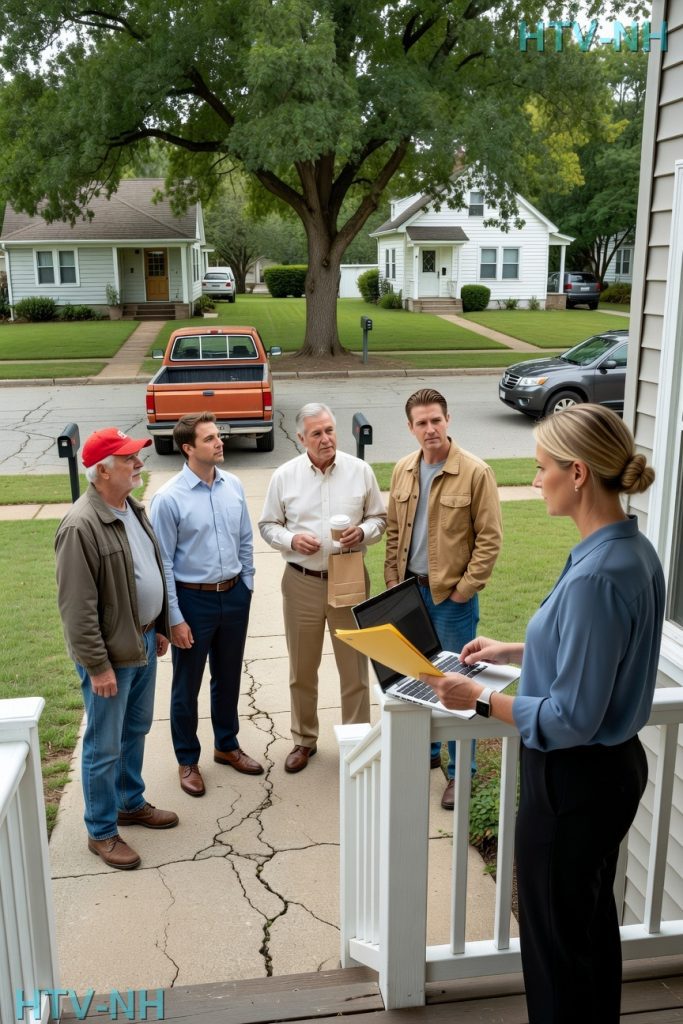
Lucy Stewart was sitting on the porch steps, a laptop glowing on her lap and her legal pad covered in frantic handwriting. Lucy wasn’t a emotional woman, but when she stood up to look at me, her face was completely pale.
She didn’t waste time on small talk. Instead, she slid a thick, white legal envelope across the porch table toward me. My name was written across the front in Benjamin’s unmistakable, sharp cursive.
“What is this?” I asked, my voice cracking for the first time.
“It’s a complete restructuring of his estate,” Lucy explained, her voice dropping to a sharp whisper. “Accounts, property deeds, investments—he signed everything over to you. He’s liquidating his entire life, Michael.”
I stared at the envelope. For two agonizing years, I had prayed for a phone call, a letter, an apology from the son who had locked me away for a family tragedy I had absolutely nothing to do with. I had dreamed of the moment he would realize his mistake. But I never imagined he would send an insurance policy instead of a confession.
“Why now?” I whispered. “Why give me all of this after what he did?”
Lucy looked at Kyle, then back at me, her eyes cutting through me like glass.
“Because I finally managed to dig up the sealed medical files and the unredacted police logs from that night,” Lucy said, opening her laptop completely. “The timeline they used to frame you? It was mathematically impossible. The bruises, the timing of the emergency call, the missing bank statements… Michael, your son didn’t just make a mistake. He knew exactly who was responsible from day one. And it wasn’t you.”
My blood turned to pure ice. The air left my lungs. Before I could even process the depth of the betrayal, the gravel in the driveway crunched.
A sleek black SUV pulled up right behind Kyle’s truck. The driver’s side door clicked open, and Benjamin stepped out, looking exhausted, broken, and terrified.
He didn’t look like the arrogant young man who had pointed a finger at me in a courtroom two years ago. He looked like someone who knew his sins had finally caught up to him. He took one step toward the porch, his eyes locked onto the white envelope in my hands.
“Dad,” he choked out, his voice trembling. “Please… you don’t know the whole story.”
I stood up from the porch chair, the legal paperwork gripping tightly in my fist as two years of pent-up rage and betrayal rushed to the surface…
————————————————————————————————————————
They kept me in Beaumont Federal Correctional Institution for two years for something I never did.
No anger-management class ever touched it. No chaplain ever managed to pray over it hard enough to soften it. No amount of staring at a concrete ceiling in the middle of the night made betrayal feel less personal. A locked cell teaches you many things. It teaches you how loud a building can be when everyone inside it is pretending not to break. It teaches you how slowly time moves when all you can do is measure your life by trays, counts, lights-out, and the sound of steel opening for everybody except you. And if you sit with that kind of time long enough, it also teaches you what remains when everything ornamental has been stripped from a man.
What remained in me was not peace.
The morning of March 14, 2024, began under a flickering fluorescent light that had been threatening to die for three days and somehow kept finding the strength to keep irritating me instead. The correctional officer handling release processing looked like a man who had lost a war with breakfast before sunrise. There was mustard on his collar, a coffee stain on the edge of his clipboard, and the dull, dragging gait of somebody who had made a lifelong commitment to doing every task three minutes slower than necessary.
“Thompson, Michael. Forty-seven. Release date today.”
He never looked up.
“That’s me,” I said. “Unless somebody else wants the privilege.”
Nothing. Not even a twitch around the mouth. Nobody in Beaumont laughed before eight in the morning, and most of them didn’t laugh after that either.
They gave me back my wallet, sixty-three dollars in cash, a gray T-shirt I didn’t recognize, and my wedding ring, which I had no business still wearing except that habit and stubbornness are cousins, and both had kept me alive. I slid the ring back onto my finger without thinking and hated myself for the reflex. My marriage had not survived what happened. That part had burned down early. But the ring had become less about a woman and more about the version of me who had existed before my son stood in a courtroom and buried me alive with a lie.
I left the T-shirt in the bag. A man is allowed a line somewhere.
The gates opened at 7:42 a.m.
I stepped out into the parking lot and stopped there longer than I meant to, my hands at my sides, my lungs filling so hard it almost hurt. Free air does smell different. People who have never lost access to it think that sounds theatrical. Let them. They’re wrong. Free air has movement in it. It has choices. It has gasoline and damp concrete and old fryer grease from somewhere down the road and the sweet, warm edge of a Texas morning before the heat has fully woken up. I stood there and breathed like a man relearning a language.
If I had known what was waiting on the other side of that parking lot, I might have walked slower. I might have savored the last ten seconds of ignorance. Simplicity is expensive, and I had already spent mine.
Kyle Murphy was leaning against his battered Ford F-150, arms crossed, one boot hooked over the other, a Houston Texans cap pulled low over his brow. The truck was the color of old pennies and had the kind of dents that come from honest use rather than neglect. Kyle himself had not changed much since we were young men, except that the gray had come in at his temples and set permanently in the beard he kept trimmed close. Some men get softer as they age. Kyle had become more exact. More distilled. He was still the same man I’d met in 1987 on an electrical job in the Fifth Ward, when we were both broke, sunburned, and one missed paycheck away from disaster. But time had stripped him down to the essentials in the best way. Dependable. Quiet. Immovable when it mattered.
Kyle was the kind of man who showed up.
That sounds simple. It isn’t.
A lot of people love you in theory. They love you from across town. They love you from a safe emotional distance. They love you by saying they hate what happened. Kyle loved people with his truck keys already in his hand.
He pushed off the door when he saw me coming. For a second neither of us spoke. Then he stuck out one arm. We shook hands the way men do when a hug would be too honest if it happened first. Then he pulled me into him anyway and slapped me once on the back, hard enough to say what he wasn’t going to say out loud.
“You look terrible,” he said.
I barked out half a laugh. “I spent two years in federal prison, Kyle.”
“Still.”
He stepped back and looked me over, not theatrically, not sentimentally. Inventory. My face. My shoulders. The weight I had lost. The way I held myself. Whatever he saw, he kept to himself.
“You eat, Mike?”
That almost broke me, and not because of the food.
I need you to understand something about Kyle Murphy. In thirty-seven years of friendship, he had called me Michael exactly twice. Once at my mother’s funeral, when I was standing at the grave trying not to fold in half, and once in 1999 on a job site when he honestly thought I was having a heart attack. Every other day, in every other circumstance, in church, in traffic, on rooftops, in bars, under houses, in waiting rooms, after fights, after weddings, after funerals, I was Mike.
Just Mike.
That name in Kyle’s mouth always meant home.
We got into the truck. He had a Whataburger bag on the back seat and a large black coffee in the cup holder with my name written on it in thick black Sharpie. MIKE. All caps. Handwritten, not printed, like he had taken an extra second to make it look right. Like he’d known I would need proof that somebody still remembered exactly who I was.
I picked up the cup with both hands and stared at it.
Kyle started the engine and pulled out without a word.
That was another thing about him. He never rushed to fill silence just because silence made lesser men nervous. He knew that some moments needed air more than language. So he drove north with one hand resting easy on the wheel, the truck rattling a little at high speed, sports talk radio off for once, and let me sit there with my coffee and my breakfast and the fact of being outside.
I unwrapped the burger and took a bite so hot it burned the roof of my mouth. It tasted like salt, grease, pepper, and mercy.
We were fifteen minutes onto Highway 96 before Kyle said, very carefully, “Benjamin called me yesterday.”
There it was.
My son’s name entered the cab of that truck like a blade sliding under a door. I kept my eyes on the trees going past outside.
“What did he want?”
“He wanted to know if I knew what time you were getting out.”
“You told him?”
“I told him I didn’t know.”
I turned and looked at him. “But you did know.”
He nodded once. “I did.”
There was no pride in it. No performance. Just fact.
I looked back out the passenger-side window. Pine trees, billboards, gas stations, long flat strips of Texas that seemed built from repetition and distance. Two years, and Benjamin still hadn’t found his way back to anything resembling courage. He could not drive two hours to meet the man he had put behind bars. He could send questions through Kyle, though. He could reach carefully into the air around the consequences and see whether it bit him.
“Did he say anything else?” I asked.
Kyle took longer than I liked to answer.
“He’s in trouble.”
That got my attention.
He kept his gaze on the road. “Real trouble. The Midtown office is gone. The development company filed Chapter 7 in November. He lost the River Oaks house in January. Ella left around Christmas, from what I heard. He’s in a rental now. Pearland. Not the good part.”
Good, said a voice in me I did not admire.
I kept my face still.
“What does he want from me?”
Kyle reached into the back seat at a stoplight and dropped a thick manila envelope onto my lap. My name was written across the front in handwriting I recognized before I fully looked at it. Benjamin had broken his right wrist at fourteen and retrained himself left-handed out of pure teenage stubbornness. His cursive had always been deliberate, overcorrected, almost too careful, like he was trying to outwrite himself. That same cramped control stared up at me now.
“He mailed that to my place three weeks ago,” Kyle said. “Asked me to hand it to you on release day.”
“You open it?”
“No.”
I believed him.
I turned the envelope over once, felt the weight of papers inside, and set it on the dashboard. I wasn’t ready to know what shape Benjamin’s desperation had taken. Not with Beaumont still in my lungs.
By the time we reached Houston, the sky had turned the color of polished aluminum and the city had begun to rise out of the distance. I had lived in Houston long enough to love its refusal to flatter itself. It did not charm you by being easy. It charmed you by being enormous, contradictory, humid, sprawling, ugly in one direction and unexpectedly beautiful in the next. You learned it through repetition. Through heat. Through traffic. Through neighborhoods that changed block by block. Through the way a city can become your witness without ever promising to defend you.
Kyle lived in Westbury on Beechnut Street, in a modest ranch house shaded by live oaks old enough to have opinions. The porch paint needed touching up. The mailbox leaned half a degree to the left. There was a potted fern by the front steps that had somehow survived everything Texas weather could throw at it. The house looked exactly the way I needed a house to look that morning—solid, familiar, and unimpressed by anybody’s drama.
Lucy Stewart was waiting on the porch steps with a laptop open on one knee and a yellow legal pad balanced over the other. She stood when I got out of the truck. Lucy was Kyle’s neighbor, a paralegal downtown, and one of the sharpest minds I had ever encountered in any room that did not require a wiring diagram. She was in her early fifties, wore her dark hair cut at the jaw, and had the kind of gaze that made flimsy lies collapse before they finished standing up.
“Michael,” she said.
Then she hugged me.
Not long. Not sloppily. Lucy was not an affectionate woman by instinct. The fact that she made the effort told me more than any speech about what these two years had looked like from the outside.
She stepped back. “Sit down before you open that envelope.”
So I did.
Kyle took the porch rail, leaning one hip against it, while Lucy turned the laptop toward me and tapped the trackpad once.
“Benjamin filed documents with probate court in Harris County four days before your release,” she said. “He also sent you a copy. I know because Kyle showed me the outside of the envelope, and then I pulled the filing.”
I looked at her.
“Michael, your son named you sole beneficiary of his entire estate.”
I didn’t speak.
“Everything still in his control,” she continued. “Business interests, property holdings, investment accounts, liquid assets, whatever remains after the collapse. All of it. Your name.”
The porch was suddenly too warm.
Kyle was watching me the way a man watches a live wire. Carefully. Without assuming distance is enough.
“Two years ago,” I said, “he framed me in court. Now he writes me into his estate.”
Lucy’s face tightened in that small, exact way it did when she was annoyed by the architecture of human behavior.
“Yes.”
I stared at the screen and understood something ugly all at once. Guilt had visited Benjamin. Maybe not often. Maybe not nobly. But it had touched him. He had looked at what he’d done and tried to create some version of repair that would not require confession. He had put my name on paper because paper is easier than truth. Paper does not ask you to stand in front of your father and say I destroyed your life to save my own. Paper does not tremble when it lies.
“What else?” I asked.
Lucy glanced down at her legal pad, then back up.
“I’ve been digging into the miscarriage.”
The air in my chest went thin.
My daughter-in-law—ex-daughter-in-law now, I supposed—had lost a baby in March of 2022. Benjamin told the court I had caused it. Not directly with my hands, but through an alleged confrontation in the home, stress, a fall, the kind of story that grows teeth when grief is available to feed it. There were details. Manufactured ones. Timelines massaged until they sat neatly around my name. It had been just plausible enough, just emotional enough, just ugly enough to stick.
Lucy spoke more quietly now.
“I got access to records from St. Luke’s through a contact. Ella’s OB noted acute stress and physical trauma consistent with a fall. There was also secondhand cocaine exposure in her system.”
Kyle went very still.
I heard myself say, “Mine?”
“No.” Lucy held my gaze. “Not yours. It was never you.”
For a moment I could not feel the porch beneath my feet.
Cocaine.
Secondhand exposure in Ella’s system.
Benjamin’s face flashed across my mind the way I’d seen it the last day in court—controlled, pale, arranged into a mask meant to resemble grief and landing closer to relief. I had replayed that face at two in the morning in Beaumont until it lived under my eyelids. Back then I hadn’t had the final piece. I had only known something in him had settled too fast, too neatly, once I was gone.
Now I knew.
He had not just panicked. He had not just let fear speak for him. He had redirected ruin. He had taken his own guilt and fed it my name.
Kyle swore softly under his breath.
Lucy kept going because that was what competence looked like. “The notes strongly suggest the exposure came from someone in her immediate environment. The hospital record alone wouldn’t retry your case, but it makes one thing absolutely clear. Benjamin knows exactly what happened, and he knew it when you were sentenced.”
I closed my eyes briefly. Not for composure. For containment. Anger is not the dangerous emotion people think it is. Anger burns hot and announces itself. The dangerous ones are colder. The ones that sharpen instead of erupt.
When I opened my eyes, Kyle was staring at the porch boards, jaw tight, turning his Texans cap in his hands.
“Kyle,” I said.
He looked up.
“Say it.”
His throat moved once before the words came. “I sat in that courtroom, Mike. I watched him point at you, and I watched them take you out, and I keep thinking I should’ve dug harder. Should’ve talked to more people. Should’ve pushed where it felt wrong. I knew something was off. I just… I didn’t get there fast enough.”
“You’re here now.”
It wasn’t absolution. It was fact.
He nodded once and put the cap back on.
That was the end of that conversation for the moment, but not because it was settled. Nothing about that morning was settled. The envelope lay on the porch table between us, full of my son’s legal remorse, and I still had not opened it.
I did then.
The papers inside were exactly what Lucy had described. Beneficiary designations. Amendments. Signatures. Asset lists in a structure complicated enough to look responsible and simple enough to reveal panic to anyone with patience. Benjamin had essentially built a paper bridge from his collapsing life to mine and hoped that naming the father he sacrificed would somehow make the strategy resemble redemption.
I almost admired the nerve.
Not the morality. The nerve.
It was close to noon when Lucy’s phone buzzed. She looked at the screen, then at the street. Something in her expression changed.
“Michael,” she said, “please don’t tell me your son is at the end of Beechnut.”
Of course he was.
Benjamin had always had a talent for arriving one half-step too late and expecting the world to pause until he caught up. Even as a boy, he would come flying into rooms after the important thing had already been said and ask questions everybody else had finished having ten minutes earlier. I used to think that was thoughtlessness. Later I realized it was entitlement with good hair.
I stood slowly. The manila envelope stayed on the chair behind me.
Kyle was up immediately. “You want me to—”
“No. Sit.”
He didn’t like it, but he sat.
Lucy closed her laptop.
And then Benjamin got out of his car.
The first thing I noticed was how much smaller he seemed. Not physically smaller in the literal sense, though he had lost weight. Smaller in occupancy. As if he no longer filled his own outline all the way. He stood at the bottom of the porch steps wearing an expensive jacket that had given up on him before he gave up on it, his hair too long over the ears, his face hollowed at the cheeks. He looked like a man who had been living on coffee, adrenaline, and the illusion that one more conversation might save him.
He also looked like my son.
That was the problem.
You can hate what someone did and still recognize the slope of their shoulders from when they were six and asleep in the back seat after Little League. You can want justice and still remember teaching them to ride a bike in a Kroger parking lot off Westheimer while dusk fell and they kept shouting, “Don’t let go yet,” even after your hand was already gone.
He lifted his eyes to mine.
For a moment neither of us spoke.
Two years, three weeks, and four days of imagining this meeting, and silence arrived first.
Then he said, very quietly, “Dad.”
One word.
It had a crack in it. Not theatrical. Not manipulative, at least not intentionally. More like a door that had warped in bad weather and no longer opened the way it used to. And because my body still knew that voice from the inside, something in my chest tightened before I could stop it.
“Benjamin,” I said.
Not Ben.
Not son.
Benjamin.
He heard the difference. I saw him hear it.
“Can I come up?”
“Barely.”
He climbed the steps. Kyle did not look away from him. Lucy did not offer him a smile. The whole porch had become a courtroom with better woodwork.
Benjamin glanced at Lucy, at Kyle, then back at me. “You look good.”
“Don’t do that.”
He swallowed. “I just meant—”
“Benjamin. Don’t.”
He nodded once.
We went inside because a confrontation on a porch becomes theater for the street if you let it, and I had no intention of giving my son the dignity of public spectacle. Kyle’s living room looked exactly like it always had. Mismatched furniture. A television too large for the wall. A Texans throw blanket over the couch arm. The soft smell of old coffee, dish soap, and somebody frying bacon earlier that morning. An ordinary room. Which made what happened in it feel worse.
Benjamin sat on the edge of the couch. I took the wooden chair across from him. Lucy stayed in the armchair near the window with her legal pad. Kyle planted himself in the kitchen doorway and crossed his arms in a position so final it might as well have been nailed there.
“You got my envelope,” Benjamin said.
“I did.”
“Then you know.”
“I know what’s in it.”
He rubbed one hand over his mouth. “Dad, I—”
“Why?”
That stopped him.
I leaned forward just enough to let him understand I was not tired, not uncertain, not available for detours.
“Why name me beneficiary? Why now?”
He stared at the floor a second before answering.
“Because everything started falling apart, and I panicked.”
There it was again. Panicked. A word men use when they want fear to sound like an accident instead of a decision.
“I thought if something happened to me,” he continued, “if the business collapsed completely, if I lost everything, at least you’d have something.”
I let the silence after that sentence sit where it landed. Then I said, “You thought building a consolation prize out of the ruins of a lie was the right thing to do.”
His face flinched like I had hit him. Good.
“I need your help.”
There it was. The true center of the conversation, finally appearing.
“With what?”
He took a breath too shallow to be useful. “There are creditors. Three of them are threatening litigation. If you sign the remaining property holdings back to me, I can leverage them. Negotiate. Restructure. Get ahead of the worst of it.”
I looked at him for a long moment.
Then I said, very quietly, “So on the day I walk out of prison, the prison you put me in, you come here to ask me to sign something.”
“Dad, it isn’t like that.”
“You framed me.”
His mouth closed.
“You stood in a courtroom in Harris County and pointed at me. You let twelve strangers and a judge believe I was responsible for Ella losing that baby. You watched me get cuffed. You watched me disappear. So before you say another word to me about property or leverage or restructuring, I need you to understand that I know exactly what happened.”
The blood drained out of his face so fast it was almost fascinating.
“What do you mean, you know?”
Lucy answered him before I could.
“St. Luke’s records,” she said. “March 2022. Ella’s OB report. Acute physical trauma consistent with a fall. Cocaine exposure from someone in her immediate environment. Information omitted from the court.”
Benjamin stared at her like he had forgotten other adults existed.
Then he looked back at me, and I watched the walls come down inside him one by one.
That was the moment I had imagined in Beaumont. The moment of recognition. Exposure. Collapse. In the cell, whenever I replayed it, I imagined satisfaction arriving with it like a reward. What actually arrived was heavier than that. Sadder. Triumph is a bright emotion. This was darker. More exhausted. There is nothing clean about watching your child become undeniable to himself.
“Dad,” he said, and his voice broke on the word. “Ella and I were in a bad place. I was using. I wasn’t thinking straight. I didn’t mean for any of it to happen.”
“And when it did,” I said, “you put it on me.”
“I was scared.”
“So was I.”
My voice did not rise. That seemed to hurt him more.
“I was scared in holding. I was scared in transport. I was scared every day inside Beaumont when the lights went down and I had to sleep in a room full of strangers with my name rotting in public. Fear didn’t make me hand your life to somebody else, Benjamin.”
He looked down. His hands were shaking now, though he kept trying to hide it by pressing them against his knees.
Kyle made a small sound in the kitchen doorway, something between disgust and pity. I did not look at him. Looking at Kyle in that moment would have softened me, and softness was not yet earned.
“I’m not signing anything today,” I said.
Benjamin looked up.
“I’m not saying never,” I continued. “I’m saying not today. Not like this. You are going to leave your current contact information with Lucy. You are going to go back to Pearland, or wherever you’re sleeping, and you are going to wait.”
“For what?”
“For me to decide what I want to do with everything you handed me.”
I stood, walked to the front door, and opened it.
“You gave me your estate. You gave me the evidence. You gave me all the cards. The least you can do is give me a few days to learn how I want to play them.”
Up close he looked worse. Older. Not in years, in erosion. There are faces on which stress merely lands. On his, it had taken up residence.
“Dad,” he said quietly, standing at the threshold. “I’m sorry.”
I believed him.
That was part of the tragedy.
I believed he was sorry. I also believed he had only become sorry once the collapsing structure of his own life forced him to stand inside what he’d built. Remorse that arrives after bankruptcy is still remorse, but it does not travel alone.
“I know you are,” I said.
I did not say it was okay.
I did not say I forgave him.
He walked out. Down the steps. Back to the car that had replaced the Range Rover. Back to the version of his life that still expected solutions to appear if he wanted them badly enough.
I watched until the car turned off Beechnut.
Kyle handed me a fresh coffee and said nothing.
I stood there on the porch holding the cup and looking at the street while Texas light shifted through the trees, and all I knew for certain was this: Benjamin Thompson was going to need something from me again. And for the first time in over two years, I was not the one trapped in the waiting.
People imagine revenge as a speech.
They imagine the righteous monologue, the shaking finger, the villain finally hearing every truth you’ve been storing in your chest and crumbling under the weight of it. That can happen, I suppose. But it has never been my style. I came up working electrical. The most important things I ever fixed happened behind walls where nobody saw my hands. You do not announce a rewiring. You cut the current, you reroute what matters, and you let the switch tell the story later.
The next morning Lucy was back on Kyle’s porch before seven with her laptop open, two uncapped highlighters beside it like surgical tools. Kyle was in the kitchen making bacon and eggs, and the smell of them drifting through the screen door hit me with a force that still surprised me. Prison taught me hunger in repetitive ways. Freedom gave it personality again.
Lucy did not waste time.
“I dug deeper into the creditors.”
I sat across from her with my coffee and waited.
“Three are threatening litigation,” she said. “One matters more than the others. Douglas Hail. Commercial real estate investor out of The Woodlands. Benjamin borrowed four hundred thousand dollars from him in 2022 under a private agreement with a personal guarantee. The note is fourteen months past due.”
“How bad?”
“Hail filed civil suit last month. Hearing in eleven days. If he wins—and he will—any asset Benjamin controls or has claim to becomes vulnerable. Including anything you sign back over.”
I leaned back in the porch chair and let that settle.
“So the estate transfer wasn’t an apology.”
“No,” Lucy said. “It was camouflage. He was trying to move what remained of his assets out of reach by putting them in your name, then get you to sign them back after the threat passed.”
I laughed once.
It came out without humor. “My son came to me on release day to use me as a legal hiding place.”
“Yes.”
There was nothing to add to that. Lucy had always understood that the cleanest summary was usually the cruelest.
She flipped a page.
“After the business collapse and losing the River Oaks house, there’s really only one meaningful asset left. A mixed-use property on Westheimer. Ground-floor retail, residential units above, decent equity even with the mortgage. Roughly two hundred eighty thousand.”
My mind went there at once. Westheimer. Mixed-use. Old Houston bones. I knew the type of building. The wiring. The maintenance. The cash flow. The patience required to keep a structure standing when the men who own it mistake leverage for competency.
“As sole beneficiary,” Lucy said, “you can petition for early transfer of that property due to Benjamin’s instability and the pending litigation. If we file today, there’s a decent chance the deed records before Hail gets judgment.”
Kyle appeared in the doorway with a spatula in one hand.
“That legal for real?” he asked.
Lucy looked at him over the top of her laptop. “It is if drafted correctly.”
He nodded like that was all he needed.
She slid the petition toward me.
I read every line.
That is another thing prison returns to you if you let it: patience with paperwork. Not trust. Never trust. But patience. I read the petition twice, thought about Benjamin saying Dad on the porch, thought about him at eight years old begging me not to let go of the bike seat, thought about his face in court, thought about the secondhand cocaine in Ella’s medical file, thought about the range of human beings that can exist inside one person and how little any of that changes the bill when it comes due.
Then I signed.
Methodical. Clean. No speech.
Lucy filed it downtown at 9:47 a.m.
Kyle drove us. I watched Houston move by the window as though reacquainting myself with an old friend I was not yet ready to call one. Strip malls and church signs and overpasses. Warehouse districts giving way to office glass. The city looked exactly the same as it had before my sentencing, which felt obscene at first. How dare it continue? Then I remembered that cities continuing is one of the only honest things about them. They do not pause for private catastrophe. That is what makes them useful.
“How do you feel?” Kyle asked as we got back on the freeway.
“Hungry.”
He laughed, short and real. “You keep saying that.”
“I keep meaning it.”
The next nine days were quiet, and that may have been the most difficult part. Everybody loves the confrontation scene. Nobody romanticizes the maintenance that follows it. Cold revenge, if that is what you want to call it, is administrative. It is filing deadlines and waiting periods and not answering questions too soon. It is sleeping badly while appearing calm. It is making coffee while legal machinery turns invisibly somewhere else.
I stayed with Kyle.
I helped him repair a broken fence panel in the backyard on the second day because I needed to use my hands for something other than opening and closing around anger. The cedar boards were warped near the bottom, the posts a little loose in the soil after winter rain. We measured, cut, re-leveled, drilled, reset. The work was ordinary enough to be medicinal. Kyle understood that without needing it explained. He handed me tools when I needed them and kept his opinions mostly to himself.
On the fourth day, I called an old contact in the Galleria area about consulting work for an electrical contractor who specialized in commercial retrofits. He remembered me immediately. Reputation, once earned honestly, has a way of waiting for you longer than people do. By the end of the call I had the outline of short-term work and the first faint sensation that my name might still belong to me professionally, even if the courts had borrowed it for a while.
On the sixth day, I drove to the barber shop on Bissonnet where I’d been getting my hair cut since 2003. The barber was still there. He looked at me in the mirror, looked again, and said, “Been a minute, Mike.” That was all. No questions. No pity. Just the respectful acknowledgment of a man returning to his own reflection. When he turned me back toward the mirror at the end, I saw someone older than the man who had gone into Beaumont, and harder, yes, but also more legible. As if prison had burned off every version of me that had been trying to keep everyone comfortable.
Benjamin called Lucy twice during that stretch.
She answered both times because she was a professional and because ignoring a desperate man too early can make him inventive. She told him the paperwork was being processed and that Michael Thompson would be in touch when he was ready. She did not specify which paperwork. Benjamin, like many men who mistake intelligence for invulnerability, filled silence with whatever story served him best.
On the morning of March 24, Lucy called just after eight.
“It’s done,” she said. “Transfer confirmed. Deed recorded this morning. The Westheimer property is yours.”
I was standing in Kyle’s backyard with coffee in my hand, looking at a cardinal perched on the fence we had fixed. It did not appear to be accomplishing anything except being red and alive in the clean morning light, which felt, for some reason, like enough.
I thanked her and hung up.
Kyle came out carrying a plate with toast on it. “That the call?”
“Yep.”
He leaned against the door frame. “How’s it feel?”
I looked at the bird, at the fence, at the steam off the coffee cup.
“Like a switch just got flipped somewhere I can’t hear yet.”
He took that in and nodded.
“The hearing’s tomorrow, right?”
“Yep.”
“You going?”
I thought about sitting in another courtroom in Harris County. Thought about wood benches. Fluorescent lights. Lawyers whose cufflinks cost more than good men’s rent. Thought about watching another public structure rearrange my son’s future while pretending procedure and morality were cousins.
“No,” I said. “I don’t need to be there.”
And I didn’t.
Lucy had a contact present and fed me the outcome in careful pieces later that afternoon. Benjamin arrived with a lawyer he clearly could not afford to keep for long and a strategy built almost entirely around the equity in the Westheimer property. The lawyer presented it as leverage in proposed settlement talks. Opposing counsel requested verification of current deed records. The court clerk pulled them. The property belonged to Michael Raymond Thompson, effective March 24, 2024.
Benjamin, according to Lucy’s contact, went completely still.
There is a kind of stillness that signals composure. This was not that. This was the stillness of a man whose last available story has just been taken away from him in public.
His lawyer asked for a recess. It was granted. During that recess Benjamin called me four times.
I was at a diner on Kirby Drive eating eggs over medium, hash browns, and toast with too much butter, reading an actual newspaper because prison had restored my appreciation for tactile things that arrive without asking anything of you. I watched his name light up my phone screen four separate times and let it ring until it stopped.
Not out of cruelty.
I want to be clear about that, even now. There is a version of this story in which I enjoyed those calls. In which I sat there smiling over coffee while my son learned helplessness. That is not what happened. The feeling was quieter than satisfaction. More settled. A man does not always refuse the phone because he is savoring pain. Sometimes he refuses because the work is already done, and conversation at that point would only be vanity in a nicer shirt.
Without the Westheimer equity, Benjamin had nothing persuasive to offer Hail. Judgment entered in full. Every meaningful asset still in Benjamin’s personal control became vulnerable to seizure.
Three days later I drove to the property myself.
It sat on Westheimer like many Houston buildings do—more useful than pretty, brick-faced, slightly weathered, standing in a line of structures that had survived several economic theories and were still there out of sheer practical stubbornness. Two retail units at street level. One vacant. One occupied by a dry cleaner who had no idea his landlord had changed. Four residential units above. Exterior drainage issues. Masonry needing attention. A roofline that would require inspection before summer turned honest. I parked across the street, got out, and stood with my hands in my jacket pockets looking at it like a man studying a future he had not expected to inherit from betrayal.
Good bones.
That is what I thought first.
People say that about buildings and relationships as though it excuses the amount of work required to make either one livable. It doesn’t. Good bones simply mean the damage is not terminal.
I did not go inside that day. I just stood there and let my eyes track the lines of the place. Windows. Brick. Downspouts. Meter boxes. Access points. Ownership expresses itself differently when you’ve built things with your hands. It is never purely abstract. Even a deed becomes physical in the mind. Weight-bearing walls. Faulty circuits. Deferred maintenance. Hidden rot. Places where water gets in.
From there I drove back toward Westbury in a 2019 Chevy I had bought two days earlier with the first consulting payment and the first decent breath of optimism I’d trusted in years. On the passenger seat lay a single envelope. Inside it was not a legal threat or a demand or the kind of triumph men fantasize about sending when they imagine justice. It was a letter Lucy had typed at my request and I had signed beneath.
Two paragraphs.
The first said I had no intention of using St. Luke’s records against Benjamin publicly. Those documents, I wrote, belonged to whatever remained of his conscience. I was not interested in destroying a man who had already burned most of himself down without my assistance.
The second said the Westheimer property was mine and would remain mine. If Benjamin ever wanted a real conversation—one without legal maneuvering, hidden agendas, or papers requiring signatures—he knew where to find Kyle Murphy’s house on Beechnut Street.
That was not forgiveness.
It was not even mercy in the sentimental sense.
It was simply a door left unlatched because I was fifty-seven years old and tired of sealed rooms. There comes an age at which absolute closure begins to resemble pride wearing mourning clothes. I was not interested in being that man either.
Kyle dropped the letter at Benjamin’s Pearland rental that evening.
He did not stay to see whether anyone was home.
That night, after dinner, Kyle and I sat in his backyard under the porch light with two beers and the kind of silence only old friends can share without translating. Somewhere down the block a dog barked twice and gave up. Traffic on the feeder road hummed like distant machinery. The spring air had started to thicken with the promise of heat.
After a long while, Kyle said, “You still love him.”
I looked out at the dark yard. “Love doesn’t disappear just because somebody earned consequences.”
He nodded slowly. “That make it harder?”
“Yes.”
Another pause.
“You think he’ll come?”
“To Beechnut?”
“Yeah.”
I took a drink.
“Yes,” I said. “Not right away. Not while he still thinks there’s some move left. But eventually? Yeah. Men like Benjamin only start telling the truth once they run out of usable lies.”
Kyle made a sound that might have been agreement.
Then he said, “You know what bothered me most about seeing him the other day?”
“What?”
“He looked like you around the eyes.”
That hit harder than I expected.
There are inheritances no legal document can intercept. A look. A habit of standing. A way of going quiet before saying something you know will matter. I had spent two years fantasizing about Benjamin as a stranger, a betrayer, an adversary. It was easier that way. Easier than admitting that he was also the boy who had my mother’s hands and my father’s appetite for work and, apparently, my eyes when life got mean enough.
“I know,” I said.
We finished the beers in silence.
The first week of April brought work.
The contractor in the Galleria called me in on a mid-rise renovation that had been bleeding money because somebody with a degree and a polished smile had mistaken code for a suggestion. I spent three days walking mechanical rooms, reading prior work, finding shortcuts buried inside walls, and explaining to younger men why a clean job always looks boring to people who don’t understand what danger used to be there. It felt good. Not emotionally. Structurally. It felt good to know something well enough that truth revealed itself quickly under my hands.
That same week I met with a property manager Lucy recommended for Westheimer. I listened more than I spoke, asked questions about occupancy, delinquency, vendor relationships, maintenance backlog, and municipal compliance. By the end of the meeting she realized I was not inheriting this building to liquidate it and vanish. I was learning it. That changed her tone immediately. People can hear commitment in your questions if they know what to listen for.
I also drove to Pearland once.
I did not stop.
I just drove past the subdivision where Benjamin was renting a beige stucco house on a street with too many identical mailboxes and not enough shade. I saw his car in the driveway. I saw a stack of flattened boxes by the garage. I saw a child’s bicycle in the yard next door and had to grip the steering wheel harder than necessary. For a split second I imagined the life he might have had if truth had entered his bones earlier. Wife. Baby. House. Arguments about grocery lists and mortgage rates and school districts. Ordinary burdens. The kind that feel insulting while you’re living them and sacred when they’re gone.
Then I kept driving.
You do not heal by parking outside the ruins and asking them to explain themselves.
Benjamin did not come to Beechnut that month.
He texted Lucy twice. Short, clipped messages asking if I had read the letter he assumed must exist, then later asking if I would meet privately. Lucy answered the first with one sentence and ignored the second at my instruction. If he wanted to speak, he knew where to do it. No secret venues. No neutral conference rooms. No emotionally hygienic locations chosen to reduce consequence. Beechnut or nothing.
Meanwhile, life did the stubborn thing it does.
I started waking before dawn because prison had trained my body to distrust sleeping late. At first I hated it. Then I let it become useful. I’d sit on Kyle’s porch with coffee, legal pad in hand, and make lists. Electrical bids. Property repairs. Calls to return. Questions for Lucy. Tools I needed to replace. Things I had learned about myself in Beaumont that I did not want to forget just because freedom offers better distractions. One of those things was this: resentment multiplies in idleness. Give it empty hours and it will start furnishing the place.
So I kept moving.
Some afternoons I helped Kyle in his garage reorganize thirty years of bolts, extension cords, paint cans, and obscure hardware he swore he would one day need. Other afternoons I walked Westheimer with a contractor and talked drains, flashing, HVAC service, and brick repointing. Lucy filed what needed filing. The property manager handled notices, renewals, and banking. Bit by bit, a life that had been reduced to cinderblock and routine began reassembling itself around function rather than injury.
And underneath it all ran the quieter current: Benjamin.
I thought about him in flashes rather than monologues. His face at the door. His hand shaking on his knee. The way he said Dad. The way he had once held the back of my shirt when thunderstorms scared him as a boy. The fact that none of those memories canceled the man he became, and none of his choices erased the child he had been. People who have never had to survive loving someone who betrayed them speak as if clarity and affection cannot coexist. They can. It just hurts more.
In late April, a Saturday rain blew through Houston hard enough to turn the streets silver. Kyle was inside watching a ballgame with the volume low when there was a knock at the door.
I knew who it was before he stood up.
Kyle looked at me. I looked at him. Then I said, “Open it.”
Benjamin stood there damp at the shoulders, no umbrella, hair darkened by rain, wearing a plain navy button-down that had seen better ironing. He looked tired in a more settled way than before. Less panicked. More stripped.
Kyle stepped aside without speaking.
Benjamin entered and stopped in the living room like a man aware he had crossed into a room where old versions of himself no longer had access.
Lucy was not there. It was just the three of us.
I set my coffee down and remained seated.
“You came,” I said.
He nodded.
“For what kind of conversation?”
“The one in the letter.”
There was a seriousness in him I had not heard on the porch weeks earlier. Desperation had edges. This was different. This was what remained after the edges had cut him enough times.
Kyle went to the kitchen and stayed there, present without intruding.
Benjamin sat when I told him to. He did not begin with apologies this time. That may have been the first wise thing he did all year.
Instead he said, “I sold my watch to pay half my lawyer bill.”
I looked at him.
“I’m not telling you that for pity,” he said quickly. “I’m telling you because I don’t know how to talk to you anymore unless I stop trying to manage how this sounds.”
That was new too.
So I let him continue.
“Hail took everything he could. The remaining investors are circling. The company is dead. Ella won’t answer me. I go to sleep every night hearing that courtroom in my head and then I wake up and hear your voice in this house saying you knew everything. I haven’t had one quiet day since you walked out.”
“Good,” I said before I could decide whether I should.
He closed his eyes briefly. “Yeah. I figured.”
Rain ticked against the windows. Somewhere in the kitchen Kyle opened a cabinet, then another, giving us just enough household noise to keep the room from becoming theatrical.
Benjamin leaned forward, elbows on his knees.
“I’m not here about the property.”
“Then why are you here?”
He swallowed. “Because I told myself for two years that if I just fixed enough of the outside, I could eventually make what I did sound complicated instead of evil. Business pressure. Ella and I were falling apart. I was using more than anybody knew. I thought if I admitted one thing, everything would come down. So I picked the worst possible person to stand under it and called it survival.”
He looked at me then. Directly. No lawyer language. No hedge.
“It was me. The drugs were mine. The lies were mine. The courtroom was mine. I watched them take you because I was more afraid of losing my life than I was ashamed of destroying yours.”
A strange calm moved through me.
I had waited so long to hear something like that that I had imagined it would detonate when it arrived. Instead it landed heavily, like furniture being set down in the right room after a long move. Not relief. Not healing. Just weight finally placed where it belonged.
“Why now?” I asked.
“Because there’s nothing left to protect.”
That was honest, and honesty does not become less honest just because it comes late.
“You should have said that in court.”
“I know.”
“You should have said it before the cuffs.”
“I know.”
“You should have said it when the first lie left your mouth.”
“I know.”
Each answer came smaller. Quieter. True.
I sat back.
For a long moment I let myself look at him without needing to decide what to do. That may sound minor. It wasn’t. For months every look I gave my son had been functional—assess, defend, calculate, contain. This one was harder because it was human. He looked terrible. Not ruined in the melodramatic sense. Merely reduced to the size of his actual choices.
“When you were ten,” I said, “you broke the neighbor’s side mirror with a baseball.”
His brow furrowed. He hadn’t expected memory.
“You came inside crying before the man even knocked on our door. You thought I was going to skin you alive. You remember what I told you?”
He nodded faintly. “That being scared after you tell the truth is survivable. Being scared while you keep lying turns you into somebody weak.”
“That’s right.”
Rain hit harder for a moment, then softened again.
“You knew that at ten,” I said. “So I need you to understand that what hurts isn’t just what you did. It’s that somewhere between that boy and this man, you became willing to forget every decent thing I ever taught you if it kept your hands clean for five more minutes.”
His eyes filled then, and because he was my son, because my body still responded to him in old ways even after everything, I had to look away for a second so I would not soften too fast.
“I know,” he said.
Kyle set a glass of water on the coffee table and retreated again without comment.
Benjamin picked it up but didn’t drink.
“What happens now?” he asked.
The question hung there.
I could have made a performance of the answer. Could have given him something cold and memorable and cinematic. Instead I told the truth because somebody had to.
“Now,” I said, “you keep living in the life you made. You pay what you can pay. You lose what you lose. You stay sober if you’re serious, and if you’re not, don’t come back here. You tell Ella the truth if she’ll hear it. You do not ask me for money. You do not ask me for the property. You do not bring me documents. And if you want any chance at all of having a father in your life again, you understand that forgiveness is not a door you knock on once. It’s a house you build from the ground up while nobody promises to move in.”
He took that in like a blow he had expected and still not prepared for.
“I can do that,” he said.
“You can try.”
He nodded.
Then, after a long pause: “Are you ever going to forgive me?”
There are questions men ask as bargaining attempts, and there are questions they ask because they finally realize they do not control the answer. This was the second kind.
“Yes,” I said.
His head lifted, startled.
“Maybe,” I corrected. “One day. But if I do, it won’t be because you asked at the right moment. It’ll be because enough truth showed up over enough time that I no longer had to choose between loving you and respecting myself.”
His mouth trembled once. He nodded again.
When he left that night, the rain had stopped. The street outside shone under the porch light, wet and quiet. He stood on the top step for a second like he wanted to say something else. Then he didn’t. That was wise too.
Kyle closed the door after him and looked at me.
“How you feel?”
I thought about it.
“Tired,” I said. “But less divided.”
He accepted that answer the way he accepted most things—with a nod and no unnecessary embroidery.
By June, the Westheimer building had new gutters, corrected drainage, one refreshed lease, and a repaired electrical issue on the second floor that had probably been a fire waiting for a dumb tenant and one hot summer afternoon. The work in the Galleria turned into more work. I rented a small apartment of my own not far from Meyerland, close enough to Beechnut to feel anchored and far enough to remember that a man my age ought to live by his own kitchen rules again.
Benjamin came by once a month after that.
Always Sunday afternoons. Always empty-handed unless you counted sobriety chips in his pocket, which I did not because early sobriety is better treated like wet concrete—real, but not ready for weight. He had started meetings. He was working with a sponsor. He had taken a job well beneath his former self-image at a commercial supply warehouse because it paid cash flow and required clocking in on time. The first time he told me that, some ugly part of me felt satisfaction. The healthier part recognized the job for what it was: honest.
We did not become close quickly. That would have been obscene. Some visits were stiff. Some stayed mostly with Kyle and me talking football while Benjamin listened and tried not to look grateful merely to be in the room. Once he offered an opinion on a bad call by the Texans and Kyle looked at him for three full seconds before answering, which was as close to public mercy as I’d seen from Kyle since this started.
Ella eventually agreed to meet Benjamin in a therapist’s office, according to him. I asked for no details. The dead deserve privacy even when the baby had only been here for weeks and possibility. Grief does not become less real because it lacked a birthday.
That summer, on a dry, punishingly bright afternoon, Benjamin came with me to Westheimer for the first time.
I had not planned it. We were on Beechnut, Kyle was changing the battery in a smoke detector, and Benjamin asked what I was doing later. I heard myself say, “Property walk,” and then, after a second, “You can come if you want.”
He looked surprised enough that I almost withdrew the offer just to restore order. Instead I let it stand.
We drove over in the Chevy with the air conditioning doing its best against Houston heat. Benjamin spent half the trip looking out the window like a boy on the way to a principal’s office.
At the building I handed him a clipboard.
“What am I doing with this?”
“Learning how expensive neglect is.”
We walked the exterior first. Brick. Flashing. Drainage slopes. HVAC condensate lines. Meter labeling. I pointed things out and made him write them down. Not because I needed help. Because some lessons are better absorbed while standing in front of an actual wall.
Inside the vacant retail unit I showed him where previous tenants had overloaded circuits for years, where shortcuts had been hidden behind drywall, where repairs done cheaply eventually produce invoices with anger attached. He listened carefully. Asked decent questions. Sweated through the back of his shirt.
At one point he stood in the middle of the unit and said, “I never actually understood what you did.”
I kept my eyes on the panel box.
“No,” I said. “You didn’t.”
It wasn’t an accusation. Just another fact arriving late.
We finished the walk in silence.
Back outside, he handed me the clipboard. “I’m sorry I thought money made me smarter than the people who built the things I used.”
That one startled me.
I looked at him. He was serious.
“Hold on to that thought,” I said. “It’ll save you from becoming embarrassing again.”
He laughed once, unexpectedly, and for the briefest second I heard the boy inside it.
Healing is not cinematic.
It does not march in wearing orchestral music and close all the windows in one scene. It arrives in fragments so small you can miss them if you are loyal to your damage. A man tells the truth without prompting. A father makes coffee for two instead of one. An old friend stops standing in the doorway during visits and starts sitting back down. You share a drive without feeling like every silence is a referendum. None of those fragments erases the original wound. They simply teach the wound that it no longer has exclusive tenancy.
By the first cool front in October, the Westheimer property was cash-flow positive enough to stop feeling like an artifact of revenge and start feeling like what it really was: an accidental second life. I had work that used my hands, an address with my name on the lease, and the quiet satisfaction of walking into rooms that no longer needed me to explain where I had been before they let me belong there.
Benjamin was still rebuilding. That would take years, and some of it would never return. Trust rarely grows back in the exact shape it was planted. But he kept showing up. Sober. On time. Without paperwork. Without angles.
One evening, after he left, Kyle sat on my couch in the apartment and looked around at the place—modest furniture, decent lamp light, takeout menus stacked near the fridge, work boots by the door, plans for Westheimer spread on the table.
“You all right now?” he asked.
I thought about Beaumont. About the first morning out. About the envelope, the courtroom, the deed transfer, the diner phone calls, the cardinal on the fence, the letter to Pearland, the rain on Beechnut, the property walk, the thousand ordinary decisions that had quietly replaced the fantasy of revenge with something sturdier.
Then I said the truest thing I knew.
“I’m not where he left me.”
Kyle smiled at that. Not wide. Just enough.
“No,” he said. “You sure as hell aren’t.”
Later, after he went home, I stood at my apartment window looking out over the parking lot while traffic moved beyond the trees. Houston made its usual noise. Somebody’s muffler. A siren somewhere farther off. A television through a wall. Life continuing in every direction at once.
There are stories where the day a man walks free ruins the person who betrayed him.
This is not exactly one of those stories.
The day I walked free did ruin something. It ruined the last usable lie my son had. It ruined the structure he built to protect himself. It ruined the illusion that betrayal can stay profitable forever. But it did something else too, something I had not known to want while I was still inside Beaumont counting my hurt by the hour.
It gave me back the slower, harder thing.
Not innocence. Not peace. Not the old version of fatherhood I had once worn without thinking.
It gave me back authorship.
Benjamin put me in a cage for what he did. He handed me his estate because he thought guilt on paper could outmaneuver judgment in the flesh. In the end I kept the property, kept my name, kept the truth, and left one door open on Beechnut Street for the man he might still become if he proves, over time, that he wants to deserve it.
Some mornings I still wake before dawn and for one confused second expect concrete, count time, steel, the particular dead hum of prison air. Then I hear my own refrigerator running in the next room, or a truck backing up in the alley, or rain beginning on my own window, and I remember.
I am not there.
I am in Houston.
I am still Mike.
And I am still standing.