
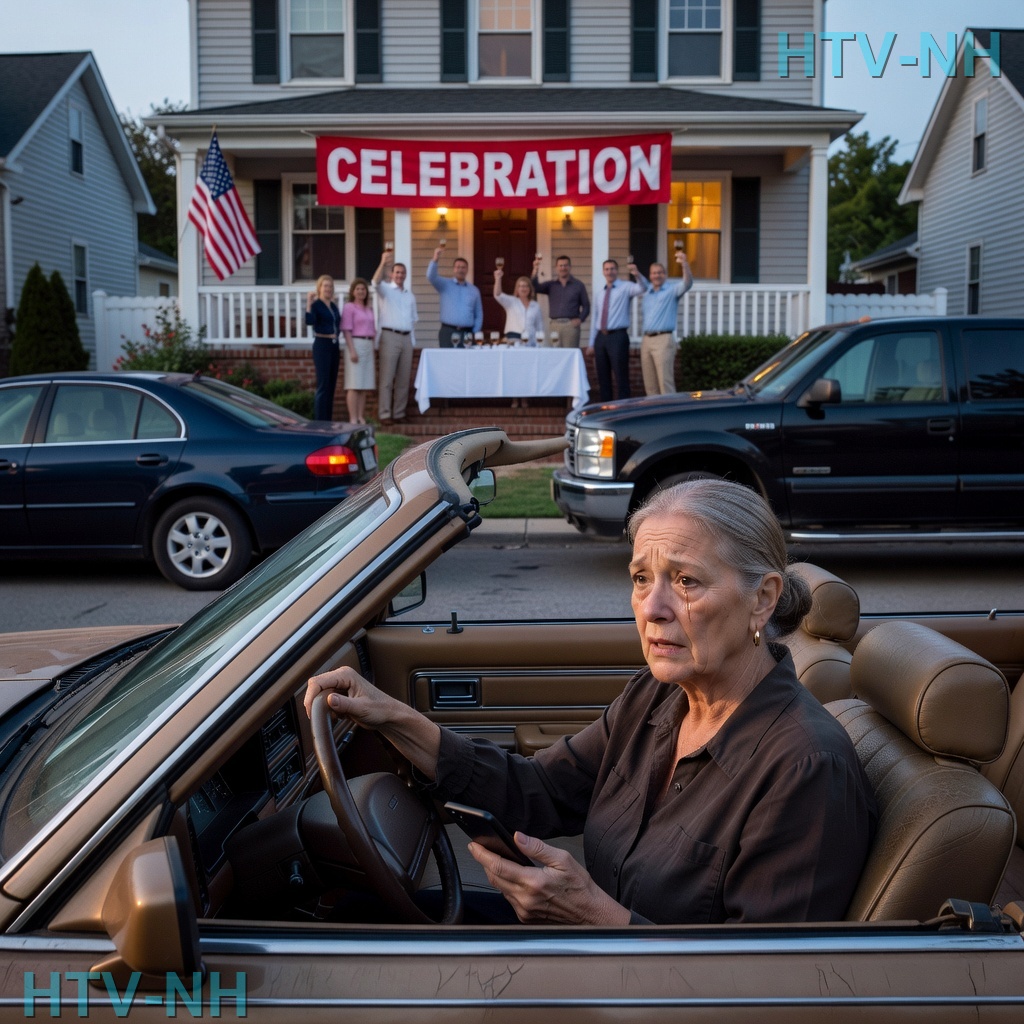
For two long years, I lived in the cramped guest room of my son’s suburban home in Springfield, Missouri. Every single month, the routine was the same: my Social Security check would arrive, and my daughter-in-law would practically snatch it out of my hands before I could even blink. She treated my tiny retirement money like a mandatory tax for the “privilege” of breathing her air. I swallowed my pride, kept the peace, and helped raise my grandchildren.
But on a freezing Saturday morning, with the kitchen windows completely fogged over by the bitter winter cold, the fragile peace shattered forever.
The night before, the multi-state lottery numbers had been drawn. And the ticket I bought every single Friday at the local corner store? It didn’t just win a minor prize. It hit the massive $48 million jackpot.
The moment the news registered in the house, my daughter-in-law didn’t offer a hug. She didn’t shed tears of joy for our family’s newfound fortune. Instead, a terrifyingly greedy look took over her face. She turned to me, her voice dripping with venom, and shouted in front of the entire family:
“Stop eating for free in my house! We don’t need your pathetic Social Security money anymore. You can move out of the guest room today!”
She honestly believed that since the family was about to be fabulously wealthy, they could finally discard the “old woman” like yesterday’s trash. She thought the money belonged to them.
The Silence That Chilled The Room
My son stood in the corner, staring at the floor, too cowardly to look me in the eye or defend his own mother. They expected me to break down. They expected me to cry, to beg for a place to stay, or to argue about how much I had sacrificed for them over the last two years.
Instead, the entire kitchen went dead silent.
I didn’t shed a single tear. I didn’t raise my voice. I quietly set my coffee cup down, stood up from the table, and tightened my grip on my faded, worn-out wallet. I looked directly into my daughter-in-law’s smug, expectant face, smiled the calmest smile of my life, and delivered one single sentence.
The Ultimate Reality Check
When those words left my mouth, the color completely drained from her face. My son’s jaw dropped so low I thought it would hit the linoleum floor.
They had spent two years treating me like a financial burden, and they were so blinded by the sight of $48 million that they forgot the most basic rule of law and ownership. As I walked out of the kitchen and toward the front door, leaving them standing in the freezing cold of their own greed, they finally realized the catastrophic mistake they had just made.
The jackpot changed my life, but the way I chose to handle my son and daughter-in-law changed theirs in a way they will never recover from.
————————————————————————————————————————
“Stop eating for free in my house.”
Melissa said it with her hand still around the matte-black salt grinder she had bought because the glass shaker I’d used for twenty years “didn’t match the kitchen.” She didn’t even raise her voice that much. She didn’t have to. The words landed harder than the icy porch step that had sent me down last January and bruised my hip for two weeks. Daniel stared at the table like the grain in the wood might open up and rescue him. Lily froze with her fork halfway to her mouth. Mason stopped kicking his socked feet under the chair.
I set my own fork down beside a bowl of quinoa and chicken that tasted mostly like warm air. The overhead light hummed. The dishwasher swished. Somewhere in the den, a cartoon crowd laughed at a joke no one in my dining room heard.
Then I smiled.
Not because anything about that moment was funny. I smiled because something inside me finally quit pretending not to understand what had been happening in my own home for almost a year.
I rose slowly, because seventy-six makes you respect your knees whether you are angry or not. I leaned down and kissed Lily on the crown of her head, then Mason on the forehead. “Finish your dinner, peanut,” I told them, as calmly as if nothing had happened.
Then I walked to the built-in hutch, opened the narrow drawer where I had placed a thick yellow envelope three nights earlier, and brought it back to the table.
Melissa looked at it, then at me. “What is this?”
“If this is your house,” I said, sliding the envelope onto the placemat in front of her, “you ought to know exactly what comes with it.”
She gave a little laugh at first, the kind people use when they expect a bluff to collapse in their hands. Then she pulled out the first page. I watched the color leave her face before Daniel had even finished reading over her shoulder.
Certified copy of deed. County tax record. Letterhead from Rachel Kim, attorney at law.
Property review at residence, 9:00 a.m. the following morning.
Formal notice enclosed.
Melissa’s fingers began to shake.
That was the moment the room stopped belonging to them.
My name is Brian Carter. I was seventy-six then, a widower, a retired electrician, and a man who had spent forty-eight years believing that if you kept your word, paid your bills, and loved your family hard enough, the center of your life would hold.
I had been wrong about that last part.
The house sat on a quiet street in Grove City, just south of Columbus, in a neighborhood built back when people still planted maples out front and waved when they backed out of their driveways. Three bedrooms, one and a half baths, brick ranch, finished basement I had done myself on weekends, copper lines I had soldered with my own hands, an addition off the kitchen Eleanor and I saved six years to afford. It was not fancy. It was ours. That mattered more.
Every corner of that house still carried my wife.
Eleanor laughed with her whole body. When something struck her funny, she bent forward, slapped the counter, and forgot what she was doing for a full half minute. Once, in 1998, she laughed so hard at something I said about Daniel’s prom tux that she nearly burned an entire meatloaf black. The scorch mark on the old roasting pan was still under the sink if you knew where to look. She drank Earl Grey every morning by the front window, no matter the season. She folded fitted sheets better than any human being had a right to. And the night before cancer took the last steady piece of her, she lay in our bed, squeezed my hand, and whispered, “Don’t let loneliness make you give away things you can’t get back.”
At the time, I thought she meant grief.
Turns out she meant more than that.
Eleanor had rules about paperwork. “Feelings get noisy,” she used to say. “Paper stays put.” The mortgage release, the deed, the insurance records, the receipts from every big repair we ever made, all of it went into a thick yellow envelope that lived in the fireproof box on the basement shelf behind my old wire spools and extension cords. Thirty years earlier, the day we paid the house off, she had tucked a little note into that same envelope in blue ink: Paid in full, Bri. No bank, no landlord, no one gets to decide for us again.
I had not looked at that note in years.
By the time I handed Melissa that envelope across my own dinner table, I knew those words by heart.
When Daniel called to ask if he and Melissa could stay “for a little while,” I did not hesitate long enough to call it thinking.
His landlord had sold the duplex in Galloway. Daniel’s company had just cut half its logistics team, and though he still had some contract work on his laptop, it was not steady. Melissa had been doing part-time home staging and social media work for a real estate office, which sounded to me like the modern world had found a way to turn arranging throw pillows into a career, but I kept that thought to myself. They had two children, money was tight, and the market was ugly. Rates were up. Rents were worse. Daniel sounded tired in that way grown men do when they are trying not to let their father hear panic in their voice.
“Just a few weeks, Dad,” he said from the front step while Lily clung to his leg and Mason held a stuffed dinosaur by the tail. “Until we figure things out.”
I stepped aside and told him to bring the boxes in.
If I am honest, some part of me was grateful before the first suitcase cleared the hallway. The house had gone too quiet after Eleanor died. People talk about silence as if it were gentle. It is not. Real silence can climb onto your chest at two in the morning and teach you every inch of an empty mattress. So when the grandkids’ sneakers started thumping down the hall and the TV in the den started running cartoons before school and someone besides me forgot to turn off the downstairs bathroom light, I told myself the noise was healing.
For a little while, it was.
Melissa made chicken soup one Sunday and cleaned my refrigerator without being asked. Daniel fixed the loose latch on the fence gate. Lily drew a picture of our family with Eleanor up in a cloud in the corner smiling down, which nearly broke me in half at the kitchen sink. Mason followed me around the garage asking what every tool did. At night, when I heard the children’s laughter from the guest room, the house felt less like a museum and more like a place still in use.
That was how it began.
These things never arrive wearing boots and a name tag. They slip in quietly. A phrase here. A changed habit there. A new assumption laid over an old one until the original shape underneath becomes hard to see.
The first thing Melissa took was my chair.
I came back from Meijer one Thursday morning with coffee filters, bananas, and a bag of birdseed, and the old brown recliner that had been mine for twenty-two years was gone from the den. In its place sat a pale gray, low-backed thing with sharp arms and a seat so hard it looked decorative rather than useful.
“Where’s my chair?” I asked.
Melissa didn’t look up from the throw pillows she was karate-chopping into shape. “In the basement for now. This works better with the room.”
“The room worked fine before.”
She smiled the way people do when they are explaining an app to someone they assume has lost the ability to learn. “I just wanted it to feel cleaner, Brian. Less cluttered.”
Less cluttered.
Like I was a pile of mail.
Daniel was in the kitchen at the time, checking something on his phone. He heard every word. He said, “Maybe let’s just try it for a while, Dad.”
That was the first time I swallowed something that should have been said out loud.
Not the last.
After the chair went, smaller things started disappearing in a pattern that was hard to argue with one piece at a time.
Eleanor’s floral curtains came down from the breakfast nook because they were “too heavy.” The ceramic spoon rest with the little bluebird on it vanished from beside the stove because it “didn’t go with the palette.” Melissa installed clear acrylic bins in the pantry and labeled them with a neat little machine like we were stocking a boutique grocery instead of keeping cereal and canned beans in a family kitchen. She moved the mugs, then the spices, then the silverware. When I reached for salt one afternoon and opened the wrong drawer twice, she laughed softly and said, “Please don’t mess up the system.”
The system.
In the kitchen where my wife had made chicken and dumplings every first cold night of October for thirty-seven years.
I began making my coffee earlier and drinking it on the back step before anyone else got up. I ate toast standing at the sink if Melissa had already turned the kitchen island into some kind of command center with school permission slips, a laptop, and her giant stainless steel tumbler. I spent more time in the garage, where at least the pegboard still made sense.
Even there, it did not stay mine.
One Saturday I came out and found my workbench half-cleared to make room for plastic storage towers marked WINTER DECOR, FALL PILLOWS, SELL, DONATE. My jars of screws and washers had been consolidated into labeled bins. My extension cords were wound the wrong way. You may think that is a small thing if you have never spent a lifetime working with your hands. It is not. Order has memory inside it. The place you keep a thing becomes part of how you know yourself.
Melissa stood in the doorway holding a basket of laundry and said, “I just organized a little. It was chaotic in here.”
Chaotic.
I had wired schools, rewired kitchens, and fixed half the porch lights on our block for people too stubborn to call an electrician. Nothing in that garage had ever been chaotic.
Daniel, again, chose the role of furniture. Present. Useful to somebody, I suppose. But silent.
The hardest part was not even the changes themselves. Houses change. People put fresh paint on old walls. Grandchildren leave crayons under sofa cushions. Life does that. The hardest part was the way Melissa started talking about the place.
“Our bedroom.”
“Our kitchen.”
“Our entryway.”
“Our house.”
At first she said it casually, to neighbors, to delivery drivers, to the woman from the school PTO who came by with a fundraiser packet. Every time the words brushed past me, I told myself not to be petty. She was just nesting. She was trying to make the children feel secure. She did not mean anything by it.
Then she started sorting Eleanor.
I came home from the hardware store one Saturday and found newspaper spread across the dining table and a cardboard donation box open on the floor. Melissa was wrapping china in sheets torn from the Sunday ads. Eleanor’s blue willow platter sat on one chair. The gravy boat her mother gave us for our first Thanksgiving sat on another. Three dessert plates with thin silver rims were already buried under wadded paper like they were headed for a yard sale instead of carrying forty years of holidays.
“What is this?” I asked.
Melissa did not even pause. “Decluttering.”
I stared at the platter in her hands. “Those are not donations.”
She set it down with a little more force than necessary. “No one uses formal dishes anymore. They take up an entire cabinet. The kids need space.”
“The kids need space for what?”
“Normal things,” she said, with a shrug that made my fingertips go numb. “Plastic cups they can reach. Lunch containers. Things that actually make sense for a family.”
A family.
As if Eleanor and I had been an early draft.
Daniel came in from the backyard while I was lifting the china out of the box and setting it back on the table. He took one look at the scene and immediately became interested in the thermostat, which is how I knew he understood exactly what was happening.
“Maybe we can put some of it in the attic,” he said.
I turned to him slowly. “Maybe we can put it back in the cabinet where your mother kept it.”
Neither of them answered.
So I did it myself. One plate at a time. Blue willow first. Then the serving bowl with the tiny chip under the rim from Christmas 2007 when Daniel was carrying too many dishes and dropped one because he was talking instead of looking. I knew the story behind every mark. That was the point. Memory is stored in more than photographs. Sometimes it lives in the weight of a plate.
Melissa watched me re-shelve the whole set without offering help. Daniel watched me without offering a spine.
That afternoon, after the cabinet doors closed, I stood in the kitchen and understood something I had not been ready to name before.
People do not take over a life all at once.
They clear it shelf by shelf.
My next-door neighbor Marlene caught me by the mailbox a week later and asked, too carefully, “You doing all right over there, Brian?”
Marlene Watkins had lived beside us since Reagan’s first term. She and Eleanor traded tomato plants and gossip and once spent an entire July arguing over the best way to kill crabgrass. She knew the difference between regular curiosity and concern.
“Course I am,” I said.
She watched Melissa’s SUV in my driveway for a second before she looked back at me. “I only ask because Melissa told Janice from the HOA garden committee you all are finally making the place yours. Janice thought that was a funny way to describe a house you’ve had since Daniel still wore Toughskins.”
I laughed, because men my age have spent a lifetime using humor to stand in front of humiliation like a bouncer at the door. “People say things.”
Marlene did not laugh with me. “Kindness and surrender are not the same thing, Brian.”
I told her I knew that.
I did not know it well enough yet.
A week later I found the property tax bill already opened on the counter, the envelope slit clean and the pages stacked under Melissa’s planner.
“I took care of it,” she said when she saw me looking. “No need to worry.”
I did not answer right away. The line between insult and invasion had started getting thin, and I was tired of pretending I could not see it.
“Those come to me,” I said.
She kept typing on her laptop. “Well, they came to the house.”
I stood there with my hands at my sides, feeling something old and hot begin to move in my chest. “Which is mine.”
Daniel looked up from the breakfast bar. Melissa finally turned her head.
It was only a second, but I saw it then. Not guilt. Not embarrassment.
Annoyance.
Like I had interrupted a process.
That night, after everybody went to bed, I went downstairs in my socks and opened the fireproof box on the shelf behind the old spools of wire. Dust had gathered along the metal latch. The yellow envelope was right where Eleanor always kept it, thick and square and heavier than paper ought to feel in one hand. I sat on the basement steps and emptied it into my lap.
Deed. Mortgage satisfaction. Insurance renewals. Furnace replacement receipt. Tax records. The little blue note from Eleanor dated the day we paid off the last penny: Paid in full, Bri. No bank, no landlord, no one gets to decide for us again.
I read that line four times.
Then I took the deed and the last three tax statements upstairs and spread them across the dining table after midnight while the rest of the house slept under my roof. I do not know how long I sat there looking at my own name typed in black and white, but I know exactly what finally made me move.
From the hallway, half-awake and heading to the bathroom, I heard Melissa whisper into her phone, “Once the paperwork catches up, we’ll finally be able to do this place right.”
Paperwork catches up.
I do not think she knew I was awake. I do not think she knew the old floorboard near the linen closet squeaked before it held weight. I do not think she imagined that a man who spent his whole career tracing faults inside walls knew how to listen for what people thought was hidden.
The next morning, I drove to a Staples out on Stringtown Road, made copies of everything, bought a fresh yellow clasp envelope as close as I could get to the old one, and put the copies inside.
I still had not decided exactly what I was going to do.
But for the first time in months, I had stopped waiting for somebody else to decide it for me.
The lawyer came from an old union friend.
Ed Blevins and I had spent eleven years on different school renovation crews back when asbestos briefings were delivered with less paperwork and worse coffee. We still met for breakfast every other month at a diner in south Columbus where the waitress called half the men in the room hon. When I told him, carefully and without too much drama, what had been going on in my house, he listened with the flat, serious face men like Ed wear when they are trying not to spook you before they understand the damage.
“You need somebody who deals with property and elder stuff,” he said. “Not because you’re confused. Because they are.”
He slid a business card across the table.
Rachel Kim had an office two blocks from the Franklin County courthouse. Mid-forties maybe, crisp navy blazer, no-nonsense eyes, the sort of woman who could make people stop rambling just by lifting a pen. I liked her almost immediately, which annoyed me because I had gone in there ready to distrust anybody charging by the hour.
She read the deed, asked precise questions, and took notes while I explained that Daniel and Melissa had never paid rent, never signed a lease, and had moved in with my permission after their place fell through.
“Has title ever been transferred in whole or in part?” she asked.
“No.”
“Any life estate, survivorship deed, trust conveyance, anything of that kind?”
“No.”
“Have you represented to them that the house already belongs to Daniel?”
“I said what any father says when he is still feeling his way through grief and trying to sound generous. That someday, if things stayed simple, it would go to him. Someday.”
She capped her pen. “Someday is not a transfer.”
Something in me eased at that sentence. Not because it solved anything. Because it named the truth in a way that did not wobble.
She explained my options in plain English. The cleanest path was to revoke the permission under which they were staying and give written notice. Because they were family and not tenants paying rent, the situation was more emotional than technical. Paper would matter. So would calm.
“If you want my honest view,” she said, “the legal issue is straightforward. The human issue isn’t. People get very bold when they start treating anticipated inheritance like present ownership.”
I let out a breath I had not realized I’d been holding.
Then she asked, “Do you want them out?”
I looked through the window at the courthouse flag snapping in late-March wind and discovered how hard that question really was.
I wanted my house back. I wanted my son to have already chosen decency without being cornered. I wanted my grandchildren to keep sleeping under my roof without hearing adults sharpen their voices around them. I wanted Eleanor alive at the breakfast table with her tea and her impossible fitted-sheet skills and her ability to look at Daniel once and make him tell the truth.
“I want them to remember where they are,” I said finally.
Rachel held my gaze for a moment. Then she nodded.
“I’ll prepare the paperwork,” she said. “You use it if and when you’re ready.”
When I got home, I tucked her letter, business card, and the deed copies into the fresh yellow envelope and slid it into the hutch drawer.
For three days it sat there.
On the third night, Melissa told me to stop eating for free in her house.
And after that, ready was just another word for overdue.
Melissa skimmed the first page twice, as if the words might rearrange themselves into something less dangerous if she read fast enough. Daniel took the papers from her and went pale in a slower, more honest way.
“What the hell is this?” he asked.
“Paper,” I said. “Since there seems to be some confusion.”
Lily looked from Melissa to me with that terrible watchfulness children get when they know something adult and ugly has entered the room. Mason whispered, “Mom?” around a mouthful of dinner gone untouched.
I bent down to their level. “Why don’t you two go brush your teeth for me? Then you can pick one show before bed.”
Neither of them moved until I smiled again and said, “Go on.” Lily slid off her chair first. Mason followed, clutching his dinosaur. They kept turning to look back, and each glance landed on me like a thumb pressed into a bruise.
As soon as they were gone, Melissa dropped the pages on the table. “You went to a lawyer? Over one comment?”
I heard the words one comment and knew exactly how long she had been counting on my silence.
“Not one comment,” I said. “A year of them.”
Daniel rubbed both hands over his face. “Dad, come on. Nobody is trying to steal your house.”
I looked at him. “Then why did your wife tell me I was eating for free in it?”
He opened his mouth, but Melissa got there first.
“Because you act like nothing has changed,” she snapped. “Do you know how much work it takes to run this house with two kids? To keep groceries in it? To keep everybody organized? You just drift in and out and criticize everything.”
A laugh almost came out of me then, not from amusement but from the absurdity of hearing a woman lecture me about maintaining a house whose furnace filters I still changed, whose electric bill I still paid, whose property taxes I still covered, whose garbage disposal I had replaced with my own two hands six months earlier after Daniel stood over it with a flashlight and no clue what he was looking at.
“I criticize because my chair vanished,” I said. “Because my wife’s things keep disappearing. Because I have to ask permission to reach for salt in my own kitchen.”
Melissa crossed her arms. “This isn’t about salt.”
“No,” I said. “It is about ownership.”
Daniel pushed his plate away. “Can we please not do this in front of the kids?”
I looked toward the hallway where small feet had stopped moving. They were listening anyway. Children always hear the part adults most want hidden.
“That is exactly why we are doing it now,” I said quietly. “Because they’ve spent months watching how the adults in this house behave.”
Melissa let out a sharp breath. “So what, we’re just supposed to leave because your feelings are hurt?”
“Tomorrow at nine,” I said, tapping the letterhead, “Rachel Kim will be here to explain your options. Tonight, you will lower your voice.”
Her face changed then. The confidence was still there, but for the first time it had to share space with calculation.
Daniel stood up. “Dad—”
“No.” I had not raised my voice that loud in years, and it startled all three of us. “You do not get to ‘Dad’ me now. Not after sitting there while I was told I eat for free under my own roof.”
He sat back down.
Melissa gathered the papers with stiff fingers and carried them to the kitchen counter like she could relocate the problem by changing surfaces. I heard them arguing behind the bedroom door an hour later, his voice low and pleading, hers clipped and furious. Around ten, Lily padded into my room in mismatched pajamas and asked if everybody was mad at everybody.
I told her grown-ups were being foolish.
“Are we leaving?” she whispered.
I looked at the framed photo of Eleanor on my dresser, then back at my granddaughter’s small, worried face. “That depends on whether your parents remember their manners,” I said.
It was not the whole truth.
But it was the part a child could carry to bed.
Rachel arrived at 8:58 the next morning in a dark blue sedan that looked cleaner than any car with children in the house had any right to be. She came alone except for a slim leather portfolio and a manila folder tucked under one arm. Melissa opened the door before I could reach it, probably hoping momentum would count for something if she got there first.
“Can I help you?” Melissa asked, already sharpening herself for the performance.
“Rachel Kim for Mr. Carter,” Rachel said.
I stepped up beside Melissa. “Right on time.”
Rachel gave me the smallest nod, then glanced past us into the foyer where Lily’s backpack hung beside my old flannel jacket and somebody had stuck a chore chart to the wall with pastel magnets.
“Good morning,” she said to the room at large. Daniel had come in from the kitchen now, unshaven and gray under the eyes. “I am here at Mr. Carter’s request to review the record ownership of this property and deliver written notice terminating your permissive occupancy.”
Melissa turned. “That sounds ridiculous.”
“Only if you do not know whose house you’re standing in,” Rachel said.
I almost smiled at that. Almost.
We all moved to the dining table. My table. Rachel laid out certified copies one by one, each paper squared carefully to the edge of the placemats Melissa had bought in some beige shade she called oatmeal. Deed. Tax record. Utility statements in my name. Property insurance in my name. No transfer. No co-owner. No trust conveyance. No secret already-done inheritance hiding behind family assumptions.
Daniel stared at the first page like he was waiting for a trap door to open underneath his chair.
“I thought…” he began.
Rachel looked up. “You thought what, exactly?”
He swallowed. “Dad always said eventually the house would be mine.”
I could feel Melissa’s eyes snap to him.
Rachel folded her hands. “Eventually is a future intention. Not present title. Anticipated inheritance is not ownership.”
Melissa’s voice cracked high and strange. “We’ve lived here almost a year.”
“By Mr. Carter’s permission,” Rachel said.
“We’ve been paying for groceries. We’ve been maintaining the place.”
Rachel slid the notice toward her. “You have seven days to vacate. If you need copies, I have additional sets.”
“Seven days?” Melissa said, staring at the number as if it were obscene.
It was the first time that number seemed beautiful to me.
Daniel looked at me then, really looked, and I saw something almost childlike break open in his face. Not sorrow yet. Shock first. Shock that I had acted. Shock that paper existed independent of his hopes. Shock, maybe, that the quiet old man at the end of the table had drawn a line and signed his name under it.
“Dad,” he said, “you can’t be serious.”
I kept my hands flat on the wood so nobody would see them tremble. “I have been serious for months. I was just the only one paying attention.”
Melissa shoved her chair back hard enough to scratch the floor. “This is insane. Where are we supposed to go?”
A younger man might have enjoyed answering that. I did not. Enjoyment would have made it uglier. Truth was enough.
“Somewhere you are not confused about ownership,” I said.
Rachel rose. “I recommend everyone keep the next seven days calm and practical. Moving is easier when people resist the urge to turn it into theatre.”
Melissa laughed once, a dry broken sound. “Easy for you to say.”
Rachel gathered the extra copies into her folder. “Mr. Carter is within his rights. My advice would be to spend your energy on housing, not outrage.”
When she left, the front door clicked shut so softly you might have mistaken it for mercy.
What followed was not mercy.
The house changed temperature after that.
Not literal temperature. Melissa still kept the thermostat two degrees lower than I liked because she said stuffy rooms made the children sluggish. I mean the emotional temperature, the felt weather of a place. Our brick ranch had once held arguments, grief, laughter, the usual storms of a family over decades. But after Rachel left, every room developed the metallic chill of a hospital hallway. Cabinet doors shut harder. Footsteps became messages. Silence stopped being peace and started doing surveillance.
Melissa did not scream again. In some ways I almost wish she had. Shouting is crude but honest. What she chose instead was worse: the polished civility people use when they want witnesses on their side.
By noon my phone rang with a number from church.
Pastor Tom was a decent man with soft eyes and a bad habit of believing every family crisis was one casserole away from resolution. He asked how I was holding up. That phrase alone told me enough.
“Holding up to what?” I asked.
A pause. “Melissa said there was some misunderstanding. That things got heated.”
Things got heated.
I looked through the front window and watched Daniel carry flattened boxes in from the garage while Melissa stood by the SUV talking fast with one hand pressed to her temple. “No misunderstanding,” I said. “Just delayed clarity.”
Tom hesitated, then asked if I wanted him to stop by.
“No,” I said. “I want people to stop pretending disrespect is the same thing as stress.”
After I hung up, there were two more calls. Daniel’s aunt in Newark, who had not asked after me once in the year since Eleanor’s funeral but suddenly felt moved to mention family unity. A woman from church named Louise, careful and syrupy, asking whether I was “feeling supported through this season.” I nearly told her the season I was feeling most strongly was irritation.
Melissa had moved fast.
By evening, I understood the outline of her version. I was grieving. I was lonely. I had “taken something the wrong way.” The children were caught in the middle. Daniel and Melissa had sacrificed to help me keep up the house. Now I was throwing them out over pride.
Pride.
Funny word. People use it when an older person finally refuses to disappear on schedule.
The next morning Melissa knocked on my bedroom door with a school district form in her hand and a face composed into practical reason.
“We need to talk about the kids’ address,” she said.
That sentence alone told me she still had not understood what the last forty-eight hours were about.
I followed her to the kitchen. Daniel was already there, seated at the island with his laptop open, looking like he wanted the screen to swallow him. Melissa laid the form on the counter between us.
“If we have to move before the end of the semester,” she said, “it would be better if Lily and Mason could keep using this address for school a little longer. Just for stability.”
I stared at her.
Not because I did not understand the logistics. I did. Children pay for adult upheaval in all kinds of ways, and school districts are one of the meaner little bureaucratic forms that pain takes in America. But even now, with boxes filling and papers served, she was still trying to drape my house around her life like borrowed authority.
“You want to move out,” I said slowly, “and keep using my address.”
“It’s temporary,” she said. “People do it all the time.”
Daniel finally looked up. “Dad, it would just help the kids finish the year without more disruption.”
I turned to him. “The disruption started when you let your wife turn my home into a future she scheduled without me.”
Melissa exhaled sharply. “So now you’re punishing the children too?”
“No,” I said. “I’m refusing to keep pretending this house is yours in any way that counts.”
She pushed the form closer to me as if proximity might create agreement. “They need continuity.”
“So did I,” I said. “I needed continuity the first time my chair disappeared. The first time my wife’s china ended up in a donation box. The first time I was told not to mess up a system in my own kitchen.”
Daniel rubbed his forehead. “Can you not make this harder?”
That one almost made me laugh.
“Harder?” I said. “You are asking me to keep lending you the appearance of ownership after I just had to hire a lawyer to remind you whose roof this is.”
Melissa’s jaw tightened. “You are obsessed with being right.”
“No,” I said. “I’m done helping you be wrong.”
For a moment the room went perfectly still. Even the refrigerator seemed to quiet down and listen.
Then I slid the school form back across the counter untouched.
“When you move,” I said, “your address moves too.”
Melissa stared at me like I had slapped her. Daniel looked tired enough to fold in half.
But neither of them argued again.
That was when I knew the seven days were not going to teach them gently.
Daniel knocked on my bedroom door after dinner. “Can we talk?”
I almost said no. Instead I opened it and let him stand there in the hall like a man waiting outside a principal’s office.
“She shouldn’t have said what she said,” he told me. “I know that.”
I leaned against the doorframe. “And yet she did.”
He glanced toward the kids’ room before lowering his voice. “She’s stressed.”
“I was stressed when your mother was dying and the insurance forms were wrong and the downstairs toilet backed up the same week,” I said. “I somehow managed not to tell anybody they ate for free in my house.”
He flinched. Good. I did not need to wound him. I needed him awake.
“Dad, we really do not have anywhere lined up.”
“You should have thought of that before you started speaking like owners.”
He rubbed his neck. “Nobody was trying to push you out.”
I held his gaze until he dropped it.
That was answer enough for one night.
The children became the hardest part almost immediately. Lily, who was eight and already too perceptive for comfort, went quiet in that brittle way smart kids do when they decide observation is safer than speech. Mason got louder, then clingier, then began asking repetitive questions with a forced cheerfulness that made my chest ache.
At bedtime on the second night of the notice, he stood beside me in the hallway hugging his dinosaur and asked, “Grandpa, are we in trouble?”
I crouched down carefully, one hand on the wall for balance. “No, buddy.”
“Then why are there boxes?”
Because your mother mistook hospitality for ownership. Because your father learned conflict avoidance young and never unlearned it. Because I let loneliness sign off on disrespect for too long. Because adults can build entire false worlds out of things nobody has clearly said.
Instead I answered, “Because grown-ups made a mess and now they are cleaning it up.”
He thought about that. “Can we still come feed the birds?”
I smiled, but it hurt. “That depends on whether your parents remember how to ask.”
He nodded as if that made perfect sense.
Maybe it did.
Children understand fairness better than adults once ego gets involved.
On the third morning, with tape ripping and drawers emptying around me, the seven days began to feel longer than a week and shorter than a lifetime.
I would like to tell you I became flint-hard at that point, the old man in the stories who finally sees clearly and never wavers again. I did not.
The truth is I wobbled every few hours.
I wobbled when Lily left a crayon drawing on the refrigerator of all of us standing under the same roof, Melissa included, and then quietly took it down before breakfast because maybe it no longer matched reality. I wobbled when Daniel carried a box of the children’s winter clothes to the garage and I saw how small Mason’s boots still were. I wobbled when the house went briefly still in the middle of the afternoon and I remembered what it had sounded like before they moved in: the refrigerator hum, the baseboard heat ticking, my own footsteps answering themselves in the hallway.
Loneliness had done more negotiating on my behalf than I liked to admit.
I had let things go because the price of objecting seemed to be silence. I let Melissa replace Eleanor’s curtains because Lily liked playing in the breakfast nook and I wanted the room in use. I let the chair go because Mason liked stretching out on the rug for cartoons and I told myself furniture was just furniture. I let the kitchen become a system because having voices at dinner mattered more than having every drawer where I wanted it. I even let Daniel start handling a few online bill payments because the first winter after Eleanor died I could not bear sitting at the computer she used for insurance paperwork without feeling like the room had gone thin around me.
But there is a difference between sharing a home and vacating it by degrees.
I paid every major bill. Property taxes, homeowners insurance, electric, water, sewer, trash. I paid for the garbage disposal Melissa jammed with celery ends because she did not know better. I paid to have the old maple out front trimmed after a storm. I paid for the Costco runs Daniel put on his card when cash flow got tight and then told him to forget about it because he was my son and the kids needed cereal and juice boxes more than I needed reimbursement. When school started back, I drove Lily and Mason three mornings a week because Melissa’s staging appointments ran early and Daniel’s contract calls started before eight.
Eating for free.
The phrase sat in my chest like a shard.
The winter before, after I slipped on the porch and went down hard on one hip, Melissa had shown up in the ER waiting room with a stainless travel mug and enough brisk competence to impress anybody who did not know the difference between care and control. At the time, I had been grateful. She answered questions when the nurse asked too fast. She wrote down the dosage for the anti-inflammatory. She suggested moving some things downstairs for me so I would not overdo it.
I see now how quickly helpfulness had turned into authority.
The cane she bought without asking.
The way she started speaking over me at follow-up appointments.
The brochure for stair-free senior communities she left on the counter by accident one afternoon and then laughed about when I saw it.
At the time, I chalked it up to clumsy concern. I wanted to believe the best. Men my age are raised on that sentence. Want the best. Assume the best. Keep the peace. Then one day you look up and peace has become the name for your own erasure.
On the third night of the notice, I stood in the kitchen after everyone had gone to bed, opened the drawer where Melissa kept the fancy black salt grinder, and held it in my palm.
Such a ridiculous little thing to become symbolic.
I put it back exactly where she wanted it.
Then I went downstairs, opened the fireproof box, and read Eleanor’s blue note again under the basement light.
No bank, no landlord, no one gets to decide for us again.
Us.
Even dead, she had better boundaries than most of the living.
Melissa chose the driveway for her next attack because driveways come with witnesses.
Marlene was out pruning the dead ends off her hydrangeas. The Amazon van had just rolled away. A boy from down the street was dribbling a basketball on the sidewalk with all the rhythm of a person not yet old enough to understand when adults are embarrassing themselves in public.
Melissa followed me outside before nine on the fourth day, arms crossed tight over a fitted sweater despite the chill.
“So that is it?” she said in a voice pitched just high enough to travel. “You are really making your grandchildren leave because of one fight?”
I turned from the mailbox and looked at her. Behind her, through the open garage, I could see stacks of boxes labeled KIDS’ ROOM, LINENS, OFFICE, TOYS. One in thick black marker read DANIEL/PRIMARY BATH. The phrase irritated me on principle.
“It is not one fight,” I said.
“You are humiliating us.”
I almost asked if humiliation was becoming easier to recognize now that it had moved into her own body, but I was raised by a woman who believed cruelty wrapped in cleverness was still cruelty.
“I am correcting a lie,” I said instead.
Her chin lifted. “We have built a life here.”
“No,” I said. “You built plans around a house you did not own.”
That landed. I could tell by the way her mouth twitched before she recovered.
Marlene kept clipping her hydrangeas without looking over, which was her very skilled Midwestern way of signaling she was listening to every word and available if I needed a witness.
Melissa stepped closer. “Do you know what people are saying about you?”
I thought of the calls, the careful voices, the syrupy concern. “I know what you’re saying about me.”
Her laugh was sharp. “Maybe if you didn’t act like some kind of martyr—”
“Martyrdom is what happens when you suffer quietly,” I said. “I did that already.”
For a second, anger flashed clean and uncamouflaged across her face. There it was at last. Not maternal concern. Not stress. Offended entitlement.
“You live like a guest,” she hissed, “and then expect everyone to treat you like the king of the place.”
I looked past her into the living room where my wife’s wedding photo still leaned facedown against a wall because Melissa had not decided where it fit her aesthetic. Then I looked back at the woman standing on my driveway under my tree in the neighborhood where I had shoveled snow for elderly neighbors and replaced porch fixtures for widows and sat up three nights during the 2003 blackout making sure the sump pump battery held.
“I do not need to be king,” I said. “Owner is enough.”
Daniel came outside then, too late as usual, running both hands through his hair. “Can we not do this out here?”
Melissa spun on him. “Why not? Apparently your father wants an audience.”
“No,” I said. “Your wife wanted one. That is why we are in the driveway.”
Daniel opened his mouth, shut it, then looked at me with a helplessness that would have moved me more if it were not so selective. He had never been helpless about things that served him. Only about things that required courage.
That afternoon, Louise from church called again, less syrup this time, more curiosity. “I just wanted to check on you,” she said.
I pictured Melissa in the church parking lot telling some sanitized version of the story with tears parked neatly in the corners of her eyes.
“I’m fine,” I said. “But you might want to ask why a grown woman thought she owned a house because she bought new throw pillows.”
There was a silence at the other end, and I knew then that Melissa’s version was not holding as cleanly as she hoped.
The truth has a slower start than gossip.
But it travels farther.
On the fifth morning, Mason came into the den wearing one sneaker and one sock and asked if I had seen his yellow folder for school.
“Check by the printer,” I said.
“It’s not there.”
I followed him to what used to be the breakfast nook and had become Melissa’s office corner sometime after Labor Day. The children had already cleared most of their things out. The little white desk remained, along with the printer, a ring light, a jar of pens, and a stack of staging magazines about maximizing natural light in older homes. My older home, naturally.
Mason dug around under the desk while I opened the printer tray because paper jam warnings had been blinking all week. His school folder was not there. But another folder was. A glossy one, tucked half-under a catalog as if somebody had shoved it out of sight in a hurry.
Cedar Glen Senior Living.
My name was clipped to the front in blue ink: Brian Carter, age 76.
I did not understand it at first, not fully. The mind protects itself with delay. I opened the folder because my fingers were already moving before the rest of me caught up.
Inside were brochures with stock photos of silver-haired people smiling over soup bowls in dining rooms that looked like hotel lobbies pretending to be homes. There was a pre-appointment checklist. A page titled Independent Living Assessment. A handwritten list of my medications from the winter after my fall. And a yellow sticky note in Melissa’s slanted handwriting:
Ask Daniel to bring up POA when Brian’s in a good mood. Tour Friday 2 p.m. If we do summer listing, kitchen needs paint.
Summer listing.
For a few seconds the room narrowed so sharply I thought I might sit down on the floor beside Mason’s missing folder and stay there.
“Grandpa?” he said.
I closed the file so fast the plastic edge snapped against my thumb. “Nothing, buddy. Your folder’s probably in the car.”
He ran off toward the mudroom.
I stood alone with the Cedar Glen folder in my hands and understood, with a clarity that was almost clean, that the problem had never been a rude comment over dinner.
The problem was that somewhere along the line Melissa had begun arranging my future without me in it, and Daniel had either known or failed to know on purpose.
Both options felt like betrayal.
I took the folder to the back porch and sat down in Eleanor’s old wicker chair. The March air stung my nose. A plane headed toward John Glenn airport left a white line across the sky. Somewhere down the street, somebody fired up a leaf blower. Ordinary sounds. Ordinary day. Ordinary enough that it almost mocked what sat in my lap.
Daniel came home just after four. I was waiting at the dining table with the Cedar Glen folder open beside Rachel’s notice.
He saw it and stopped.
For once, he did not ask what was going on. He knew.
“Sit down,” I said.
Melissa came in behind him carrying a box of kitchen towels and froze when she saw the folder.
“No,” she said immediately, which told me far more than any explanation could have.
I touched the sticky note with one finger. “Summer listing?”
Daniel sank into the chair like his knees had gone loose. “Dad—”
“Do not start with that word like it is a shield,” I said.
Melissa put the box down too hard. “You were not supposed to go through my things.”
I looked at her. “It was in my house beside my printer with my name on it.”
She folded her arms. “We were exploring options. After your fall. After everything. This house is too much for you.”
The sentence might have sounded reasonable to a stranger. That is how control survives in families—by dressing itself in concern and waiting for outside applause.
“Too much for me?” I said. “Or not enough for you?”
Daniel stared at the folder. “It was not like that.”
I lifted the brochure. “Then explain the listing note.”
His silence lasted long enough to become confession.
Melissa stepped in. “Daniel told me this house would be his eventually. He told me that from the beginning. We were trying to plan like adults. Someone has to.”
“And that someone was you?” I asked.
“Someone has to think ahead.”
I leaned forward. My voice stayed low, which made her take a step back. “Thinking ahead does not give you the right to write me out of my own life.”
Daniel dragged a hand over his face. “I told her someday, Dad. I did. I thought… I do not know what I thought. That it would calm things down. That it was obvious the house would stay in the family.”
“It is in the family,” I said. “The problem is you started acting like I was already gone.”
No one said anything after that.
Lily stood in the hall holding Mason’s yellow school folder and looking at all three of us with the stunned stillness of a child who does not understand the details but knows the grown-ups just reached a part of the truth that cannot be walked back.
That was the moment I stopped wondering whether I had been too harsh.
I had not been harsh enough soon enough.
That night was the closest I came to breaking my own line.
After everybody went to bed, I sat alone at the kitchen table with the Cedar Glen brochure on one side and the yellow envelope on the other. The house had that deep midnight quiet where even the refrigerator sounds deliberate. I could hear Daniel and Melissa moving around in the back bedrooms. I imagined the children in a townhouse somewhere smaller and meaner, sharing walls with strangers, confused about why their grandfather had drawn a line in the middle of their lives. I imagined Daniel at ten years old, asleep in a race-car bed with one hand hanging over the edge, safe because I had made him safe. I imagined Eleanor on the couch during chemo, too tired to lift her teacup without both hands, still managing to tell Daniel kindly but firmly that love did not exempt him from responsibility.
I missed her with such force I had to put my palm flat on the table.
Grief changes shape, but it never retires.
For one ugly, exhausted half hour I considered calling Rachel in the morning and telling her to withdraw the whole thing. Let them stay six months. Let them stay till school let out. Let them stay until it felt less cruel. Let the chair remain in the basement and the brochures stay hidden and the kitchen become a system and the house continue dissolving around me a polite inch at a time.
Then I thought of the sticky note again.
Ask Daniel to bring up POA when Brian’s in a good mood.
Not when Brian asks for help.
Not when Brian decides he wants to downsize.
When Brian’s in a good mood.
Like I was a door to be timed, not a man to be consulted.
I carried the yellow envelope downstairs and sat on the basement steps under the pull-chain light, the same place I had sat the first night I reopened it. There, tucked behind the mortgage release, was another scrap of paper I had forgotten about entirely. Eleanor’s handwriting again, smaller this time, on the back of an old electric bill envelope.
If I’m first to go, don’t let anybody turn this house into a waiting room for your own exit. Live in it. Use it. Keep your ground.
I had no memory of her writing it. Maybe she had scribbled it during one of the bad months when future and fear lived too close together. Maybe she had hidden it there on purpose, knowing I would only find it when paper finally mattered more than denial.
I sat there a long time with that note in my hand.
Above me, through the floor, I could hear muffled footsteps. My son. His wife. The life they had built in rooms I had once painted while he napped in a playpen nearby. The version of fatherhood I had always believed in told me sacrifice was the same thing as love. The older, harder version I was finally learning said sacrifice without boundary becomes permission.
When I came back upstairs, I called Rachel and left a voicemail because it was close to eleven.
“Proceed exactly as planned,” I said. “And when this is done, I want to talk about updating everything else so there isn’t confusion again.”
Then I went to bed.
Not peaceful.
Just settled.
Sometimes that is the braver thing.
The next afternoon I took Lily and Mason into the backyard under the maple tree where Daniel had once tried to build a treehouse and mostly succeeded at building a liability. The grass was still winter-thin. Eleanor’s old bird feeder hung crooked from the shepherd’s hook because I had not gotten around to fixing it since the storm in February. Mason noticed everything physical before he noticed anything emotional.
“The feeder’s leaning,” he said.
“Yeah,” I said. “I know.”
Lily tucked her hands into the sleeves of a sweatshirt too big for her and looked at me with those dark, direct Carter eyes. “Mom says we’re moving because you don’t want us here.”
There are moments when adults get one clean chance not to teach a child the wrong lesson. It does not feel grand when it happens. It feels like standing in damp grass with your heart misfiring.
“That is not true,” I said. “I want you here very much. What I do not want is grown-ups being unkind in this house.”
Lily’s face did not change, but I could see her working on the sentence from the inside. “So it is about manners?”
I almost laughed. Eleanor would have loved her for that.
“Among other things,” I said.
Mason kicked at the dirt. “Did we make too much noise?”
I knelt down and put a hand on each of their shoulders. “The noise was my favorite part.”
That got me their attention.
I told them stories then. How their dad had once ridden a Big Wheel down the hallway so fast he took out a floor lamp and blamed the dog we did not own yet. How their grandmother sang to the radio while she made pancakes and never once remembered the correct words. How houses were supposed to hold the people inside them gently, not make anyone feel small.
“You can still come feed the birds,” I said. “You can still come over for lunch. You can still call me when your parents say no to dessert and ask if I’d like to hear a very unfair story.”
Mason brightened a little. “Even if we do not live here?”
“Especially then.”
Lily looked past me toward the kitchen window where movement flickered behind the blinds. “Will Mom be allowed to come?”
I thought about lying. Children deserve kindness, but they do not need every adult truth softened into uselessness.
“When your mother remembers how to be respectful,” I said.
That answer seemed to satisfy her more than a fake one would have. She nodded once, solemn as a judge.
Melissa came out onto the patio before we were done.
“What are you telling them?” she demanded.
“The truth at their level,” I said, standing.
Her eyes flashed. “You do not get to turn my children against me.”
I looked at the two kids beside the maple tree, their faces tight and watchful again, and something iron settled into my spine.
“I’m not the one using them as a shield,” I said.
For the first time since the notice, Daniel spoke before she did. “Mel,” he said, warning in his voice.
She turned on him. “What? He’s making me the villain.”
Daniel looked exhausted in a way I had not seen before—not tired from money, not tired from work, but tired from the cost of pretending not to know what was right.
“Maybe stop saying things that make that easy,” he said.
Melissa stared at him as if he had slapped her.
It was not an apology. It was not redemption. But it was the first time he had interrupted her instead of me.
Small things count when you have been starving.
After dinner that night, while Melissa packed the hall closet, Daniel carried my recliner up from the basement without being asked. He set it back in the den, a little awkwardly, two inches crooked on the rug. The leather smelled faintly of damp storage and cedar blocks. I stood in the doorway and ran my hand across one arm worn smooth by twenty-two years of evenings.
“I’m sorry about the chair,” he said.
There are apologies that arrive because the soul has turned, and apologies that show up because the evidence has become unbearable. I did not yet know which kind his was.
But the chair was back in my room, and for that evening at least, the house remembered me more loudly than their plans did.
Day six brought the practical ugliness that always follows emotional ugliness.
Apartment listings. Storage unit comparisons. Calls placed from the front porch in low voices that kept rising anyway. Daniel drove across town twice to look at rentals in Reynoldsburg and once to a townhouse complex in Hilliard that wanted more money up front than they had. Melissa complained about square footage, school ratings, commute times, stairs, pet policies for the goldfish nobody in the family had cared about until it became one more burden to mention.
I stayed out of most of it. Not because I did not care. Because inserting myself into the logistics would have turned the boundary back into a negotiation, and I was finally wise enough to know the difference.
Even so, I was not made of stone.
On Friday afternoon I wrote down the number of a landlord Ed knew through church, a man with a duplex out near Obetz who kept clean units and did not jack rents every cycle just because Zillow told him to. I handed the scrap of paper to Daniel in the garage.
He took it like it might burn. “What’s this?”
“A lead,” I said. “For a place you can afford.”
His face went through three emotions too fast to name. Gratitude. Shame. Suspicion. “Why are you helping?”
Because the children need beds. Because I am angry, not cruel. Because fatherhood does not switch off just because disappointment arrives in work boots.
Instead I said, “Because making you leave and wanting you ruined are not the same thing.”
He looked down at the phone number for a long time.
Melissa did not appreciate the gesture.
She cornered me near the pantry after dinner, the acrylic bins behind her glowing under the under-cabinet lights like smug little monuments to somebody else’s order.
“If you really cared about family,” she said, “you would put this house in Daniel’s name and let us all stay. We could take care of you. Everybody wins.”
There it was. Stripped clean now. No concern. No misunderstanding. The core ask.
I laughed then—not kindly, not meanly, just with disbelief so complete it needed sound.
“The day you told me I ate for free here,” I said, “was the day any offer like that died.”
She stepped closer. “You can’t live alone forever.”
I met her eyes. “Then I should not have been made to feel alone in a full house.”
For once, she had nothing ready. No reheated moral language, no practical disguise. Just silence and the sound of Daniel unzipping another suitcase in the bedroom.
Later that evening, Daniel stood in the doorway of the den while I sat in my recliner watching a ballgame without absorbing a single inning.
“We found a place,” he said.
I muted the TV. “Where?”
“Townhouse off London Groveport Road. Not ideal. But it’s available.”
I nodded.
He kept standing there. “Melissa says you hate her.”
I considered the question. Hate is lazy. Hate lets the hater stop looking carefully.
“No,” I said. “I think she confused control with competence and inheritance with ownership. That is not the same thing.”
He let that sit. Then he asked, very quietly, “Do you hate me?”
That one hurt because part of him still believed the worst thing a father can do is answer too fast.
“No,” I said after a moment. “But I have been ashamed of you.”
He closed his eyes.
“You think silence kept peace,” I went on. “It did not. It just billed the damage to me.”
He nodded once without looking up.
I do not know whether that was the night he truly understood, or merely the night understanding became harder to avoid. But I know the next morning he packed faster, spoke less, and did not let Melissa turn every hardship into a performance.
Sometimes growth looks very ordinary.
Sometimes it looks like a man finally carrying his own boxes.
The seventh morning came in low gray light and the smell of wet pavement. Ohio in spring likes to pretend it is thinking about sunshine while delivering clouds instead. A U-Haul backed into the driveway just after eight with the beep-beep-beep of machinery announcing finality to the whole block.
I had been awake since before six.
I made coffee in the dark. Fed the birds. Straightened the yellow envelope and Cedar Glen folder into one stack on the table because part of me wanted the evidence visible until the last possible minute, as if truth were a draft and I needed to keep the windows shut against revision. Then I put both away in the hutch. The point had been made. I did not need paper to play bodyguard anymore.
The children ate toaster waffles off paper towels because Melissa had packed the plates she liked and left the ones I liked inaccessible out of pettiness or haste or both. Lily wore her backpack even though they were not leaving for another hour. Mason kept wandering from room to room saying goodbye to objects in a whisper he thought adults could not hear.
“Bye, stairs.”
“Bye, bird feeder.”
“Bye, creaky hall.”
That last one nearly took me out at the knees.
Two movers in navy shirts came through the house with practiced efficiency and no interest in anybody’s family drama. Thank God for that. Nothing punctures a melodrama like hired strangers who just want the couch angles to work. Daniel directed them through the rooms. Melissa followed with a clipboard because of course she did, though by then the performance had mostly collapsed under the weight of reality. She looked tired. Not wounded-proud. Just tired, which is how entitlement often looks once the world stops agreeing with it.
Around ten, as they loaded the last of the children’s plastic bins, she finally turned to me in the foyer. Her face was pale, makeup lighter than usual, hair pulled back in a hurry.
“I hope you’re happy,” she said.
The old me might have defended himself. Might have explained that happiness had nothing to do with it. That I had wanted respect, not exile. That I would have gladly shared every room in the house if she had not mistaken generosity for vacancy.
The version of me who had survived the last week understood that some sentences are not doors. They are bait.
“I hope you learned something,” I said.
Her mouth hardened. Then Lily came running from the hall and threw both arms around my waist before her mother could say anything else.
I bent and hugged her tight. Mason crashed into my hip a second later, nearly knocking me sideways, so I put one hand on the wall and held them both.
“You coming later?” he asked into my shirt.
“Not today,” I said. “But Sunday lunch is still possible if your dad calls first.”
Melissa made a sound behind us, but Daniel cut in. “He’ll call.”
I straightened slowly. Daniel stood by the open front door holding a box labeled BATHROOM / MEDS in thick black marker. He looked older than he had seven days earlier. Not by years. By truth.
“Dad,” he said.
The movers were outside. The truck ramp clanged. Somewhere down the street a dog barked like it had been hired for atmosphere. Everything in the moment seemed too normal for how sharp it felt.
“I’m sorry,” he said.
Not polished. Not strategic. Just stripped down enough to reach me.
I believed he meant it, though meaning it was not the same as repairing it.
“I hope so,” I said.
His eyes went to the living room, where my recliner sat again under Eleanor’s wedding photo, rehung the night before. Then back to me. “Can we come back someday?”
There was the question I had known was waiting at the end of the week like a bill.
I looked past him at the driveway, at the truck, at the wet street, at Marlene pretending to sweep her porch while openly eavesdropping for my benefit. Then I looked at my son, grown and diminished and still somehow carrying traces of the boy who once ran barefoot through this same foyer with orange Popsicle on his chin.
“Maybe,” I said. “When you remember whose house it is. And how to act in it.”
He nodded. Once. No argument.
Melissa walked past us without meeting my eyes. Whether that was pride or shame no longer mattered to me as much as it once would have. She stepped into the drizzle, called to the movers, and climbed into the passenger seat of the truck cab with her clipboard still in hand like a person trying to maintain one last symbol of control.
The door shut. The engine started.
And then, just like that, they were gone.
The house did not become quiet all at once. First came the fading truck, then the refrigerator hum, then a clock in the hallway I had stopped hearing months earlier, then the rain beginning in earnest against the kitchen window.
I stood in the foyer with one hand on the doorknob and felt something in me unclench so deeply it bordered on grief.
Not because they had left.
Because I had finally stopped leaving first.
The first hour after they drove away, I did nothing useful.
I walked from room to room the way a man walks through a church after a funeral, not because he expects fresh revelation in every pew but because movement is the only respectful thing to do in the presence of something finished. The guest room still smelled faintly of Melissa’s hair products and the children’s bubblegum toothpaste. The hall closet had an empty square where the extra paper towels used to sit. A Lego piece waited under the den radiator like a tiny bright inheritance of chaos. In the pantry, the acrylic bins remained lined up in military rows.
I took three of them down before I even thought about it.
By noon, Marlene was at my back door carrying a Pyrex dish under one arm and not pretending anymore. “Chicken tetrazzini,” she announced. “And before you say you’re fine, the answer is I don’t care.”
I let her in.
We sat at the table—my table, the sentence had become a prayer by then—and ate quietly for a few minutes before she said, “You did what needed doing.”
I looked at the casserole because the alternative was crying in front of a woman who had seen me snowblow in a bathrobe but never cry. “Does not feel noble.”
“Noble is overrated,” she said. “Useful is better.”
That sounded like something Eleanor would have approved.
I told Marlene about the Cedar Glen folder. Her face went so still it reminded me of the look electricians get when they realize the wire they are about to touch might still be live.
“Oh, Brian,” she said.
I shrugged because when pain gets precise, shrugging can feel safer than speech. “Guess I should thank God Mason lost a school folder.”
She reached across the table and squeezed my wrist once. Nothing theatrical. Nothing pitying. Just human contact with good timing.
After she left, I opened every window in the house for ten minutes even though the air was cold. I stripped the beds. I carried three bags of trash to the curb. I peeled Melissa’s color-coded labels off pantry bins and tossed them one by one into the kitchen can. RICE. SNACKS. PASTA. BREAKFAST. The adhesive fought me harder than I expected, which felt appropriate.
By evening, the den looked almost right again. My chair was centered on the rug. Eleanor’s framed wedding photo hung where it had always belonged, above the narrow shelf by the hall. The fancy black salt grinder sat beside the stove, suddenly ridiculous enough to make me laugh. I dug the old glass shaker out of the back of a cabinet, washed it, filled it, and put it back on the table.
When the house finally settled that night, the silence was different than it had been the year after Eleanor died.
Then, silence had been absence.
Now, silence was ownership.
Three days later I went back to Rachel Kim’s office with the Cedar Glen folder, the original deed, and the yellow envelope under my arm.
She read the sticky note without changing expression much, which somehow made the whole thing feel more serious. People who perform outrage can be useful in the moment. People who document it calmly can save you later.
“I’m glad you found this,” she said.
“I wish I had not needed to.”
She nodded. “Of course. But since you did, let’s make sure no future confusion survives you.”
We spent the better part of an afternoon updating what I should have updated the first year after Eleanor died, when grief made paperwork feel like betrayal. New will. Durable arrangements. Health directives with my own choices written down in clean, explicit language. A trust for the house, not because I expected a siege at the front door, but because vague promises had already done enough damage in my family. If anything happened to me, the house would be sold and the proceeds would go into equal educational trusts for Lily and Mason after my care expenses, not straight into Daniel’s hands by default. Daniel would not serve as sole decision-maker on anything.
Rachel did not editorialize while we worked. She did not have to. Every line item was an opinion.
At one point she asked, “Do you want Melissa specifically excluded from access to the property after your death?”
I thought about the question longer than she probably expected.
“No,” I said finally. “I want everything so clear that access depends on behavior, not assumptions.”
That made her smile just a little. “Clarity is underrated.”
When I left her office, the yellow envelope felt heavier than it had the first day I carried it in, though it held fewer pages now and more certainty. I stopped at the courthouse annex on the way home, filed what needed filing, then bought myself lunch from a little place off High Street where nobody knew my story. A turkey sandwich, black coffee, kettle chips. Ordinary meal. Ordinary table. I sat there looking out at traffic and realized how long it had been since I ate without bracing for correction.
On the drive back to Grove City, I passed a senior living billboard with smiling gray-haired couples in sweaters the color of optimism. I almost drove by. Then I pulled onto the shoulder, took a breath, and laughed until my eyes watered.
Not because it was funny.
Because once you survive being quietly erased in rooms you built, even an absurd billboard can feel like the universe trying too hard.
By the time I got home, I knew exactly where the yellow envelope belonged.
Not in the basement anymore.
In the top drawer of the hutch, where anyone standing at my dining table could see it and understand that paper was no longer something I forgot about until things got dangerous.
Daniel called that Sunday at 11:12, right in the middle of the Buckeyes spring game replay and ten minutes before I was supposed to start soup.
“I was going to call sooner,” he said.
“Yet here we are.”
He exhaled. “Can I bring the kids by for an hour?”
I looked at the kitchen where Eleanor’s bluebird spoon rest was back beside the stove and my old glass salt shaker sat where it had always belonged. I thought about saying not yet. I thought about making him earn more before access returned. Then I remembered Lily’s face under the maple tree and Mason whispering goodbye to the hallway.
“One hour,” I said. “And Melissa does not get to turn the driveway into theatre.”
He let out something close to relief. “She’s not coming.”
That interested me, but I chose not to lean on it.
The children were on my porch twenty-five minutes later, bursting past their father with all the velocity adults lose when they begin believing dignity requires restraint. Mason had a paper bag of birdseed clutched in one fist. Lily brought a library book about owls and informed me the townhouse had thin walls and a neighbor who played trumpet badly after dinner.
We fed the birds, made grilled cheese, and sat at the table like people relearning where the edges were. Daniel stayed quieter than the children did, which for once was an improvement. When Lily asked if she could put her backpack on the old hall hook like before, I said yes without making it sacred. That was important too. Houses can hold memory without turning every ordinary thing into a shrine.
After the kids went into the backyard to inspect whether the maple had grown in the last week, Daniel and I stood at the sink together, looking out through the window screen.
“Melissa’s angry,” he said.
“I imagine she is.”
“She says you embarrassed her in front of the kids.”
I dried my hands slowly. “She embarrassed herself in front of the kids long before the notice.”
He nodded.
There was more gray in him at the temples than I remembered. Or maybe consequence just ages a man into visibility.
“I told her I should have stopped it sooner,” he said. “The chair. The curtains. All of it.”
“You should have.”
“I know.”
Silence sat between us for a bit. Not the old cowardly silence. Something plainer. A silence working.
Then he said, “I didn’t think you would actually do it.”
There are confessions that reveal more than apologies. That was one of them.
“No,” I said. “You thought my love for you meant I would keep retreating.”
He did not defend himself.
“I grew up with you fixing everything,” he said after a moment. “I think I got used to believing you would adjust around whatever I failed to handle.”
That one I respected. It was ugly and true. The first honest sentence he had given me in a long time.
“I did fix a lot,” I said. “That is on me too.”
He looked over. “So what now?”
I watched Mason try to dump half the birdseed in one spot and Lily correct him with the solemn irritation of elder siblings everywhere. “Now you visit if you call first. The kids are welcome. You are welcome when you remember respect. Your wife is welcome after she apologizes without excuses.”
He winced a little. “That may take a while.”
“I’ve got time.”
A ghost of a smile passed through him then, small but real.
When they left, Lily kissed my cheek, Mason asked if he could leave his dinosaur here for backup, and Daniel stood on the porch with his hands in his pockets like a man learning how to arrive somewhere honestly.
“Thank you,” he said.
“For what?”
“For not making the kids pay for us.”
I looked at him long enough to make sure he heard the difference between mercy and access.
“I never planned to,” I said.
Over the next month, I reclaimed the house in layers.
Not by turning it backward. Backward is another kind of trap. Eleanor was not coming through the front door with grocery bags cutting red lines into her fingers, and Daniel was not eight anymore, and Lily and Mason were not going to keep needing booster seats forever. Homes that try too hard to become museums of the right decade end up dead in a different way.
So I aimed for something else.
I rehung Eleanor’s breakfast nook curtains after getting them cleaned, but I also bought new tiebacks because the old ones had frayed where sunlight ate through the fabric. I put my chair back in the den and left a basket of children’s books beside it because I knew the kids would come. I moved the mugs back where my hand expected them and tossed every last acrylic pantry bin into a donation box, though I kept two because, to my annoyance, they were actually useful for pasta. You can dislike a person and still admit one of her storage choices had merit.
The biggest job was the kitchen wall by the table.
Melissa had repainted it a cold greige the fall before, one of those colors people choose when they want a room to look expensive rather than welcoming. It made the whole space feel like a dentist’s office pretending to be calm. I stood in front of it one morning with a paint chip in one hand and Eleanor’s old apron in the other and realized the wall color bothered me more than it should because I had never been consulted.
So I bought two gallons of a warm cream from Sherwin-Williams and spent a Saturday giving the room back its light.
Painting at seventy-six is less about speed than about planning where you want the ladder before you commit to climbing it. By noon my shoulders were talking back and there was more paint on my wrist than the roller, but when I stepped down and looked at the first finished section, the room breathed again. Marlene came over with her hair in a bandanna and insisted on cutting in around the window because, in her words, friendship means not letting widowers ruin trim.
We worked in companionable silence for a while, which is one of the highest forms of friendship available to adults over sixty.
At one point she said, “You know, there were rumors.”
“There usually are.”
“I told Louise from church if she wanted the truth, she could ask why Melissa had senior living brochures with your name on them.”
I stopped rolling paint. “You didn’t.”
Marlene dipped her brush, unconcerned. “I absolutely did. That woman weaponizes concern like it’s a casserole dish.”
I laughed so hard I had to sit on the step stool.
By late afternoon the wall was done, the room smelled like fresh paint and coffee, and something in me that had been braced for months finally loosened around the edges. Grief was still there. Hurt was still there. Betrayal had not magically turned into wisdom just because I had survived it. But there is a particular kind of healing in choosing where the light falls in your own kitchen.
That evening Lily and Mason came by with Daniel for dinner. Lily stopped in the doorway and said, “It looks like before, but sunnier.”
That may have been the best compliment I had ever received on a paint job.
Melissa came back alone six weeks after the move-out because a package had been delivered to my address by mistake.
The doorbell rang at 2:17 on a Wednesday. I opened it expecting a delivery driver and found her on the porch in sunglasses too large for the cloudy day, one hand wrapped around her car keys so tightly the metal bit into her palm.
For a second we both just stood there.
Time had not improved either of us much. She looked thinner. I looked, according to the reflection in the storm door, like a man who had discovered that peace and fatigue can occupy the same body at once.
“I got a shipping notification,” she said. “It says a box from Target was delivered here.”
“It was.” I pointed to the package bench inside the foyer where it had been sitting since morning.
She stepped just over the threshold, then stopped herself as if the house had some physical rule she could feel in the floorboards now. Maybe it did. Maybe boundaries show up in the air once people finally acknowledge them.
I handed her the box.
She glanced past me into the house, where the den looked right again and the breakfast nook curtains moved a little in the breeze from the open back window. Her eyes landed on Eleanor’s photo. Then the table. Then the hutch drawer, slightly open, the top edge of the yellow envelope visible inside.
Recognition flashed across her face, quick and unwilling.
“You keep that where people can see it now,” she said.
“Yes.”
She gave a short laugh with no humor in it. “Message received.”
I leaned one shoulder against the doorframe. “Good.”
For a moment I thought she might turn and leave. Instead she stood there holding the box to her chest like a shield and said, without looking at me, “I didn’t think you would actually do it.”
“I’ve heard.”
“I’m saying…” She stopped, tried again. “I thought Daniel had a right eventually. I thought we were building toward something stable. The kids needed stability.”
I let the silence do some work before I answered. “Stability built on disrespect isn’t stability. It is trespassing with family photos.”
Her jaw tightened. “You make me sound monstrous.”
“No,” I said. “Your own words did that.”
That hit harder than I intended. Or maybe exactly as hard as it needed to.
She finally looked up. Under the oversized sunglasses, her eyes were red-rimmed in a way that could have been anger or bad sleep or both. “I’m not good at being wrong in front of people,” she said.
There, at last, was a sentence with more truth than strategy inside it.
“I noticed,” I said.
She let out a slow breath. “I’m sorry for what I said at dinner.”
I waited.
Her mouth twisted. “And for… a lot of the other things.”
Still not enough. Still too general. But closer than I had expected.
“You do not have to like me,” she said. “I know that.”
“This is not about liking,” I said. “It is about whether you understand that kindness wasn’t a vacancy sign.”
Her eyes went to the floor. “I understand it better now.”
That was not absolution. It was not even trust. It was simply the first usable piece of language she had offered me since the night of the insult.
I nodded once. “Then maybe there is room for something less ugly later. Not today. But later.”
She gripped the package, gave the smallest dip of her head, and backed out onto the porch. At the step she paused.
“Lily says the kitchen smells like Grandma again,” she said.
Then she left before I could answer.
I stood there a long time after her car backed out, one hand still on the inside doorknob.
Forgiveness, I was learning, is not a switch. It is a series of permissions you grant yourself, carefully, so bitterness does not squat where dignity just fought its way back in.
The real conversation with Daniel happened at Bob Evans on a Tuesday morning in May, over burnt coffee and scrambled eggs that tasted like they had been afraid of seasoning.
He texted first, which already told me he had something harder than logistics to say. Can we meet? Just me.
I agreed because avoidance had cost us enough.
He looked worn when he came in, carrying tiredness in his shoulders the way some men carry briefcases. He hugged me awkwardly at the booth, sat down, and spent a full minute folding and unfolding the paper napkin before the waitress even brought menus.
“You do not have to order if you are just going to dismantle a napkin,” I said.
That got the ghost of a smile.
We ordered anyway. Habit is a mercy in difficult rooms.
For a while we talked about safe things. The townhouse leaked under the back door in heavy rain. Mason hated the smaller yard. Lily had started correcting her teacher’s grammar in class, which I considered excellent Carter behavior if deployed judiciously. Daniel had picked up steadier contract work with a warehouse software company and thought it might turn into something permanent by fall.
Then he set his coffee down and looked at me straight on.
“I need you to know I told Melissa the house would be ours one day because I was embarrassed,” he said.
That was not the sentence I had expected.
“Embarrassed by what?”
“By being back in my father’s house at forty-two.” He rubbed one thumb along the mug handle. “By not having money lined up. By not being able to give the kids what I thought I should. You kept fixing things. Paying bills. Making room. And instead of being grateful, I started telling myself it was temporary because eventually it would all circle back to me anyway.”
The honesty of it hit harder than any polished apology could have.
“You used my generosity to protect your pride,” I said.
He nodded.
“And you let your wife build a life around that story.”
Another nod. “I thought if I didn’t contradict her, we’d have less conflict.”
I took a sip of coffee and immediately regretted it. “Conflict came anyway. It just rented my house while it waited.”
He winced. Fair enough.
For a while we ate. The waitress refilled our cups without asking if anything was wrong, which I appreciated. One of the gifts of American diners is the way they let men talk badly about emotion while sitting in public with hash browns.
“Melissa and I are in counseling,” he said at last.
I lifted an eyebrow. “Voluntarily?”
“Don’t make fun.”
“I’m not. I’m surprised.”
He rubbed his face. “She has her issues. So do I.”
“I was aware.”
He actually laughed at that. Good. Laughter has to come back before a family can.
Then he grew serious again. “I need you to know I never wanted you in a facility.”
I thought of the Cedar Glen folder, the sticky note, the summer listing line. “You wanted not to have to think about it too closely,” I said. “That is not the same as innocence.”
His eyes dropped to the table. “I know.”
Outside the restaurant window, cars came and went along the strip mall road. A woman wrestled a toddler into a minivan seat. Two landscapers shared a cigarette by the curb. Everybody in motion. Everybody carrying some private version of failure and repair.
“I loved being able to tell myself you had it handled,” Daniel said quietly. “I think I’ve done that my whole life.”
I looked at him then and saw not just the man who had failed me, but the boy I had perhaps overprotected into passivity. Fathers like me take pride in taking burdens before they land. Sometimes we forget that one day the grown child has to learn to hold weight without calling it love when someone else does it for him.
“That is partly on me,” I said.
He frowned. “No.”
“Not all on me,” I corrected. “But partly. I mistook usefulness for parenting longer than I should have.”
We sat with that.
Then I told him about the trust. About the updated directives. About the fact that Lily and Mason would be protected directly if anything happened to me. Not as punishment. As clarity.
He listened without interrupting. When I finished, he nodded slowly.
“That makes sense,” he said.
It should not have surprised me. It did. Maybe because the old pattern in our family had been vague love, delayed truth, and assumptions taking root in the space between. Clear language felt radical.
Before we left, he asked, “Do you think things can be okay again?”
I considered the word okay. Such a flimsy little word for the kind of damage we were talking about.
“Different,” I said. “Maybe good, later. But not the old version. That one broke.”
He accepted that better than I expected.
On the way out, he reached for the check. I let him.
That, too, was a start.
By June, Sunday lunch had become a routine again.
Not every Sunday. I was careful about that. Love can rebuild faster than structure if you let it, and then you find yourself living inside the same old pattern wearing a fresh shirt. So Daniel called first. The children came over. Sometimes he stayed and helped me in the yard. Sometimes he dropped them off and picked them up later. Melissa came twice in the early summer, both times polite enough to prove she had learned something and guarded enough to prove learning is not the same as transformation.
The first time she crossed the threshold after the Target package afternoon, she stopped in the foyer and said, with both children already racing toward the den, “Thank you for having us.”
It was the most ordinary sentence in the English language.
It was also the first accurate one she had spoken in my house.
I nodded and took the bowl of pasta salad from her hands. “You’re welcome.”
No drama. No speech. Sometimes dignity looks boring from the outside. Good. Most real repair does.
Lily helped me plant marigolds along the front walk because Eleanor always believed cheerful flowers should border serious houses. Mason held the ladder while Daniel and I straightened the bird feeder hook under the maple. Daniel was terrible with tools in the way of men who think watching tutorials counts as experience. I made him hold the level twice until he understood I was not doing the careful part for him anymore.
“To the left,” I said.
“I moved it left.”
“Your other left.”
From the porch, I heard Melissa laugh before she could stop herself. It startled all of us into a lighter silence.
At lunch, Lily asked if Grandma Eleanor would have liked the curtains back in the breakfast nook. I told her yes, though she would have complained about the hemming just to stay honest. Mason wanted to know why grown-ups cannot just say sorry right away if it saves so much trouble later. Daniel and I exchanged a look over our sandwiches and both started laughing.
“Because grown-ups are often the least grown-up people in a house,” I told him.
He accepted that as if it were revealed wisdom. Maybe it was.
Later, after everyone went home and the kitchen looked used in the right way—crumbs, cups, a knife in the sink, the happy disorder of a meal shared without power plays—I stood at the counter and realized something I had not understood when I first served the notice.
Getting the house back had not restored the past.
It had restored the possibility of a future that was not built on my absence.
That was enough. More than enough, really.
On Eleanor’s birthday in August, I took a folding chair to the cemetery because standing too long on summer asphalt is a young man’s vanity and I had no interest in performing devotion for an audience.
The headstone sat beneath a sugar maple at Sunset Cemetery, the granite warmed by afternoon sun. I brought her the usual things: fresh daisies because roses had always seemed too showy for her taste, a thermos of tea I drank myself because she would have scolded me for wasting good Earl Grey on the dead, and the yellow envelope tucked under my arm for reasons I could not have explained if someone had asked.
Nobody asked. Graveyards are merciful that way.
I sat down, set the flowers in the vase, and read her note again.
If I’m first to go, don’t let anybody turn this house into a waiting room for your own exit. Live in it. Use it. Keep your ground.
The first time I had found the note, it felt like instruction. Now it felt more like permission.
“I was late,” I told the stone. “But I got there.”
A breeze moved through the trees and lifted the edge of the cemetery blanket somebody had left on another grave a few rows over. Somewhere across the grounds, a mower droned. Ordinary sounds again. Life insisting on remaining itself even in places built for memory.
I told Eleanor everything I had not said out loud at the time. How close I came to backing down. How much the Cedar Glen folder had frightened me, not because I thought they would succeed immediately, but because it showed how easily a family can narrate a person out of centrality while still asking him to carve the turkey. I told her Daniel was trying, which was not the same as having repaired it all but was more than I would have said in March. I told her Lily corrected grammar with the kind of precision she would have admired, and Mason still called every screwdriver a fixer. I told her Melissa had apologized badly first, then slightly better, which was probably the only honest way a person like that knew how.
Then I said the truest thing of all.
“I let fear of an empty house make me small.”
There it was. The confession under everything else. Not just that I had been disrespected. That I had cooperated longer than I should have because silence scared me more than indignity did.
When you say a thing plainly in a cemetery, it loses some of its power to haunt you.
Before I left, I slid the blue note and the later scrap with her handwriting into a fresh plastic sleeve inside the yellow envelope. Protected now. Labeled. Not buried in the basement behind old wire.
At the car, I looked back once.
The stone did not answer. It did not need to.
I had spent forty-eight years building systems that carried power safely through walls. Maybe marriage had taught me a version of the same thing. Boundaries are not rejections. They are the insulation that keeps warmth from turning into fire.
I drove home with the daisies’ scent still on my hands and unlocked the front door of my house feeling less haunted than grateful.
The last public knot untied itself in the church parking lot the first Sunday in September.
I had skipped more services than usual that spring, partly because I was tired of being looked at like a fragile headline, partly because peace had become so pleasant at home I resented anywhere that made me defensive. But Marlene eventually announced that God had not designed me to become a porch hermit and drove me herself.
After service, while people milled around with Styrofoam cups of weak coffee and sheet cake somebody had brought for a missionary send-off, Louise cornered me by the bulletin board.
She was sixty if she was a day, with lacquered hair and the permanent expression of a woman who thinks concern is a social asset. Once upon a time I might have braced for her. That morning I simply waited.
“Brian,” she said, laying a hand on my forearm. “I just wanted to say I may have assumed some things earlier this year.”
I sipped my coffee. “Did you.”
Her smile tightened. “Melissa was very upset.”
“I’m sure she was.”
Louise glanced around as if the potluck table might provide better phrasing. “Well. I understand now there was more to the situation.”
This was as close to an apology as Louise had likely offered anyone since the Clinton administration. I decided not to make her dig with bare hands for the rest of it.
“There was,” I said.
She nodded vigorously. “Marlene mentioned some paperwork that suggested you were being… pressured.”
Marlene, across the room, lifted her cake fork at me without even looking over. Bless that woman.
“Something like that,” I said.
Louise lowered her voice. “For what it’s worth, Daniel spoke to Tom too. Cleared some things up.”
That surprised me enough to show on my face.
She mistook my reaction for permission and pressed on. “He said he should have defended you sooner. That he let people think you were overreacting because it was easier than admitting the truth.”
I looked past her out the fellowship hall window to the parking lot where Daniel’s old pickup sat beside my Buick. He had come with the children that morning and was outside with Mason, showing him something about tire tread while Lily climbed the low brick wall around the flower bed like it was a mountain ridge.
The sight of him there did not erase the year before. It did not erase the dinner table, the folder, the waiting-room plans made around my mood. But it did something quieter and maybe more useful.
It let me see him trying to tell the truth in rooms where lying had once cost him less.
That matters.
People love dramatic reconciliations because they fit in one scene. Real ones are duller. They happen in parking lots and phone calls and awkward lunches. In corrected rumors. In who carries the box without being asked. In whether a man says my father or Dad with shame or gratitude behind it.
Louise squeezed my arm once more and wandered off toward the cake table, likely to commit some fresh social sin in a brand-new direction. Marlene joined me at the coffee urn.
“You look smug,” I said.
“I am smug,” she said. “It’s one of my gifts.”
We watched Daniel lift Mason up so he could see over the bed of the truck. The boy laughed, full-throated and clean.
“You think it’ll hold?” Marlene asked quietly.
I thought about the question the way people who have lived long enough learn to think about hope—not as certainty, not as denial, but as measured willingness.
“Some parts will,” I said. “The rest will have to prove themselves.”
She nodded. “Reasonable.”
That afternoon, after everyone went home, I wrote one sentence on an index card and tucked it into the front of the yellow envelope above the deed copies and trust documents and Eleanor’s notes.
Clarity first. Kindness after. Never the other way around.
Maybe that was harsh. Maybe it was wise. At my age, the line between those two things gets easier to see.
By the time the leaves turned and the first cold evening settled over Grove City, the house had learned its own rhythm again.
Lily’s library books still appeared on the end table some Sundays. Mason’s dinosaur remained on the den shelf because backup apparently meant permanent residence. Daniel called before coming over now. Always. Melissa did too when she needed to, which was less often and more politely. She never again said our house or my kitchen within earshot of me, and the absence of those phrases was its own small architecture.
I had stopped bracing when someone reached for the salt.
That may sound like a trivial victory. It was not. The body remembers humiliation in ridiculous little places. A drawer. A chair. The angle of a voice across a table. Healing, if it comes, also arrives through small repetitions. A child asking, “Can I open this?” before rummaging in the pantry. A son waiting at the front door until he is invited in. A daughter-in-law setting a bowl on the counter and saying, “Where would you like this?” as if the answer matters.
The anniversary of the dinner passed almost without my noticing, which felt like grace.
That evening I made a simple supper for myself after the grandchildren had gone home and the house had settled. Leftover roast chicken, green beans reheated in a skillet, a baked potato split open with too much butter because some pleasures are improved by age instead of surrendered to it. Rain tapped lightly against the kitchen window. The maple out front scratched one bare branch across the gutter like a fingernail testing memory.
I set the plate on the table and sat down in my own chair, at my own table, in the room Eleanor and I had painted twice and argued about once and loved through every season we got.
The old glass salt shaker stood where it belonged.
I picked it up and tipped a little over the potatoes.
No one corrected me.
No one sighed.
No one mistook my presence for a burden or my kindness for surrender.
After a moment, I looked toward the hutch where the yellow envelope rested in the top drawer—not hidden, not displayed, simply there, the way boundaries should be. Useful. Quiet. Ready if needed.
Then I took my first bite.
The food was hot, the salt was right, and for the first time in a very long while, the silence around me did not feel empty.
It felt like home.
A week before Thanksgiving, Daniel called at 7:12 on a Tuesday night and said, “Before you answer, I know you’re allowed to say no.”
That got my attention.
I stood at the kitchen counter with a dish towel over one shoulder and looked out at the darkening backyard while the maple branches tapped lightly against the fence. “All right,” I said. “Ask.”
He cleared his throat. “The kids keep asking if we’re doing Thanksgiving at your place. I told them that wasn’t my decision.”
Your place.
Not home. Not the house. Not ours. His place.
A small thing, maybe. But some truths arrive in ordinary language first.
“We don’t have to,” he added quickly. “I mean it. I’m not trying to push. I just thought I should ask instead of assume.”
Have you ever heard your own child speak to you so carefully that you realized respect had entered the room before he did?
I let the silence sit for a moment. Not to punish him. To make sure we both understood the difference between permission and pressure.
“Who’s we?” I asked.
“Me, Melissa, the kids.” He hesitated. “Melissa said if you were open to it, she could bring green bean casserole. And she knows you might not be.”
I almost smiled at that. The old Melissa would have arrived with three dishes, a folding centerpiece, and a plan for my oven. The newer one, apparently, had learned the value of one clear question.
“Noon,” I said. “You knock. You wait to be let in. And nobody speaks in my house the way they spoke last spring.”
He did not argue.
“Noon,” he said quietly. “We’ll be there.”
That was the whole arrangement. And somehow, because it was so simple, it felt bigger than half the emotional speeches families make when they want to skip the hard part.
The morning of Thanksgiving came in cold and bright, one of those late-November Ohio days where the sky looks scrubbed clean and the grass crunches faintly at the edges before the sun gets higher. I was up before six, dressing the turkey, setting out Eleanor’s blue willow platter, and arguing with myself over whether two pies were enough. By eleven-thirty the kitchen smelled like sage, butter, onions, and the kind of memory no store-bought candle has ever gotten right.
I opened the hutch drawer once while I was looking for the gravy ladle and saw the yellow envelope lying there, quiet as ever.
I touched it with two fingers and closed the drawer again.
Some reminders do their job best when they don’t have to be opened.
At exactly noon, there was a knock at the front door.
Not a key in the lock. Not a shoulder pushing in behind the children’s voices. A knock.
I opened it and found Daniel on the porch holding two pumpkin pies from Schneider’s Bakery and Mason’s overnight bag, though the boy had no intention of staying over. Melissa stood beside him with a casserole dish wrapped in a striped kitchen towel. Lily had a loaf of store-bought Hawaiian rolls pressed to her chest like she had personally baked them with frontier grit.
Melissa met my eyes first.
“Happy Thanksgiving, Brian,” she said. Then she lifted the dish slightly. “Where would you like this?”
Which hurts more—the insult that split a family open, or the first polite sentence that proves the speaker finally understood it?
“In the kitchen,” I said.
That was all.
But I won’t lie to you and pretend it was small.
The children rushed past me after I stepped aside, full of pent-up energy and cold air and the smell of outside. Daniel waited half a beat before crossing the threshold, like he was making sure I had seen him pause. Maybe he was. Maybe he needed me to.
In the kitchen, Melissa set the casserole on the counter and did not rearrange a single thing. She looked around once, taking in the warm cream walls, Eleanor’s curtains, the old glass salt shaker on the table, the bluebird spoon rest by the stove.
“It looks good in here,” she said.
“It looks like itself,” I answered.
She nodded.
And to her credit, she let that be enough.
Dinner went better than I had prepared myself for, which is not the same thing as saying it went easily. Families with history do not become light just because they are using nicer words. But the weight that day had shape to it. It did not sprawl all over the room and call itself fate.
Lily helped carry dishes. Mason tried to sneak an olive before we sat down and got caught red-handed. Daniel carved the turkey under my supervision and only once held the knife like a man trying to negotiate with machinery instead of work with it. Melissa asked before opening cabinets. I answered without flinching.
Then, right in the middle of dinner, Mason reached for the salt.
Every adult at the table noticed.
You could feel it.
His little fingers brushed the glass shaker, and for one ridiculous half second the whole room hovered over that old wound like a bird over water.
Then I slid it the rest of the way toward him.
“Easy there, buddy,” I said. “Taste first.”
He grinned. Lily rolled her eyes at him in the solemn, exhausted way only older sisters can manage. Daniel looked down at his plate, and Melissa’s mouth tightened—not in anger this time, but in recognition.
Nobody said another word about it.
That was the mercy.
After pie, while the kids argued over which movie counted as a Christmas movie too early in the year, Daniel followed me out onto the back porch. The air had gone sharper by then. Somewhere across the neighborhood, somebody had started a fire pit, and the woodsmoke drifted low over the fences.
He stood beside me for a moment with both hands in his jacket pockets. Then he pulled one out and held something toward me.
A brass house key.
“I should’ve given this back months ago,” he said.
I looked at it resting in his palm, worn at the teeth, a little dull from use.
What would you do if the apology you needed most showed up not as tears, but as a key laid quietly in your hand?
I took it.
The metal felt colder than it should have.
“I changed our mailing address the week after we moved,” he went on. “Took the garage opener out too. I should’ve told you sooner. I’m telling you now.”
I closed my fingers around the key. “All right.”
He nodded toward the kitchen window, where Melissa was laughing softly at something Lily had said while she wrapped leftover pie. “She’s trying,” he said.
“I can see that.”
He looked down at the porch boards. “So am I.”
I believed him.
Not completely. Not automatically. But enough to stand there in the cold beside my grown son and not feel like one of us had to win.
When they finally left that evening, the house settled around me with the smell of turkey and coffee and dish soap still hanging in the air. I put the brass key in the top drawer of the hutch beside the yellow envelope, then stood there a moment with my hand resting on the wood.
Paper on one side. Metal on the other.
Proof comes in different forms.
I’ve learned a family can survive a hard boundary if the boundary tells the truth. If you’re reading this on Facebook, I’d be curious which moment stayed with you most—the dinner-table insult, the Cedar Glen folder, Daniel carrying my chair back upstairs, Melissa asking where I’d like the casserole, or that brass key landing in my hand. And if you’ve ever had to choose between keeping peace and keeping your place in your own life, maybe tell me the first boundary you set with family, because I suspect more of us know that ache than we admit.